
尿肿瘤坏死因子-α作为慢性原发性下腰痛的潜在生物标志物。
Urinary TNF-α as a potential biomarker for chronic primary low back pain.
作者信息
Gevers-Montoro Carlos, Puente-Tobares Mariana, Monréal Aléxiane, Conesa-Buendía Francisco Miguel, Piché Mathieu, Ortega-De Mues Arantxa
机构信息
Madrid College of Chiropractic - RCU María Cristina, Madrid, Spain.
Department of Anatomy, Université du Québec à Trois-Rivières, Trois-Rivières, QC, Canada.
出版信息
Front Integr Neurosci. 2023 Jun 28;17:1207666. doi: 10.3389/fnint.2023.1207666. eCollection 2023.
INTRODUCTION
Over two thirds of individuals with low back pain (LBP) may experience recurrent or persistent symptoms in the long term. Yet, current data do not allow to predict who will develop chronic low back pain and who will recover from an acute episode. Elevated serum levels of the proinflammatory cytokine tumor necrosis factor-α (TNF-α) have been associated with poor recovery and persistent pain following an acute episode of LBP. Inflammatory cytokines may also mediate mechanisms involved in nociplastic pain, and thus, have significant implications in chronic primary low back pain (CPLBP).
METHODS
This study aimed to investigate the potential of urinary TNF-α levels for predicting outcomes and characterizing clinical features of CPLBP patients. Twenty-four patients with CPLBP and 24 sex- and age-matched asymptomatic controls were recruited. Urinary TNF-α concentrations were measured at baseline and after 4 weeks, during which CPLBP patients underwent spinal manipulative therapy (SMT).
RESULTS
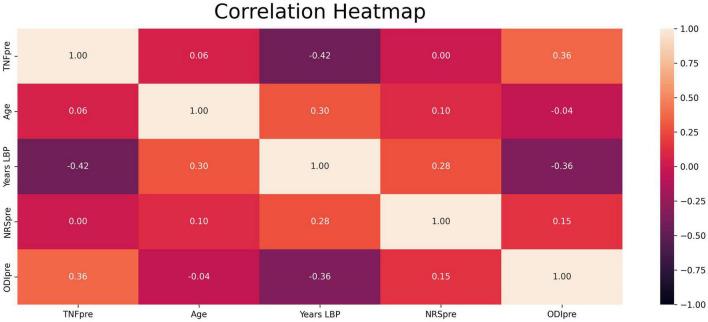
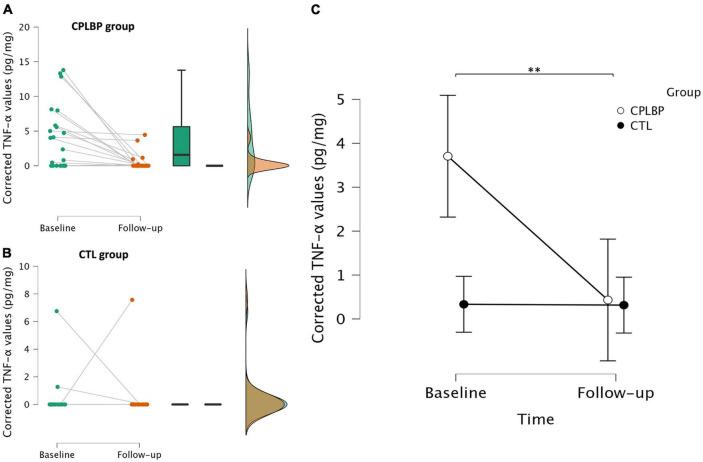
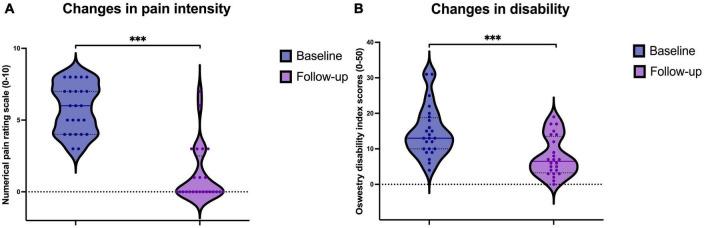
Concentrations of TNF-α were found to be elevated in baseline urine samples of CPLBP patients compared to asymptomatic controls. Moreover, these values differed among patients depending on their pain trajectory. Patients with persistent pain showed higher levels of TNF-α, when compared to those with episodic CPLBP. Furthermore, baseline TNF-α concentrations and their changes after 4 weeks predicted alterations in pain intensity and disability following SMT in patients with CPLBP.
DISCUSSION
These findings warrant further research on the potential use of urinary TNF-α concentrations as a prognostic biomarker for CPLBP.
引言
超过三分之二的腰痛(LBP)患者在长期可能会经历复发或持续的症状。然而,目前的数据无法预测谁会发展为慢性腰痛,谁会从急性发作中康复。促炎细胞因子肿瘤坏死因子-α(TNF-α)血清水平升高与LBP急性发作后恢复不佳和持续性疼痛有关。炎性细胞因子也可能介导与神经病理性疼痛相关的机制,因此,对慢性原发性腰痛(CPLBP)具有重要意义。
方法
本研究旨在探讨尿TNF-α水平预测CPLBP患者预后及特征性临床特征的潜力。招募了24例CPLBP患者和24例性别及年龄匹配的无症状对照。在基线时和4周后测量尿TNF-α浓度,在此期间CPLBP患者接受脊柱推拿治疗(SMT)。
结果
与无症状对照相比,发现CPLBP患者基线尿样中TNF-α浓度升高。此外,这些值在患者中因疼痛轨迹而异。与发作性CPLBP患者相比,持续性疼痛患者的TNF-α水平更高。此外,基线TNF-α浓度及其4周后的变化可预测CPLBP患者SMT后疼痛强度和功能障碍的改变。
讨论
这些发现值得进一步研究尿TNF-α浓度作为CPLBP预后生物标志物的潜在用途。


 Zotero 插件