
“施善者,善亦将至”:安大略省成年人在 COVID-19 大流行的头 16 个月中的亲社会行为。
'When you give kindness out, you get it back ten times more': Ontario adults' prosocial behaviour during the first 16 months of the COVID-19 pandemic.
机构信息
Faculty of Health Sciences, Health and Rehabilitation Sciences Program, University of Western Ontario, London, Ontario, Canada.
Faculty of Health Sciences, School of Occupational Therapy, University of Western Ontario, London, Ontario, Canada.
出版信息
PLoS One. 2023 Jul 17;18(7):e0288720. doi: 10.1371/journal.pone.0288720. eCollection 2023.
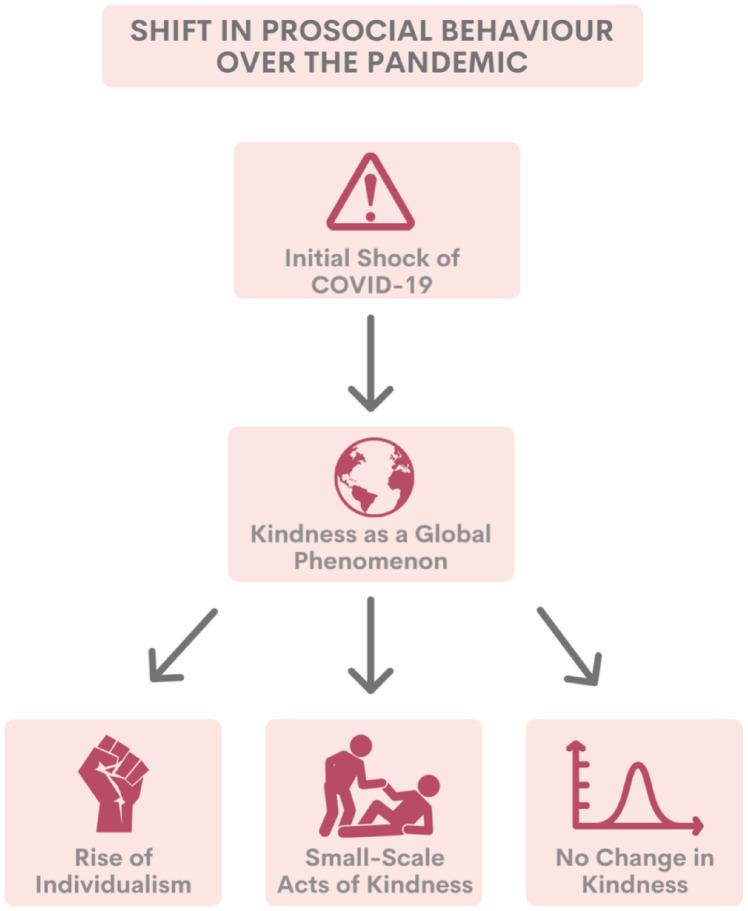
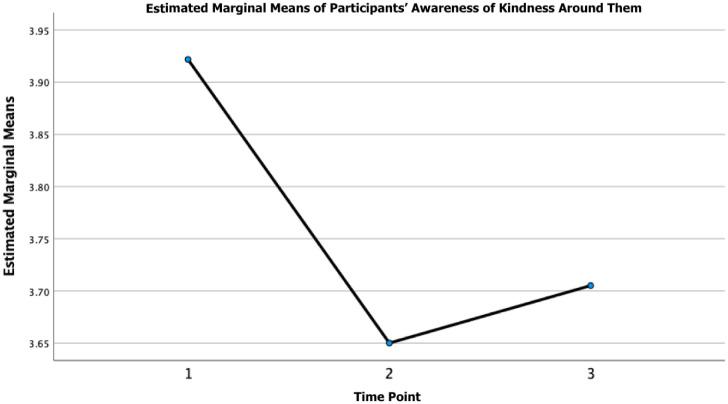
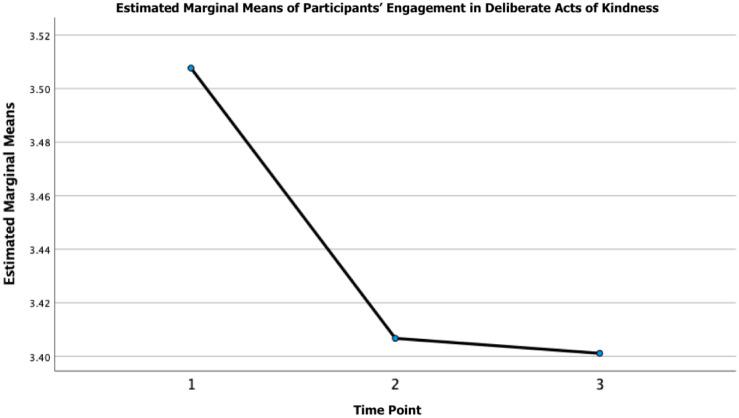
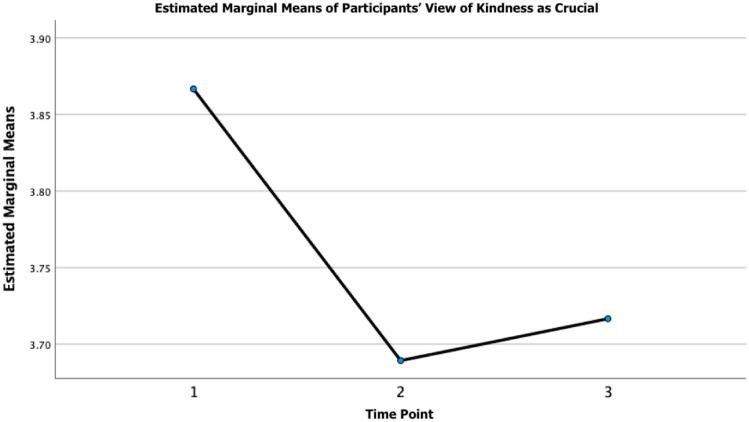
The COVID-19 pandemic has provided a collective opportunity to engage in prosocial behaviours, including kindness; however, little is known about the long-term impacts of the pandemic on such behaviours. As a part of a larger study (Health Outcomes for Adults During and Following the COVID-19 Pandemic), the purpose of this mixed methods research was two-fold: (1) to quantitatively explore adults' prosocial behaviour over time during the first 16 months of the pandemic in Ontario, Canada (April 2020-August 2021); and, (2) to more deeply explore, via focus groups, a sub-sample of Ontario adults' lived experiences of prosocial behaviour (assessed March 2022). A total of 2,188 participants were included in this study, with the majority of participants identifying as female (89.5%). At three time points, participants completed online questionnaires which included demographics, Prosocialness Scale for Adults, and three global kindness questions. A subset of participants (n = 42) also participated in one of six focus groups exploring their experiences of prosocial behaviour during the pandemic. A series of one-way repeated measures ANOVAs revealed that participants' self-reported prosocial behaviour increased significantly over time, while participants' awareness of kindness, engagement in acts of kindness, and view of kindness as crucial significantly decreased. Thematic analysis revealed three main themes: (1) shift in prosocial behaviour during the pandemic; (2) kindness from various perspectives; and, (3) prosocial burnout. This study provides insight into the longer-term effects of the pandemic on adults' prosocial behaviours and should be leveraged to help understand how individuals respond in times of crises.
COVID-19 大流行提供了一个集体参与亲社会行为的机会,包括善良;然而,人们对大流行对这种行为的长期影响知之甚少。作为一项更大研究(COVID-19 大流行期间和之后对成年人健康结果的研究)的一部分,这项混合方法研究的目的有两个:(1)在加拿大安大略省 COVID-19 大流行的头 16 个月内,随着时间的推移,定量探索成年人的亲社会行为;(2)通过焦点小组更深入地探讨安大略省成年人亲社会行为的生活体验(2022 年 3 月评估)。本研究共纳入 2188 名参与者,其中大多数参与者为女性(89.5%)。在三个时间点上,参与者完成了在线问卷,其中包括人口统计学、成人亲社会量表和三个全球性的善良问题。一小部分参与者(n=42)还参加了六个焦点小组中的一个,探讨他们在大流行期间的亲社会行为体验。一系列单向重复测量方差分析显示,参与者自我报告的亲社会行为随着时间的推移显著增加,而参与者对善良的认识、从事善良行为的意愿以及将善良视为关键的观点显著下降。主题分析揭示了三个主要主题:(1)大流行期间亲社会行为的转变;(2)从不同角度看善良;以及,(3)亲社会倦怠。这项研究深入了解了大流行对成年人亲社会行为的长期影响,应该加以利用,以帮助理解个人在危机时期的反应。

 Zotero 插件