
摄入血橙汁会改变肠道微生物群中与心脏代谢生物标志物相关的特定细菌。
Blood orange juice intake changes specific bacteria of gut microbiota associated with cardiometabolic biomarkers.
作者信息
Corrêa Telma Angelina Faraldo, Tobaruela Eric de Castro, Capetini Vinicius Cooper, Quintanilha Bruna Jardim, Cortez Ramon Vitor, Taddei Carla R, Hassimotto Neuza Mariko Aymoto, Hoffmann Christian, Rogero Marcelo Macedo, Lajolo Franco Maria
机构信息
Department of Food and Experimental Nutrition, School of Pharmaceutical Sciences, University of São Paulo, São Paulo, Brazil.
Food Research Center (FoRC), São Paulo, Brazil.
出版信息
Front Microbiol. 2023 Jul 4;14:1199383. doi: 10.3389/fmicb.2023.1199383. eCollection 2023.
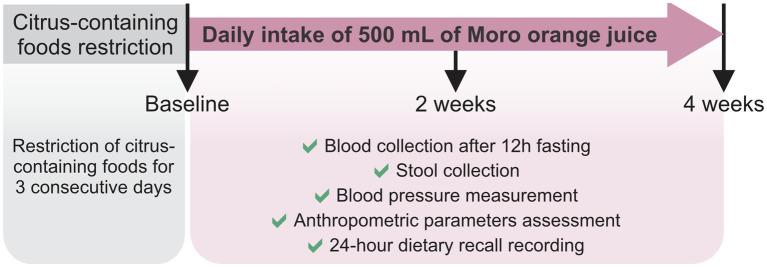
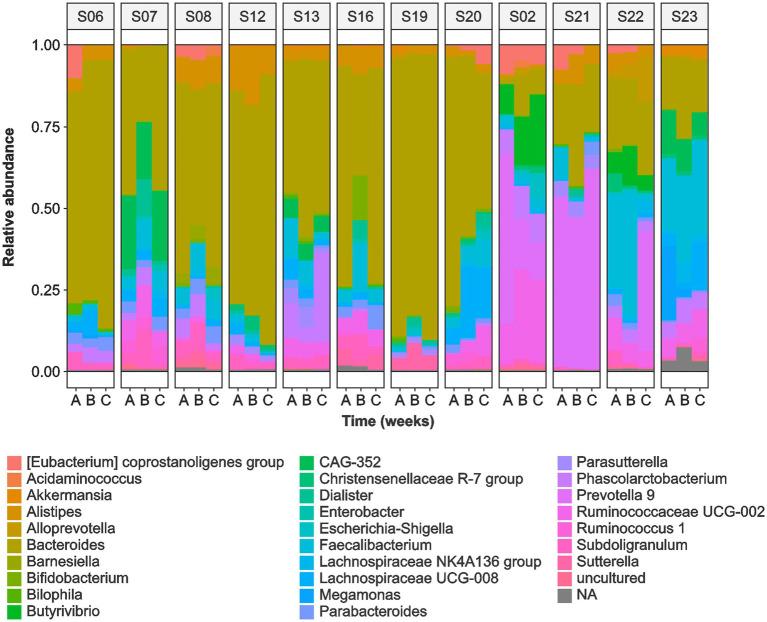
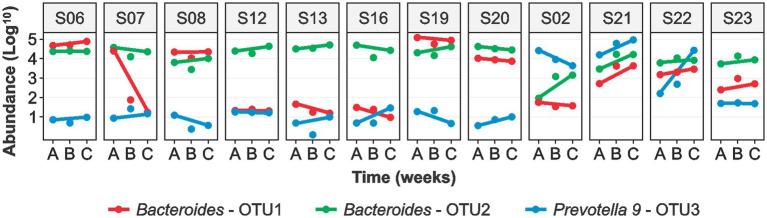
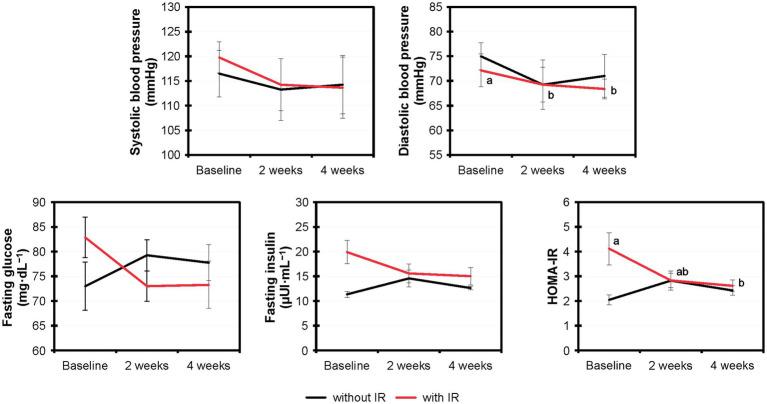
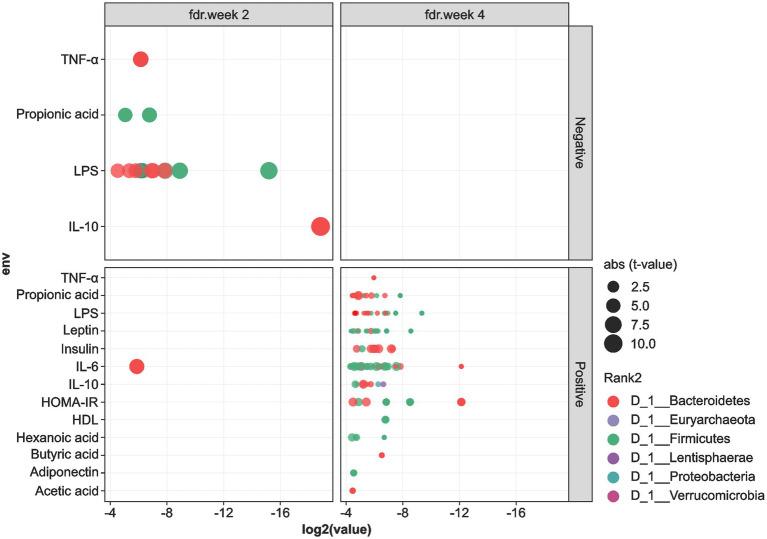
Blood orange juice is an important source of flavanones and anthocyanins, mainly hesperidin, narirutin, and cyanidin-3--glucoside. The benefits of these bioactive compounds have been reported, but the mechanistic details behind their biological effects are not well established. This study investigated the effects of Moro orange ( L. Osbeck) juice (MOJ) on gut microbiota composition and cardiometabolic biomarkers in overweight women. In this study, 12 overweight women (BMI from 25.0 to 29.9 kg/m), aged 18-37 years, consumed 500 mL of MOJ every day for 4 weeks. We assessed the gut microbiota composition, levels of short-chain fatty acids (SCFAs), cardiometabolic biomarkers, and insulin resistance (HOMA-IR) at baseline and after 2 weeks and 4 weeks of MOJ intake. The results suggested that MOJ intake affected the abundance of specific operational taxonomic units (OTUs) of the gut microbiota but did not significantly alter the diversity and general composition of the gut microbiota. However, MOJ intake increased the production of SCFAs, especially propionic and isobutyric acids, and significantly improved cardiometabolic biomarkers such as blood pressure and plasma VCAM-1 levels in the overweight women. Additionally, we observed significant associations between gut microbiota OTUs belonging to the Bacteroidetes phyla and genera and the cardiometabolic biomarkers. Furthermore, MOJ reduced fasting glucose and insulin levels and HOMA-IR values, thereby enhancing insulin sensitivity in the insulin-resistant overweight women. Finally, we highlighted the importance of orange juice intake duration because some beneficial changes such as blood pressure improvements were evident at the 2-week time interval of the intervention, but other changes became significant only at the 4-week interval of MOJ intake. In conclusion, our study demonstrated that changes in specific OTUs of the gut microbiota in response to MOJ intake were associated with significant improvements in some cardiometabolic biomarkers and SCFA levels in overweight women with insulin resistance.
血橙汁是黄烷酮和花青素的重要来源,主要包括橙皮苷、柚皮苷和矢车菊素-3-葡萄糖苷。这些生物活性化合物的益处已有报道,但其生物学效应背后的机制细节尚未完全明确。本研究调查了摩洛血橙(Citrus sinensis (L.) Osbeck)汁(MOJ)对超重女性肠道微生物群组成和心脏代谢生物标志物的影响。在本研究中,12名年龄在18 - 37岁、体重指数(BMI)为25.0至29.9 kg/m²的超重女性,连续4周每天饮用500 mL的MOJ。我们在基线以及MOJ摄入2周和4周后,评估了肠道微生物群组成、短链脂肪酸(SCFA)水平、心脏代谢生物标志物和胰岛素抵抗(HOMA-IR)。结果表明,摄入MOJ会影响肠道微生物群特定操作分类单元(OTU)的丰度,但不会显著改变肠道微生物群的多样性和总体组成。然而,摄入MOJ会增加SCFA的产生,尤其是丙酸和异丁酸,并显著改善超重女性的心脏代谢生物标志物,如血压和血浆VCAM-1水平。此外,我们观察到属于拟杆菌门的肠道微生物群OTU与心脏代谢生物标志物之间存在显著关联。此外,MOJ降低了空腹血糖和胰岛素水平以及HOMA-IR值,从而增强了胰岛素抵抗超重女性的胰岛素敏感性。最后,我们强调了橙汁摄入持续时间的重要性,因为一些有益变化,如血压改善,在干预的2周时间间隔时就很明显,但其他变化仅在MOJ摄入4周时间间隔时才变得显著。总之,我们的研究表明,超重胰岛素抵抗女性摄入MOJ后肠道微生物群特定OTU的变化与一些心脏代谢生物标志物和SCFA水平的显著改善有关。

 Zotero 插件