
双组分系统 CroRS 作为细胞包膜稳态的主要调节剂,赋予细菌病原体粪肠球菌对抗菌药物的耐受性。
The two-component system CroRS acts as a master regulator of cell envelope homeostasis to confer antimicrobial tolerance in the bacterial pathogen Enterococcus faecalis.
机构信息
Department of Microbiology and Immunology, University of Otago, Dunedin, New Zealand.
Maurice Wilkins Centre for Molecular Biodiscovery, University of Otago, Dunedin, New Zealand.
出版信息
Mol Microbiol. 2023 Sep;120(3):408-424. doi: 10.1111/mmi.15128. Epub 2023 Jul 20.
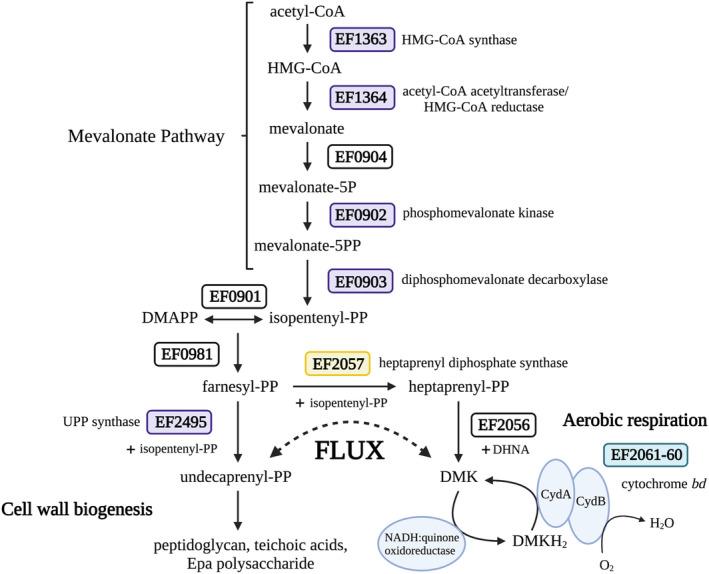
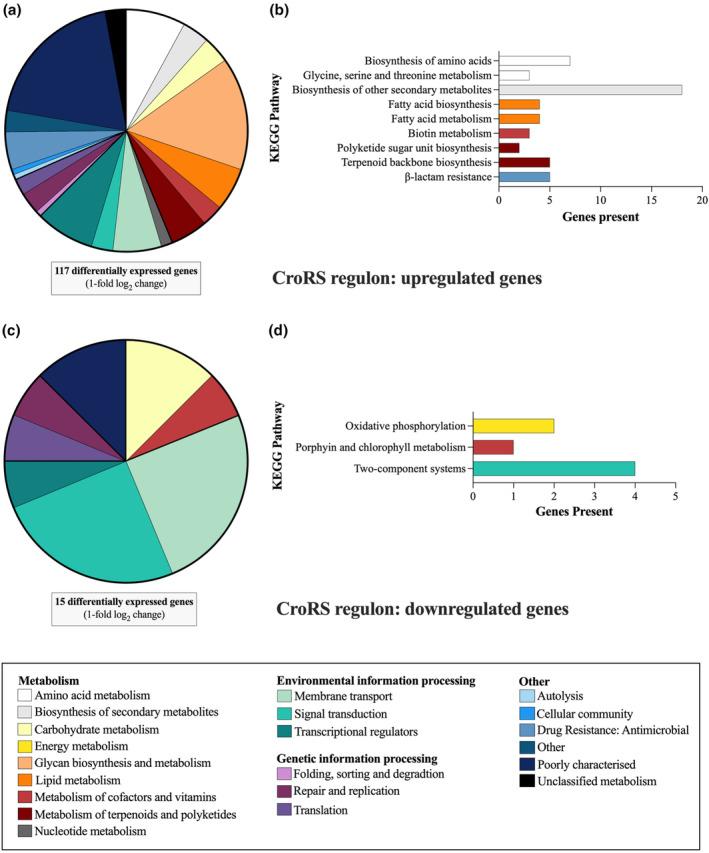
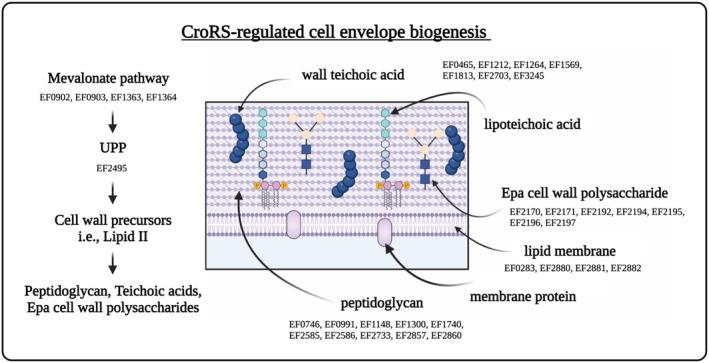
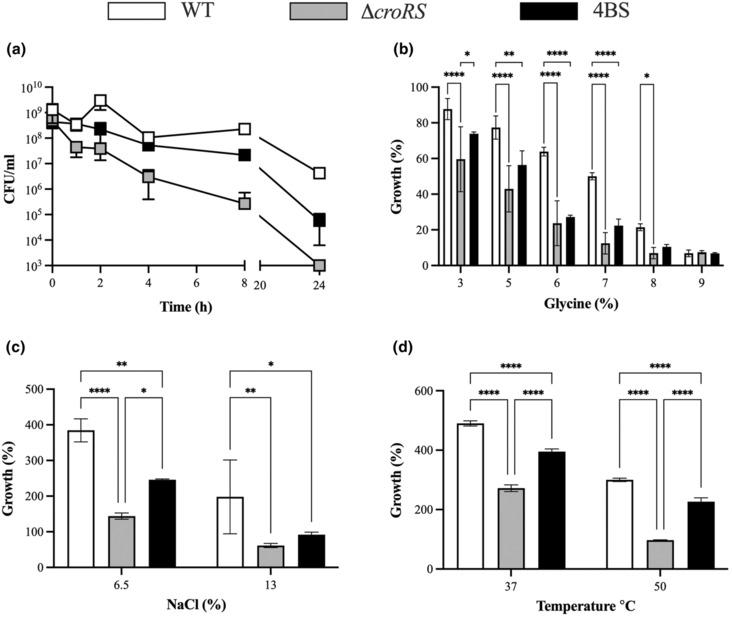
Antimicrobial tolerance is the ability of a microbial population to survive, but not proliferate, during antimicrobial exposure. Significantly, it has been shown to precede the development of bona fide antimicrobial resistance. We have previously identified the two-component system CroRS as a critical regulator of tolerance to antimicrobials like teixobactin in the bacterial pathogen Enterococcus faecalis. To understand the molecular mechanism of this tolerance, we have carried out RNA-seq analyses in the E. faecalis wild-type and isogenic croRS mutant to determine the teixobactin-induced CroRS regulon. We identified a 132 gene CroRS regulon and demonstrate that CroRS upregulates biosynthesis of all major components of the enterococcal cell envelope in response to teixobactin. This suggests a coordinating role of this regulatory system in maintaining integrity of the multiple layers of the enterococcal envelope during antimicrobial stress, likely contributing to bacterial survival. Using experimental evolution, we observed that truncation of HppS, a key enzyme in the synthesis of the quinone electron carrier demethylmenaquinone, was sufficient to rescue tolerance in the croRS deletion strain. This highlights a key role for isoprenoid biosynthesis in antimicrobial tolerance in E. faecalis. Here, we propose a model of CroRS acting as a master regulator of cell envelope biogenesis and a gate-keeper between isoprenoid biosynthesis and respiration to ensure tolerance against antimicrobial challenge.
抗菌药物耐受是指微生物种群在接触抗菌药物时能够存活但不增殖的能力。值得注意的是,它先于真正的抗菌药物耐药性的发展。我们之前已经确定了双组分系统 CroRS 是细菌病原体粪肠球菌中泰妙菌素等抗菌药物耐受的关键调节因子。为了了解这种耐受的分子机制,我们在粪肠球菌野生型和同源 croRS 突变体中进行了 RNA-seq 分析,以确定泰妙菌素诱导的 CroRS 调节子。我们确定了一个由 132 个基因组成的 CroRS 调节子,并证明 CroRS 上调了泰妙菌素诱导的所有主要肠球菌细胞包膜成分的生物合成。这表明该调节系统在维持抗菌应激期间肠球菌包膜的多层结构完整性方面具有协调作用,可能有助于细菌存活。通过实验进化,我们观察到,醌电子载体脱甲基menaquinone 合成中关键酶 HppS 的截断足以挽救 croRS 缺失菌株的耐受。这突出了异戊烯基生物合成在粪肠球菌抗菌药物耐受中的关键作用。在这里,我们提出了一个模型,即 CroRS 作为细胞包膜生物发生的主调节因子和异戊烯基生物合成与呼吸之间的守门员,以确保对抗抗菌药物挑战的耐受。
 Zotero 插件