
白藜芦醇通过 Nrf2/FTH1/GPX4 通路减轻高强度运动训练诱导的小鼠肠道炎症和铁死亡。
Resveratrol attenuated high intensity exercise training-induced inflammation and ferroptosis via Nrf2/FTH1/GPX4 pathway in intestine of mice.
机构信息
Department of Physical Education, Heilongjiang Bayi Agricultural University, Daqing, China.
出版信息
Turk J Med Sci. 2023 Apr;53(2):446-454. doi: 10.55730/1300-0144.5604. Epub 2023 Apr 19.
BACKGROUND
Moderate exercise has beneficial effects for human health and is helpful for the protection against several diseases. However, high intensity exercise training caused gastrointestinal syndrome. Resveratrol, a plant extract, plays a vital role in protecting various organs. However, whether resveratrol protected mice against high intensity exercise training-induced intestinal damage remains unclear. In this study, our objective was to investigate the protective effects and mechanism of resveratrol in high intensity exercise training-treated mice.
METHODS
Mice were treated with swimming exercise protocol and/or resveratrol (15 mg/kg/day) for 28 consecutive days. Then, the mice were sacrificed, and a series of evaluation indicators, including inflammatory factors and intestinal permeability of the gut, were measured based on this model. The expressions of inflammatory factors (tumor necrosis factor (TNF)-α; interferon (IFN)-γ, interleukin (IL)-6 and IL-10), oxidative stress (Nrf2, glutathione (GSH), hydrogen peroxide (H2 O2), catalase (CAT) and malondialdehyde(MDA)), intestinal barrier (gut permeability, ZO-1, Occludin and Claudin-1 as well as ferroptosis (Fe2+, Fe3+, SLC7A11, glutathioneperoxidase 4 (GPX4) and ferritin heavy chain 1 (FTH1)) were measured, respectively.
RESULTS
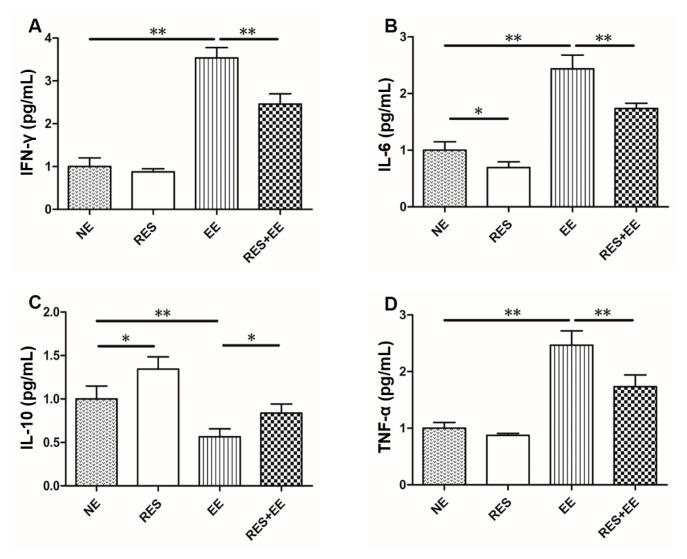
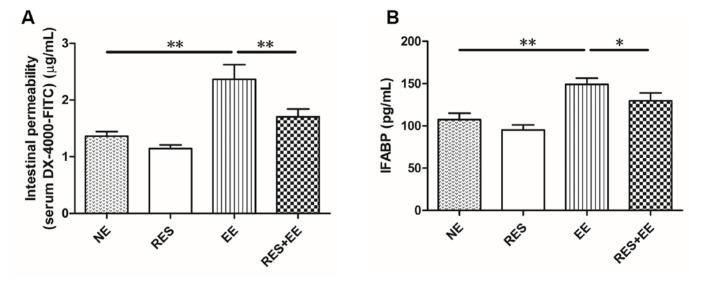
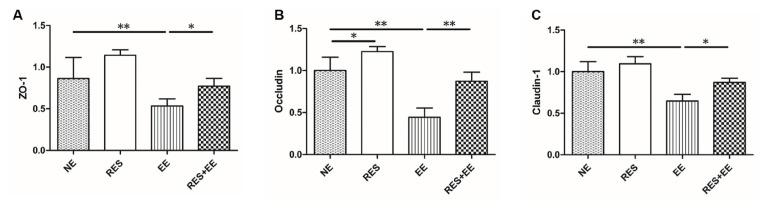
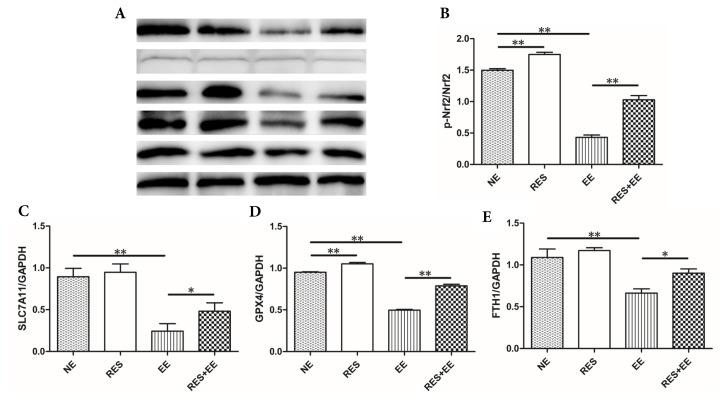
High intensity exercise training induced colon damage, manifested as inflammation (increased TNF-α, IFN-γ and IL-6 concentrations, and decreased IL-10 concentration), oxidative stress (the increase of H2O2 and MDA concentration, and the reduced CAT and GSH activities), intestinal barrier injury (increased gut permeability and intestinal fatty-acid binding protein concentration,and inhibited ZO-1, Occludin and Claudin-1 expressions) and ferroptosis (the increased of Fe2+ and Fe3+ concentrations, and suppressed phosphorylated Nrf2, SLC7A11, GPX4 and FTH1), which was relieved by resveratrol treatment in mice.
DISCUSSION
Resveratrol attenuated high intensity exercise training-induced inflammation and ferroptosis through activating Nrf2/ FTH1/GPX4 pathway in mouse colon, which providing new ideas for the prevention and treatment of occupational disease in athlete.
背景
适度运动对人类健康有益,有助于预防多种疾病。然而,高强度运动训练会导致胃肠道综合征。白藜芦醇是一种植物提取物,在保护各种器官方面发挥着重要作用。然而,白藜芦醇是否能保护小鼠免受高强度运动训练引起的肠道损伤尚不清楚。在这项研究中,我们的目的是研究白藜芦醇对高强度运动训练小鼠的保护作用及其机制。
方法
小鼠连续 28 天接受游泳运动方案和/或白藜芦醇(15mg/kg/天)治疗。然后,处死小鼠,根据该模型测量一系列评估指标,包括肠道炎症因子和肠道通透性。测量炎症因子(肿瘤坏死因子 (TNF)-α;干扰素 (IFN)-γ、白细胞介素 (IL)-6 和 IL-10)、氧化应激(Nrf2、谷胱甘肽 (GSH)、过氧化氢 (H2O2)、过氧化氢酶 (CAT) 和丙二醛 (MDA))、肠道屏障(肠道通透性、ZO-1、Occludin 和 Claudin-1 以及铁死亡(Fe2+、Fe3+、SLC7A11、谷胱甘肽过氧化物酶 4 (GPX4) 和铁蛋白重链 1 (FTH1))的表达。
结果
高强度运动训练导致结肠损伤,表现为炎症(TNF-α、IFN-γ 和 IL-6 浓度增加,IL-10 浓度降低)、氧化应激(H2O2 和 MDA 浓度增加,CAT 和 GSH 活性降低)、肠道屏障损伤(肠道通透性和肠脂肪酸结合蛋白浓度增加,ZO-1、Occludin 和 Claudin-1 表达受抑制)和铁死亡(Fe2+和 Fe3+浓度增加,磷酸化 Nrf2、SLC7A11、GPX4 和 FTH1 表达受抑制),而白藜芦醇治疗可减轻这些损伤。
讨论
白藜芦醇通过激活 Nrf2/FTH1/GPX4 通路减轻高强度运动训练诱导的小鼠结肠炎症和铁死亡,为运动员职业病的防治提供了新的思路。


 Zotero 插件