
现场便携的药用植物感染预防诊断策略的范围。
Scope of Onsite, Portable Prevention Diagnostic Strategies for Infections in Medicinal Plants.
机构信息
Manav Rachna Centre for Medicinal Plant Pathology, Manav Rachna International Institute of Research and Studies, Faridabad 121004, India.
TERI-Deakin Nanobiotechnology Centre, The Energy and Resources Institute, Gurgaon 122003, India.
出版信息
Biosensors (Basel). 2023 Jul 1;13(7):701. doi: 10.3390/bios13070701.
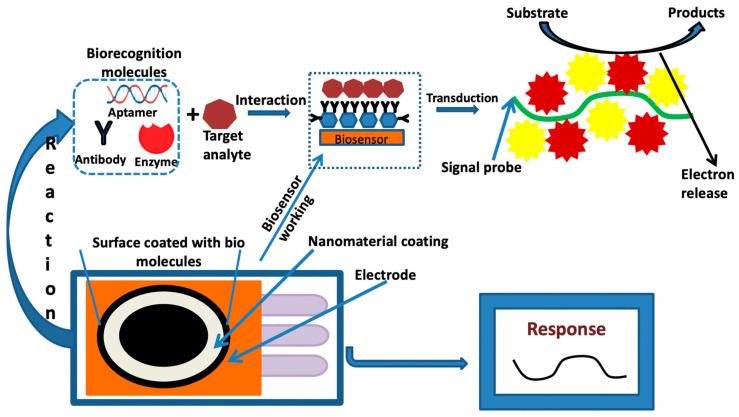
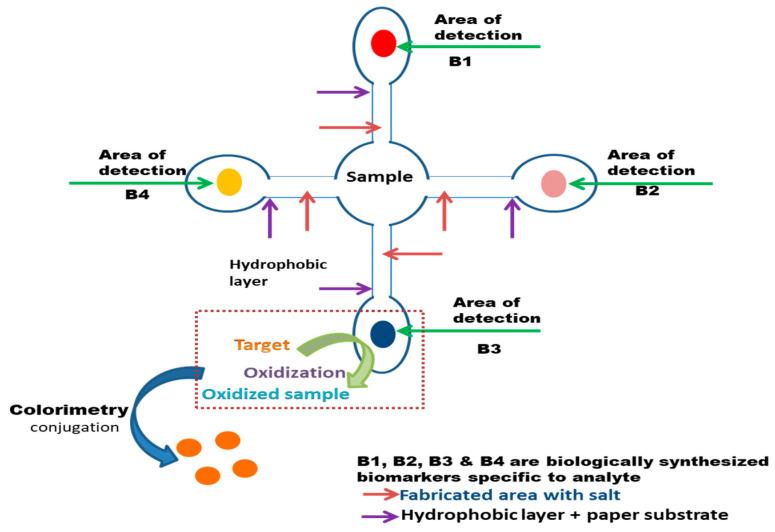
Medicinal plants are constantly challenged by different biotic inconveniences, which not only cause yield and economic losses but also affect the quality of products derived from them. Among them, pathogens are one of the harmful fungal pathogens in medicinal plants across the globe. Therefore, a fast and accurate detection method in the early stage is needed to avoid significant economic losses. Although traditional methods are available to detect , they are more time-consuming and costly and need good expertise. Nevertheless, numerous biochemical- and molecular-based techniques are available for the detection of plant diseases, but their efficacy is constrained by differences in their accuracy, specificity, sensitivity, dependability, and speed in addition to being unsuitable for direct on-field studies. Considering the effect of on medicinal plants, the development of novel and early detection measures is required to detect causal species accurately, sensitively, and rapidly that can be further applied in fields to speed up the advancement process in detection strategies. In this regard, nanotechnology can be employed to develop portable biosensors suitable for early and correct pathogenic disease detection on the field. It also provides an efficient future scope to convert innovative nanoparticle-derived fabricated biomolecules and biosensor approaches in the diagnostics of disease-causing pathogens in important medicinal plants. In this review, we summarize the traditional methods, including immunological and molecular methods, utilized in plant-disease diagnostics. We also brief advanced automobile and efficient sensing technologies for diagnostics. Here we are proposing an idea with a focus on the development of electrochemical and/or colorimetric properties-based nano-biosensors that could be useful in the early detection of and other plant pathogens in important medicinal plants. In addition, we discuss challenges faced during the fabrication of biosensors and new capabilities of the technology that provide information regarding disease management strategies.
药用植物不断受到各种生物逆境的挑战,这不仅导致产量和经济损失,还会影响到从它们中提取的产品的质量。其中,病原菌是全球药用植物中有害真菌病原菌之一。因此,需要一种快速准确的早期检测方法来避免重大的经济损失。尽管有传统的方法可用于检测,但它们耗时且昂贵,需要专业知识。然而,有许多生化和分子为基础的技术可用于检测植物病害,但它们的效果受到准确性、特异性、灵敏度、可靠性和速度的差异的限制,并且不适合直接进行现场研究。考虑到病原菌对药用植物的影响,需要开发新型的早期检测措施来准确、敏感和快速地检测致病病原菌,以便进一步应用于现场,加速检测策略的发展。在这方面,纳米技术可用于开发适用于现场早期和正确致病性疾病检测的便携式生物传感器。它还为基于创新纳米颗粒衍生的生物分子和生物传感器方法在重要药用植物中致病病原体的诊断提供了高效的未来前景。在这篇综述中,我们总结了用于植物疾病诊断的传统方法,包括免疫学和分子方法。我们还简要介绍了先进的汽车和高效感测技术在诊断中的应用。在这里,我们提出了一个想法,重点是开发基于电化学和/或比色性质的纳米生物传感器,这可能有助于早期检测重要药用植物中的病原菌和其他植物病原体。此外,我们讨论了在生物传感器制造过程中面临的挑战以及该技术的新功能,这些功能提供了有关疾病管理策略的信息。

 Zotero 插件