
选择的导航:利用监测、流行病学与结果(SEER)数据探究甲状腺癌患者拒绝手术的决定因素及后果
Navigating Choices: Determinants and Outcomes of Surgery Refusal in Thyroid Cancer Patients Using SEER Data.
作者信息
Hussein Mohammad H, Toraih Eman A, Ohiomah Ifidon E, Siddeeque Nabeela, Comeaux Marie, Landau Madeleine B, Anker Allison, Jishu Jessan A, Fawzy Manal S, Kandil Emad
机构信息
Division of Endocrine and Oncologic Surgery, Department of Surgery, School of Medicine, Tulane University, New Orleans, LA 70112, USA.
Genetics Unit, Department of Histology and Cell Biology, Faculty of Medicine, Suez Canal University, Ismailia 41522, Egypt.
出版信息
Cancers (Basel). 2023 Jul 20;15(14):3699. doi: 10.3390/cancers15143699.
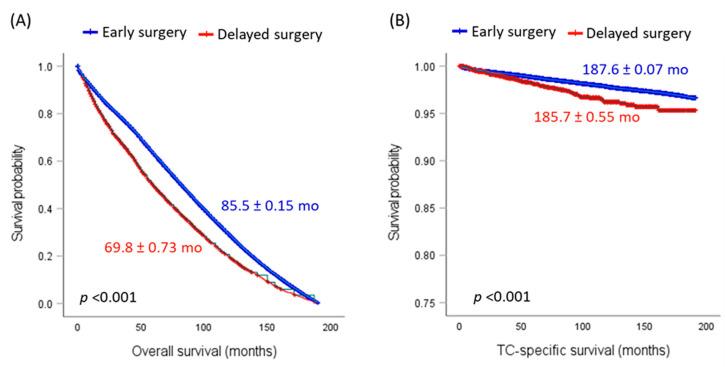
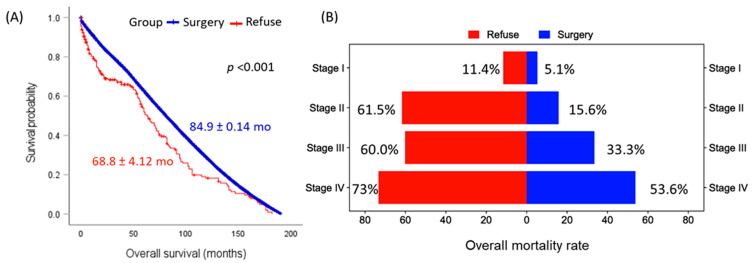
With thyroid cancer being a prevalent endocrine cancer, timely management is essential to prevent malignancy and detrimental outcomes. Surgical intervention is a popular component of the treatment plan, yet patients often refuse to undergo such procedures even if clinicians explicitly recommend them. This study gathers data from the Surveillance, Epidemiology, and End Results database (2000-2019) to learn more about the sociodemographic factors that predict the likelihood of surgical intervention. A total of 176,472 patients diagnosed with either papillary or follicular thyroid cancer were recommended surgery, of which 470 were refused. Cancer-specific mortality and overall mortality were determined with the Kaplan-Meier method and univariate and multivariate Cox proportional hazards regression model. Mortality rates for patients who delayed surgery (≥4 months vs. <4 months) were determined using similar methods. The findings reveal that surgical delay or refusal increased overall mortality. The surgical refusal was associated with increased thyroid cancer-specific mortality. However, the impact on thyroid cancer-specific mortality for those who delay surgery was not as pronounced. Significant sociodemographic determinants of surgical refusal included age greater than or equal to 55 years, male sex, being unmarried, race of Asian and Pacific Islander, and advanced tumor staging. The results underscore the importance of patient education, shared decision-making, and access to surgical interventions to optimize outcomes in thyroid cancer management.
甲状腺癌是一种常见的内分泌癌,及时治疗对于预防恶性肿瘤和不良后果至关重要。手术干预是治疗方案中常用的一部分,但即使临床医生明确建议,患者也常常拒绝接受此类手术。本研究从监测、流行病学和最终结果数据库(2000 - 2019年)收集数据,以了解更多预测手术干预可能性的社会人口学因素。共有176472例被诊断为乳头状或滤泡状甲状腺癌的患者被建议进行手术,其中470例被拒绝。采用Kaplan - Meier法以及单因素和多因素Cox比例风险回归模型确定癌症特异性死亡率和总死亡率。使用类似方法确定延迟手术患者(≥4个月与<4个月)的死亡率。研究结果显示,手术延迟或拒绝会增加总死亡率。手术拒绝与甲状腺癌特异性死亡率增加相关。然而,延迟手术对甲状腺癌特异性死亡率的影响并不那么明显。手术拒绝的重要社会人口学决定因素包括年龄大于或等于55岁、男性、未婚、亚太岛民种族以及肿瘤分期较晚。结果强调了患者教育、共同决策以及获得手术干预对于优化甲状腺癌治疗结果的重要性。

 Zotero 插件