
利用比率荧光化学传感器双波长监测法高通量分析水中细菌毒性脂多糖。
High-Throughput Analysis of Bacterial Toxic Lipopolysaccharide in Water by Dual-Wavelength Monitoring Using a Ratiometric Fluorescent Chemosensor.
机构信息
Graduate School of Science and Technology, Sophia University, Tokyo 102-8554, Japan.
Technical Development Division, Nomura Micro Science Co., Ltd., Atsugi, Kanagawa 243-0021, Japan.
出版信息
Anal Chem. 2023 Aug 22;95(33):12349-12357. doi: 10.1021/acs.analchem.3c01870. Epub 2023 Jul 31.
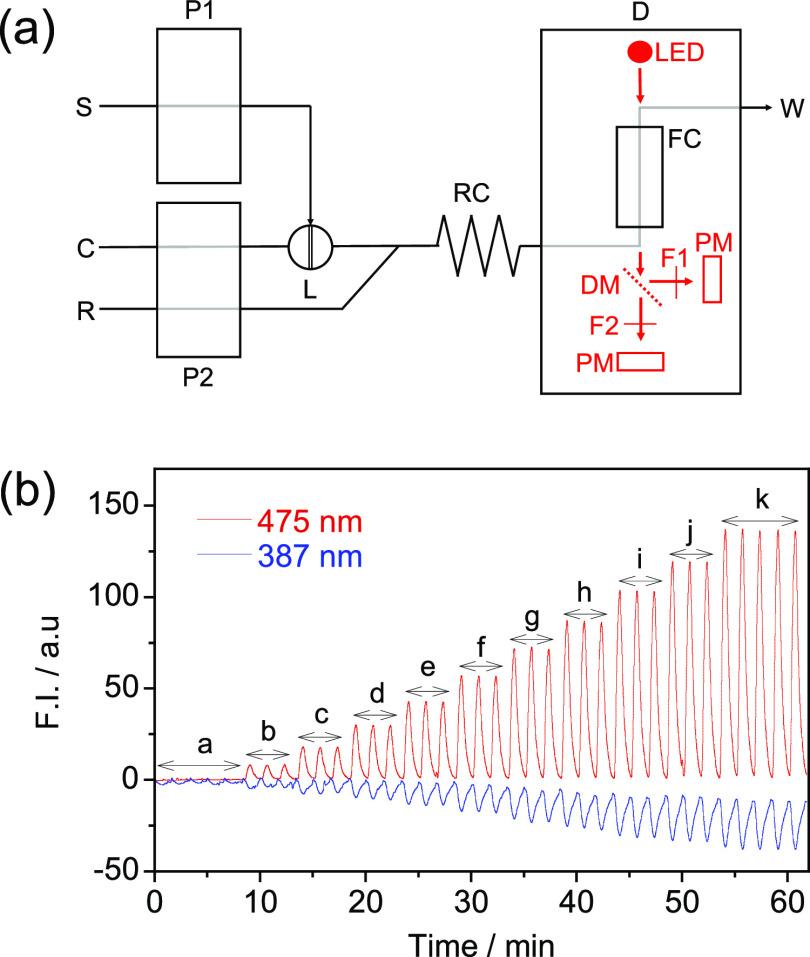
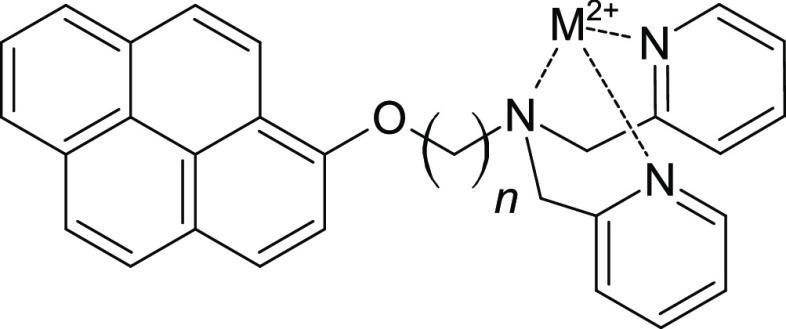
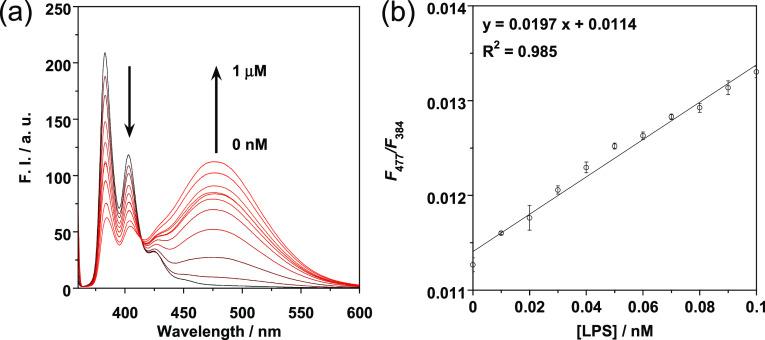
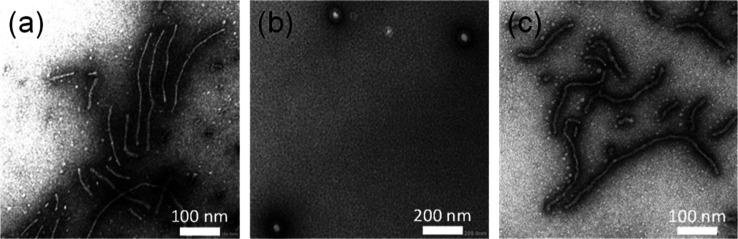
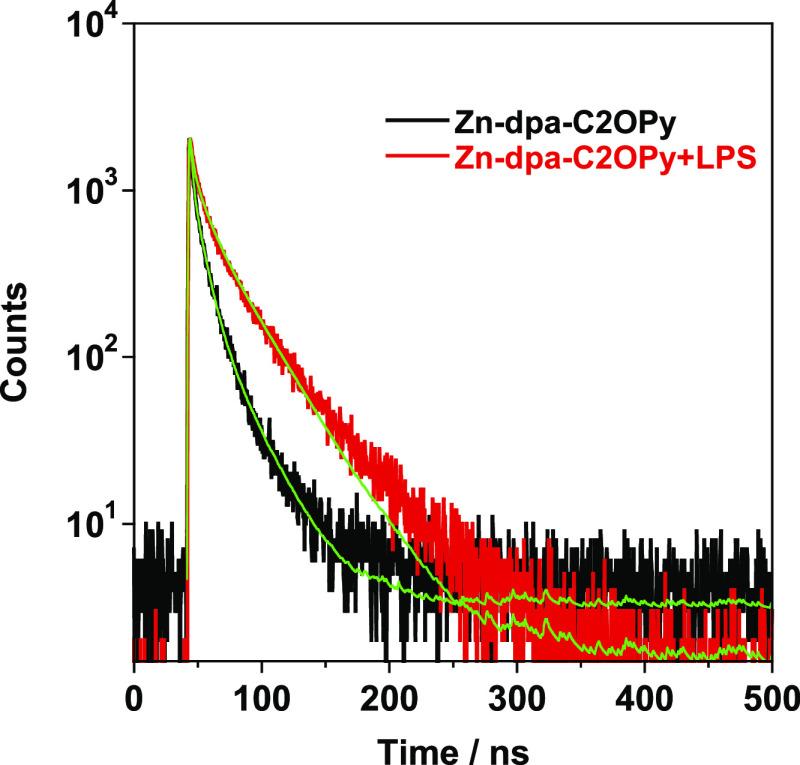
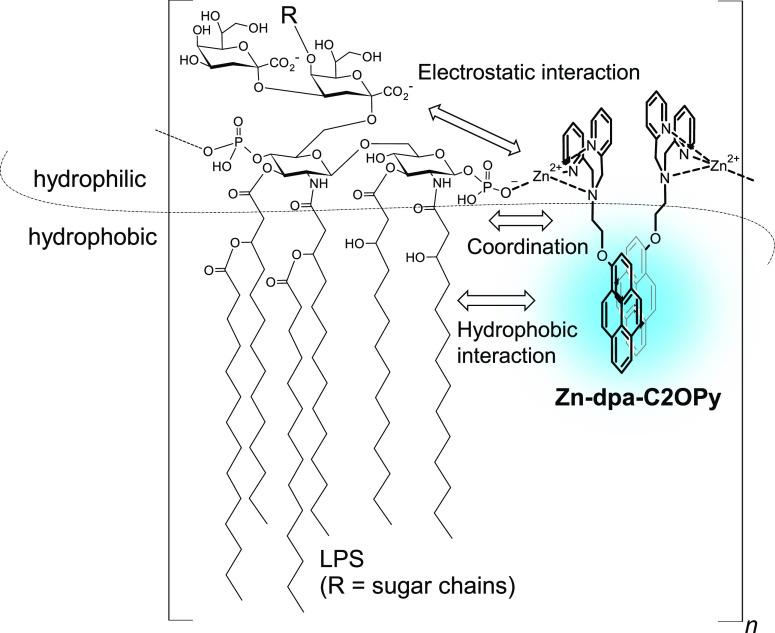
Lipopolysaccharide (LPS) is a bacterial toxin that causes fever in humans. Our small-molecule chemosensor named shows rapid ratiometric fluorescence response to LPS in water with a detection limit of 11 pM, which is lower than that of our previously reported sensor. Spectroscopic measurements (fluorescence, absorbance, H NMR, and fluorescence lifetime), dynamic light scattering measurements, and transmission electron microscopy observations revealed that the fluorescence response was induced by the changes in the aggregation state via multi-point recognition of LPS through hydrophobic and electrostatic interactions, in addition to the coordination between the zinc(II)-dipicolylamine moiety of the chemosensor and the phosphate group of LPS. The proposed chemosensor was applied to an original flow injection analysis (FIA) system with a self-developed dual-wavelength fluorophotometer, and a high throughput of 36 samples per hour was achieved. These results demonstrate the feasibility of this unique methodology combining a ratiometric fluorescent chemosensor and FIA for continuous online monitoring of LPS in water.
脂多糖(LPS)是一种细菌毒素,会导致人类发热。我们的小分子化学传感器名为 ,对水中的 LPS 具有快速的比率荧光响应,检测限为 11 pM,低于我们之前报道的传感器。光谱测量(荧光、吸收、H NMR 和荧光寿命)、动态光散射测量和透射电子显微镜观察表明,荧光响应是通过多点点识别 LPS 引起的聚集状态变化诱导的,除了化学传感器的锌(II)-二吡啶甲胺部分与 LPS 的磷酸基团之间的配位。所提出的 化学传感器被应用于具有自主开发的双波长荧光光度计的原始流动注射分析(FIA)系统中,实现了每小时 36 个样品的高通量。这些结果证明了这种独特的方法结合比率荧光化学传感器和 FIA 用于连续在线监测水中 LPS 的可行性。



 Zotero 插件