
使用脑成像技术进行帕金森病诊断和预后的机器学习模型:综述、主要挑战及未来方向。
Machine learning models for diagnosis and prognosis of Parkinson's disease using brain imaging: general overview, main challenges, and future directions.
作者信息
Garcia Santa Cruz Beatriz, Husch Andreas, Hertel Frank
机构信息
National Department of Neurosurgery, Centre Hospitalier de Luxembourg, Luxembourg, Luxembourg.
Imaging AI Group, Luxembourg Centre for Systems Biomedicine, University of Luxembourg, Esch-sur-Alzette, Luxembourg.
出版信息
Front Aging Neurosci. 2023 Jul 19;15:1216163. doi: 10.3389/fnagi.2023.1216163. eCollection 2023.
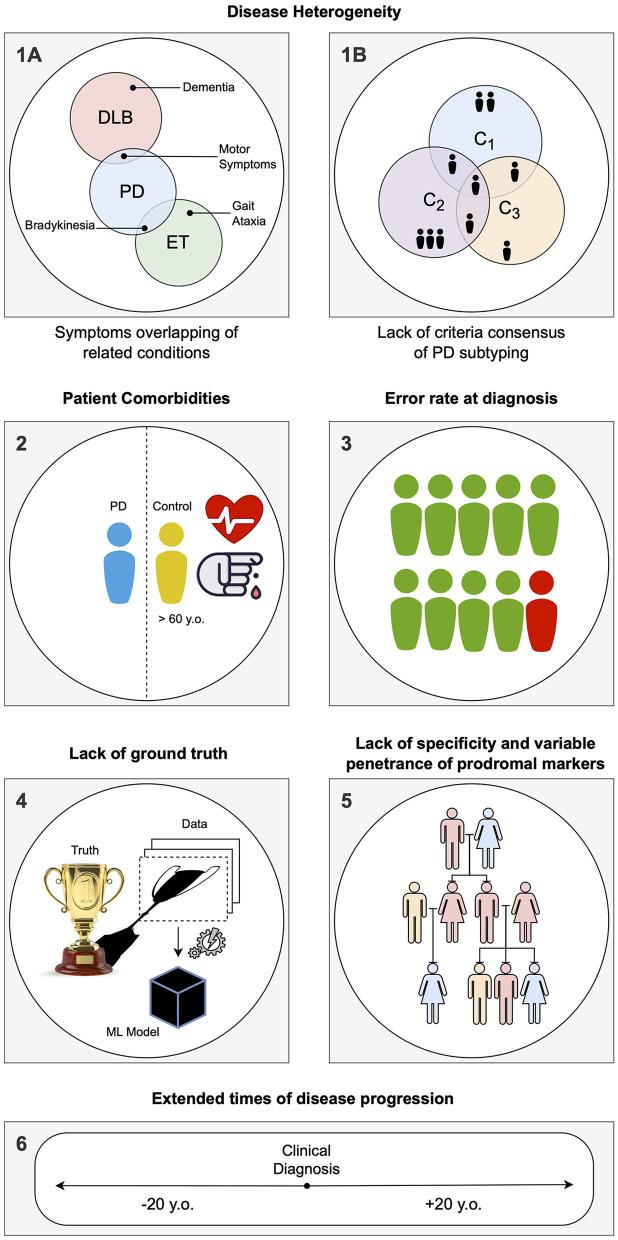
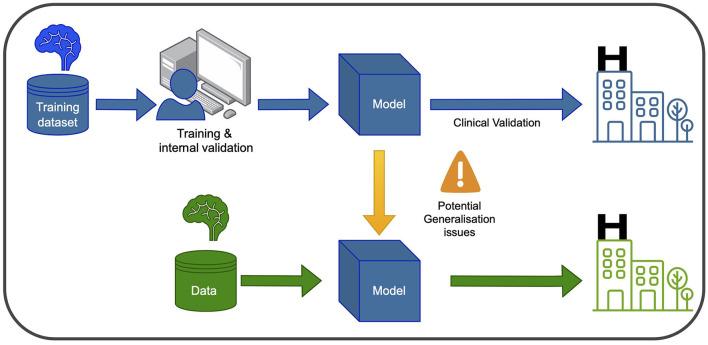
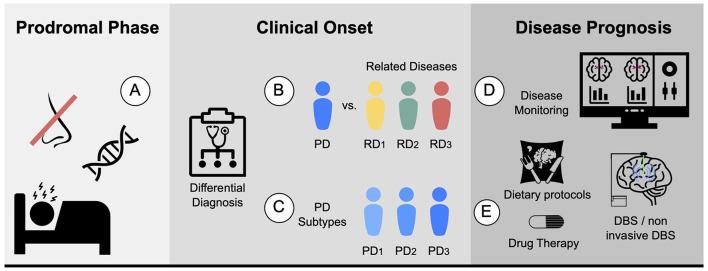
Parkinson's disease (PD) is a progressive and complex neurodegenerative disorder associated with age that affects motor and cognitive functions. As there is currently no cure, early diagnosis and accurate prognosis are essential to increase the effectiveness of treatment and control its symptoms. Medical imaging, specifically magnetic resonance imaging (MRI), has emerged as a valuable tool for developing support systems to assist in diagnosis and prognosis. The current literature aims to improve understanding of the disease's structural and functional manifestations in the brain. By applying artificial intelligence to neuroimaging, such as deep learning (DL) and other machine learning (ML) techniques, previously unknown relationships and patterns can be revealed in this high-dimensional data. However, several issues must be addressed before these solutions can be safely integrated into clinical practice. This review provides a comprehensive overview of recent ML techniques analyzed for the automatic diagnosis and prognosis of PD in brain MRI. The main challenges in applying ML to medical diagnosis and its implications for PD are also addressed, including current limitations for safe translation into hospitals. These challenges are analyzed at three levels: disease-specific, task-specific, and technology-specific. Finally, potential future directions for each challenge and future perspectives are discussed.
帕金森病(PD)是一种与年龄相关的进行性复杂神经退行性疾病,会影响运动和认知功能。由于目前尚无治愈方法,早期诊断和准确预后对于提高治疗效果和控制症状至关重要。医学成像,特别是磁共振成像(MRI),已成为开发辅助诊断和预后支持系统的宝贵工具。当前的文献旨在增进对该疾病在大脑中的结构和功能表现的理解。通过将人工智能应用于神经成像,如深度学习(DL)和其他机器学习(ML)技术,可以在这些高维数据中揭示以前未知的关系和模式。然而,在这些解决方案能够安全地整合到临床实践之前,必须解决几个问题。本综述全面概述了最近为脑MRI中PD的自动诊断和预后分析的ML技术。还讨论了将ML应用于医学诊断的主要挑战及其对PD的影响,包括目前安全转化到医院的局限性。这些挑战在疾病特异性、任务特异性和技术特异性三个层面进行了分析。最后,讨论了每个挑战的潜在未来方向和未来前景。
 Zotero 插件