
头颈部鳞状细胞癌中的S100蛋白(综述)
S100 proteins in head and neck squamous cell carcinoma (Review).
作者信息
Hu Yihong, Han Yucheng, He Minhui, Zhang Yanqun, Zou Xianqiong
机构信息
Department of Oral and Maxillofacial Surgery, Affiliated Stomatology Hospital of Guilin Medical University, Guilin, Guangxi 541004, P.R. China.
School of Basic Medical Sciences, Guilin Medical University, Guilin, Guangxi 541100, P.R. China.
出版信息
Oncol Lett. 2023 Jul 6;26(2):362. doi: 10.3892/ol.2023.13948. eCollection 2023 Aug.
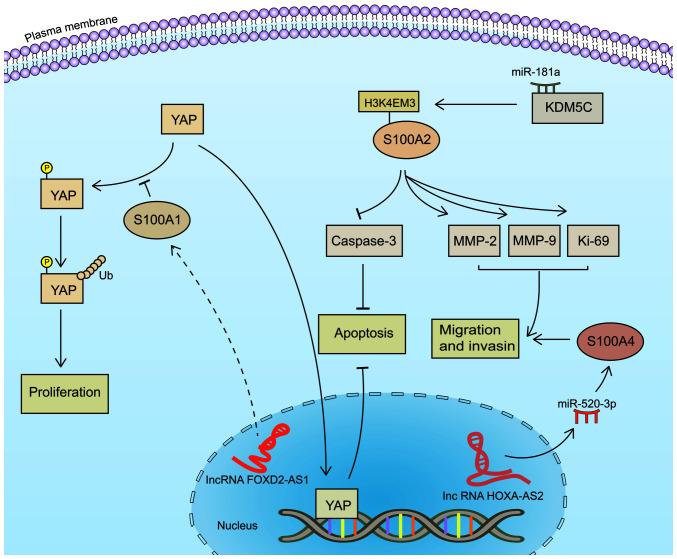
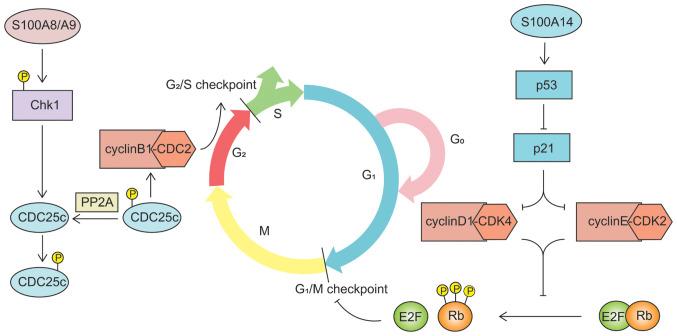
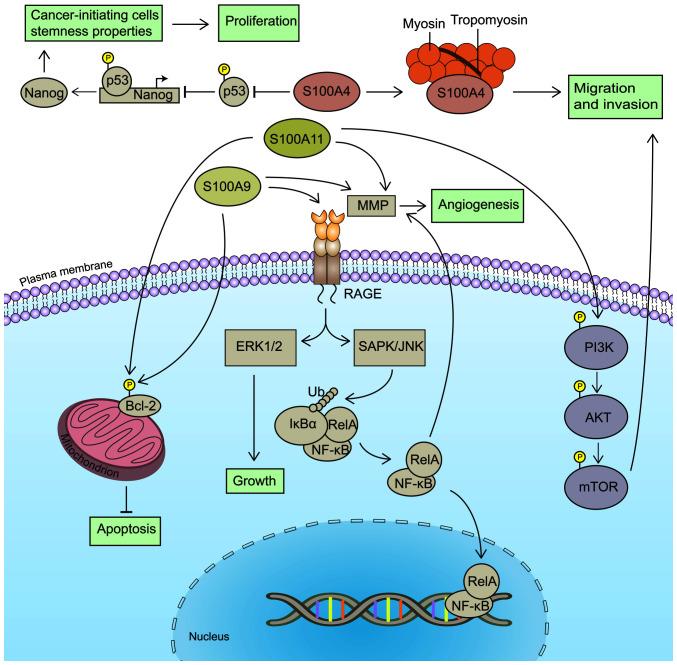
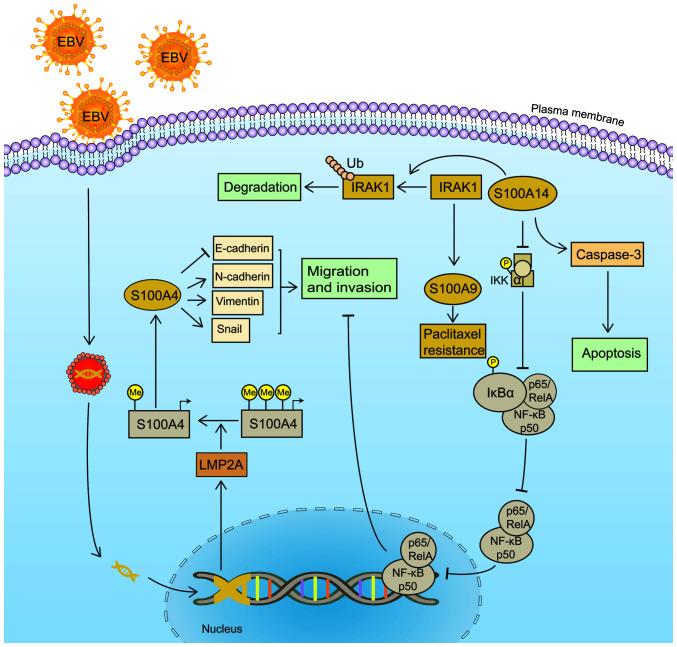
The most common tumor affecting the head and neck is head and neck squamous cell carcinoma (HNSCC). The characteristics of HNSCC include a rapid onset, a lack of early diagnosis, drug resistance, relapse and systemic adverse effects, leading to inadequate prevention, diagnosis and treatment. Notably, previous research suggests that there is an association between S100 proteins and HNSCC. S100A8, S100A9 and S100A14 interfere with tumor cell proliferation by blocking the cell cycle. The present review discusses this association. S100A4 enhances cancer stem cell properties, and interacts with actin and tropomyosin to promote tumor cell migration. S100A1, S100A8, S100A9, S100A10, S100A14 and S100P are involved in the initiation and progression of HNSCC via Hippo, nuclear factor κB, phosphatidylinositol kinase/protein kinase B/mammalian target of rapamycin and other signaling pathways. In addition, certain long non-coding RNAs and microRNAs are involved in regulating the expression of S100 proteins in HNSCC. Reducing the expression of certain members of the S100 protein family may enhance the chemosensitivity of HNSCC. Collectively, it is suggested that S100 proteins may function as markers and targets for the prevention, diagnosis and treatment of HNSCC.
影响头颈部的最常见肿瘤是头颈部鳞状细胞癌(HNSCC)。HNSCC的特征包括发病迅速、缺乏早期诊断、耐药性、复发和全身不良反应,导致预防、诊断和治疗不足。值得注意的是,先前的研究表明S100蛋白与HNSCC之间存在关联。S100A8、S100A9和S100A14通过阻断细胞周期来干扰肿瘤细胞增殖。本综述讨论了这种关联。S100A4增强癌症干细胞特性,并与肌动蛋白和原肌球蛋白相互作用以促进肿瘤细胞迁移。S100A1、S100A8、S100A9、S100A10、S100A14和S100P通过Hippo、核因子κB、磷脂酰肌醇激酶/蛋白激酶B/雷帕霉素哺乳动物靶标和其他信号通路参与HNSCC的发生和发展。此外,某些长链非编码RNA和微小RNA参与调节HNSCC中S100蛋白的表达。降低S100蛋白家族某些成员的表达可能会增强HNSCC的化疗敏感性。总体而言,提示S100蛋白可能作为HNSCC预防、诊断和治疗的标志物及靶点。
 Zotero 插件