
包膜病毒在不同生物和非生物界面的环境稳定性及传播性
Environmental Stability and Transmissibility of Enveloped Viruses at Varied Animate and Inanimate Interfaces.
作者信息
Zeng Li, Li Junya, Lv Meilin, Li Zikang, Yao Linlin, Gao Jie, Wu Qi, Wang Ziniu, Yang Xinyue, Tang Gang, Qu Guangbo, Jiang Guibin
机构信息
State Key Laboratory of Environmental Chemistry and Ecotoxicology, Research Center for Eco-Environmental Sciences, Chinese Academy of Sciences, Beijing 100085, China.
University of Chinese Academy of Sciences, Beijing 100049, China.
出版信息
Environ Health (Wash). 2023 May 30;1(1):15-31. doi: 10.1021/envhealth.3c00005. eCollection 2023 Jul 21.
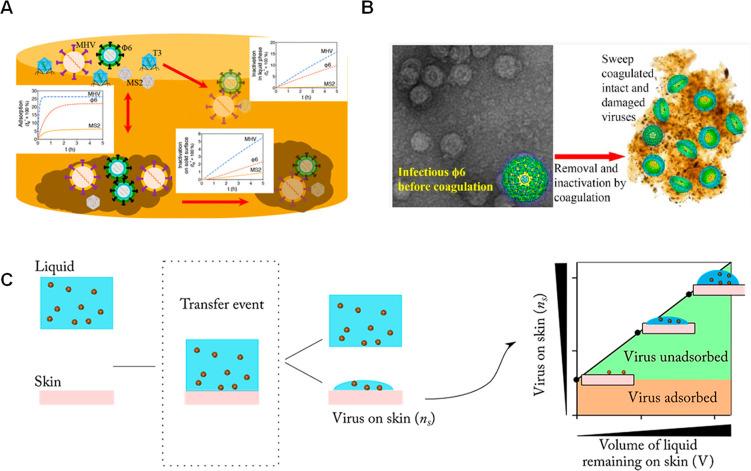
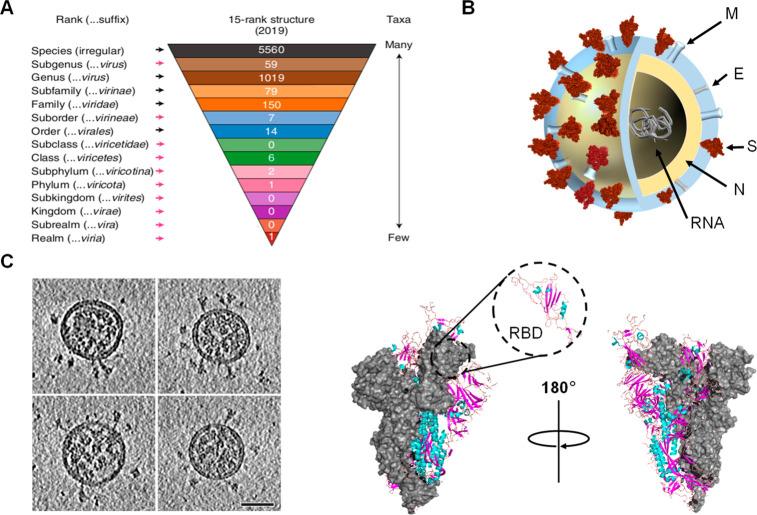
Enveloped viruses have been the leading causative agents of viral epidemics in the past decade, including the ongoing coronavirus disease 2019 outbreak. In epidemics caused by enveloped viruses, direct contact is a common route of infection, while indirect transmissions through the environment also contribute to the spread of the disease, although their significance remains controversial. Bridging the knowledge gap regarding the influence of interfacial interactions on the persistence of enveloped viruses in the environment reveals the transmission mechanisms when the virus undergoes mutations and prevents excessive disinfection during viral epidemics. Herein, from the perspective of the driving force, partition efficiency, and viral survivability at interfaces, we summarize the viral and environmental characteristics that affect the environmental transmission of viruses. We expect to provide insights for virus detection, environmental surveillance, and disinfection to limit the spread of severe acute respiratory syndrome coronavirus 2.
在过去十年中,包膜病毒一直是病毒性流行病的主要致病原,包括当前正在爆发的2019冠状病毒病疫情。在由包膜病毒引起的流行病中,直接接触是常见的感染途径,而通过环境的间接传播也会导致疾病传播,尽管其重要性仍存在争议。弥合关于界面相互作用对包膜病毒在环境中持久性影响的知识差距,有助于揭示病毒发生突变时的传播机制,并防止在病毒性流行病期间过度消毒。在此,我们从驱动力、分配效率和病毒在界面处的存活能力等角度,总结了影响病毒环境传播的病毒和环境特征。我们期望为病毒检测、环境监测和消毒提供见解,以限制严重急性呼吸综合征冠状病毒2的传播。



 Zotero 插件