
二甲双胍对缺血/再灌注损伤的影响:新证据与机制
Effects of Metformin on Ischemia/Reperfusion Injury: New Evidence and Mechanisms.
作者信息
Osorio-Llanes Estefanie, Villamizar-Villamizar Wendy, Ospino Guerra María Clara, Díaz-Ariza Luis Antonio, Castiblanco-Arroyave Sara Camila, Medrano Luz, Mengual Daniela, Belón Ricardo, Castellar-López Jairo, Sepúlveda Yanireth, Vásquez-Trincado César, Chang Aileen Y, Bolívar Samir, Mendoza-Torres Evelyn
机构信息
Advanced Biomedicine Research Group, Faculty of Health Sciences, Universidad Libre de Colombia, Seccional Barranquilla, Barranquilla 081001, Colombia.
Allied Research Society S.A.S., Barranquilla 080001, Colombia.
出版信息
Pharmaceuticals (Basel). 2023 Aug 9;16(8):1121. doi: 10.3390/ph16081121.
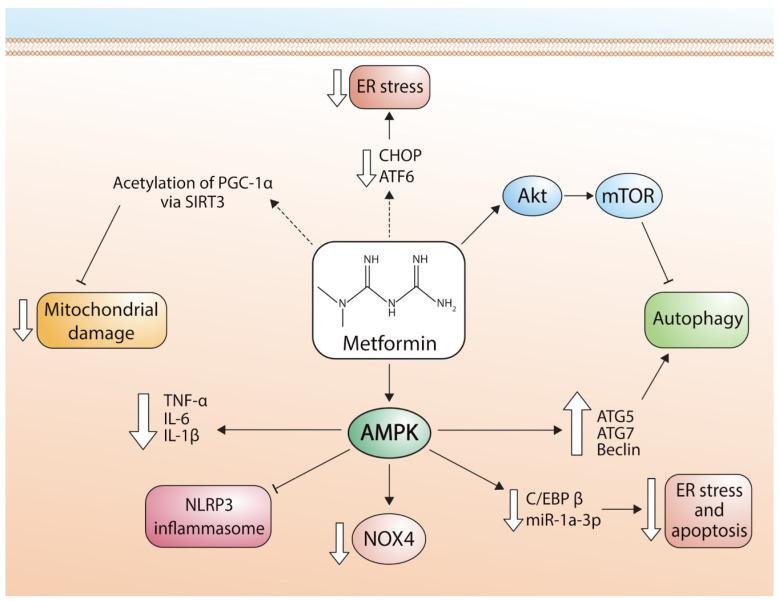
The search for new drugs with the potential to ensure therapeutic success in the treatment of cardiovascular diseases has become an essential pathway to follow for health organizations and committees around the world. In June 2021, the World Health Organization listed cardiovascular diseases as one of the main causes of death worldwide, representing 32% of them. The most common is coronary artery disease, which causes the death of cardiomyocytes, the cells responsible for cardiac contractility, through ischemia and subsequent reperfusion, which leads to heart failure in the medium and short term. Metformin is one of the most-used drugs for the control of diabetes, which has shown effects beyond the control of hyperglycemia. Some of these effects are mediated by the regulation of cellular energy metabolism, inhibiting apoptosis, reduction of cell death through regulation of autophagy and reduction of mitochondrial dysfunction with further reduction of oxidative stress. This suggests that metformin may attenuate left ventricular dysfunction induced by myocardial ischemia; preclinical and clinical trials have shown promising results, particularly in the setting of acute myocardial infarction. This is a review of the molecular and pharmacological mechanisms of the cardioprotective effects of metformin during myocardial ischemia-reperfusion injury.
寻找有可能确保心血管疾病治疗取得成功的新药,已成为全球卫生组织和委员会必须遵循的重要途径。2021年6月,世界卫生组织将心血管疾病列为全球主要死因之一,占全球死亡人数的32%。最常见的是冠状动脉疾病,它通过缺血和随后的再灌注导致心肌细胞(负责心脏收缩的细胞)死亡,这在中短期内会导致心力衰竭。二甲双胍是控制糖尿病最常用的药物之一,它已显示出超出控制高血糖的作用。其中一些作用是通过调节细胞能量代谢、抑制细胞凋亡、通过调节自噬减少细胞死亡以及减少线粒体功能障碍并进一步降低氧化应激来介导的。这表明二甲双胍可能减轻心肌缺血诱导的左心室功能障碍;临床前和临床试验已显示出有希望的结果,特别是在急性心肌梗死的情况下。这是一篇关于二甲双胍在心肌缺血再灌注损伤期间心脏保护作用的分子和药理机制的综述。

 Zotero 插件