
基于外泌体的药物递送:从实验室到临床的转化
Exosome-Based Drug Delivery: Translation from Bench to Clinic.
作者信息
Koh Hee Byung, Kim Hyo Jeong, Kang Shin-Wook, Yoo Tae-Hyun
机构信息
Division of Nephrology, Department of Internal Medicine, International Saint Mary's Hospital, College of Medicine, Catholic Kwandong University, Seo-gu, Incheon 22711, Republic of Korea.
Division of Nephrology, Department of Internal Medicine, Gangnam Severance Hospital, College of Medicine, Yonsei University, Gangnam-gu, Seoul 06273, Republic of Korea.
出版信息
Pharmaceutics. 2023 Jul 29;15(8):2042. doi: 10.3390/pharmaceutics15082042.
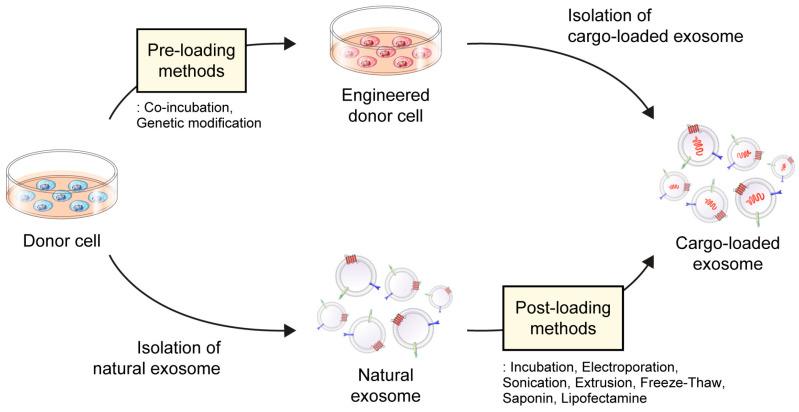
Exosome-based drug delivery is emerging as a promising field with the potential to revolutionize therapeutic interventions. Exosomes, which are small extracellular vesicles released by various cell types, have attracted significant attention due to their unique properties and natural ability to transport bioactive molecules. These nano-sized vesicles, ranging in size from 30 to 150 nm, can effectively transport a variety of cargoes, including proteins, nucleic acids, and lipids. Compared to traditional drug delivery systems, exosomes exhibit unique biocompatibility, low immunogenicity, and reduced toxicity. In addition, exosomes can be designed and tailored to improve targeting efficiency, cargo loading capacity, and stability, paving the way for personalized medicine and precision therapy. However, despite the promising potential of exosome-based drug delivery, its clinical application remains challenging due to limitations in exosome isolation and purification, low loading efficiency of therapeutic cargoes, insufficient targeted delivery, and rapid elimination in circulation. This comprehensive review focuses on the transition of exosome-based drug delivery from the bench to clinic, highlighting key aspects, such as exosome structure and biogenesis, cargo loading methods, surface engineering techniques, and clinical applications. It also discusses challenges and prospects in this emerging field.
基于外泌体的药物递送正在成为一个充满前景的领域,有潜力彻底改变治疗干预措施。外泌体是由各种细胞类型释放的小细胞外囊泡,因其独特的性质和运输生物活性分子的天然能力而备受关注。这些纳米级囊泡大小在30到150纳米之间,能够有效地运输多种货物,包括蛋白质、核酸和脂质。与传统药物递送系统相比,外泌体具有独特的生物相容性、低免疫原性和降低的毒性。此外,可以对外泌体进行设计和定制,以提高靶向效率、货物装载能力和稳定性,为个性化医疗和精准治疗铺平道路。然而,尽管基于外泌体的药物递送具有广阔的潜力,但其临床应用仍然面临挑战,原因包括外泌体分离和纯化的局限性、治疗性货物的低装载效率、靶向递送不足以及在循环中快速清除。这篇综述聚焦于基于外泌体的药物递送从实验室到临床的转变,突出了关键方面,如外泌体结构和生物发生、货物装载方法、表面工程技术以及临床应用。它还讨论了这个新兴领域的挑战和前景。


 Zotero 插件