
家族性腺瘤性息肉病患者中预防性使用阿司匹林和强化降期息肉切除术的成本效益:微观模拟模型研究。
Cost-effectiveness of preventive aspirin use and intensive downstaging polypectomy in patients with familial adenomatous polyposis: A microsimulation modeling study.
机构信息
Institute for Global Health Policy Research, Bureau of International Health Cooperation, National Center for Global Health and Medicine, Tokyo, Japan.
Institute for Cancer Control, National Cancer Center, Tokyo, Japan.
出版信息
Cancer Med. 2023 Sep;12(18):19137-19148. doi: 10.1002/cam4.6488. Epub 2023 Aug 30.
OBJECTIVE
Although there is increasing evidence to suggest the cost-effectiveness of aspirin use to prevent colorectal cancer (CRC) in the general population, no study has assessed cost-effectiveness in patients with familial adenomatous polyposis (FAP), who are at high risk of developing CRC. We examined the cost-effectiveness of preventive use of low-dose aspirin in FAP patients who had undergone polypectomy in comparison with current treatment practice.
DESIGN
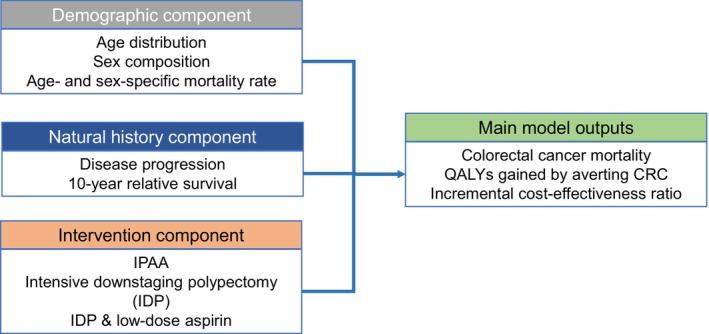
We developed a microsimulation model that simulates a hypothetical cohort of the Japanese population with FAP for 40 years. Three scenarios were created based on three intervention strategies for comparison with no intervention, namely intensive downstaging polypectomy (IDP) of colorectal polyps at least 5.0 mm in diameter, IDP combined with low-dose aspirin, and total proctocolectomy with ileal pouch-anal anastomosis (IPAA). Cost-effective strategies were identified using a willingness-to-pay threshold of USD 50,000 per QALY gained.
RESULTS
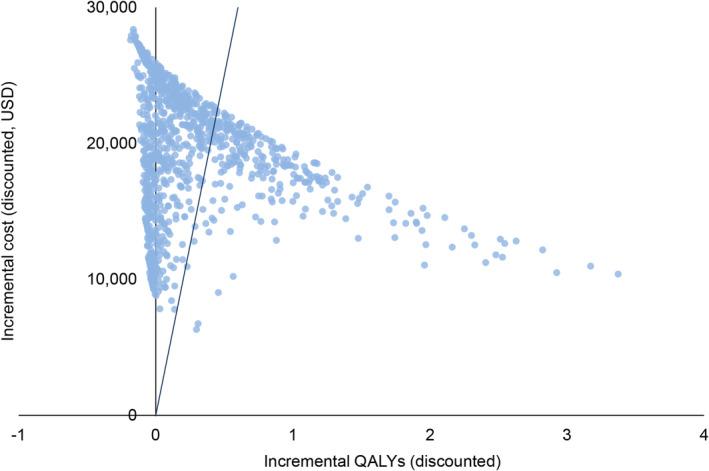
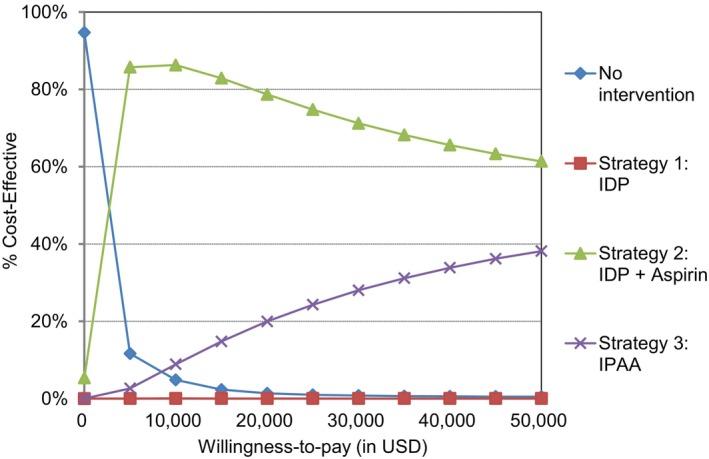
Compared with no intervention, all strategies resulted in extended QALYs (21.01-21.43 QALYs per individual) and showed considerably reduced colorectal cancer mortality (23.35-53.62 CRC deaths per 1000 individuals). Based on the willingness-to-pay threshold, IDP with low-dose aspirin was more cost-effective than the other strategies, with an incremental cost-effectiveness ratio of $57 compared with no preventive intervention. These findings were confirmed in both one-way sensitivity analyses and probabilistic sensitivity analyses.
CONCLUSION
This study suggests that the strategy of low-dose aspirin with IDP may be cost-effective compared with IDP-only or IPAA under the national fee schedule of Japan.
目的
尽管越来越多的证据表明在普通人群中使用阿司匹林预防结直肠癌(CRC)具有成本效益,但尚无研究评估家族性腺瘤性息肉病(FAP)患者预防使用低剂量阿司匹林的成本效益,这些患者发生 CRC 的风险很高。我们研究了与目前的治疗实践相比,对接受息肉切除术的 FAP 患者预防性使用低剂量阿司匹林的成本效益。
设计
我们开发了一个微模拟模型,该模型模拟了具有 FAP 的日本人群的假设队列 40 年。根据三种干预策略创建了三种情景,以与无干预进行比较,即至少 5.0mm 直径的结直肠息肉的强化降期息肉切除术(IDP)、IDP 联合低剂量阿司匹林和全直肠结肠切除术联合回肠袋肛管吻合术(IPAA)。使用每获得一个质量调整生命年(QALY)愿意支付 50000 美元的意愿支付阈值来确定具有成本效益的策略。
结果
与无干预相比,所有策略均延长了 QALY(个体 21.01-21.43 QALY),并显著降低了结直肠癌死亡率(每 1000 人中有 23.35-53.62 例 CRC 死亡)。根据意愿支付阈值,IDP 联合低剂量阿司匹林比其他策略更具成本效益,与无预防性干预相比,增量成本效益比为 57 美元。这些发现得到了单向敏感性分析和概率敏感性分析的证实。
结论
本研究表明,与 IDP 单独或 IPAA 相比,在日本国家费用表下,IDP 联合低剂量阿司匹林可能具有成本效益。


 Zotero 插件