
DNA 和组蛋白会损害葡萄球菌凝固酶形成的纤维蛋白的机械稳定性和溶酶体易感性。
DNA and histones impair the mechanical stability and lytic susceptibility of fibrin formed by staphylocoagulase.
机构信息
Institute of Biochemistry and Molecular Biology, Department of Biochemistry, Semmelweis University, Budapest, Hungary.
Plasma Chemistry Research Group, Institute of Materials and Environmental Chemistry, Research Centre for Natural Sciences, Budapest, Hungary.
出版信息
Front Immunol. 2023 Aug 17;14:1233128. doi: 10.3389/fimmu.2023.1233128. eCollection 2023.
BACKGROUND
Staphylocoagulase (SCG) is a virulence factor of , one of the most lethal pathogens of our times. The complex of SCG with prothrombin (SCG/ProT) can clot fibrinogen, and SCG/ProT-induced fibrin and plasma clots have been described to show decreased mechanical and lytic resistance, which may contribute to septic emboli from infected cardiac vegetations. At infection sites, neutrophils can release DNA and histones, as parts of neutrophil extracellular traps (NETs), which in turn favor thrombosis, inhibit fibrinolysis and strengthen clot structure.
OBJECTIVES
To characterize the combined effects of major NET-components (DNA, histone H1 and H3) on SCG/ProT-induced clot structure, mechanical and lytic stability.
METHODS
Recombinant SCG was used to clot purified fibrinogen and plasma. The kinetics of formation and lysis of fibrin and plasma clots containing H1 or core histones+/-DNA were followed by turbidimetry. Fibrin structure and mechanical stability were characterized with scanning electron microscopy, pressure-driven permeation, and oscillation rheometry.
RESULTS
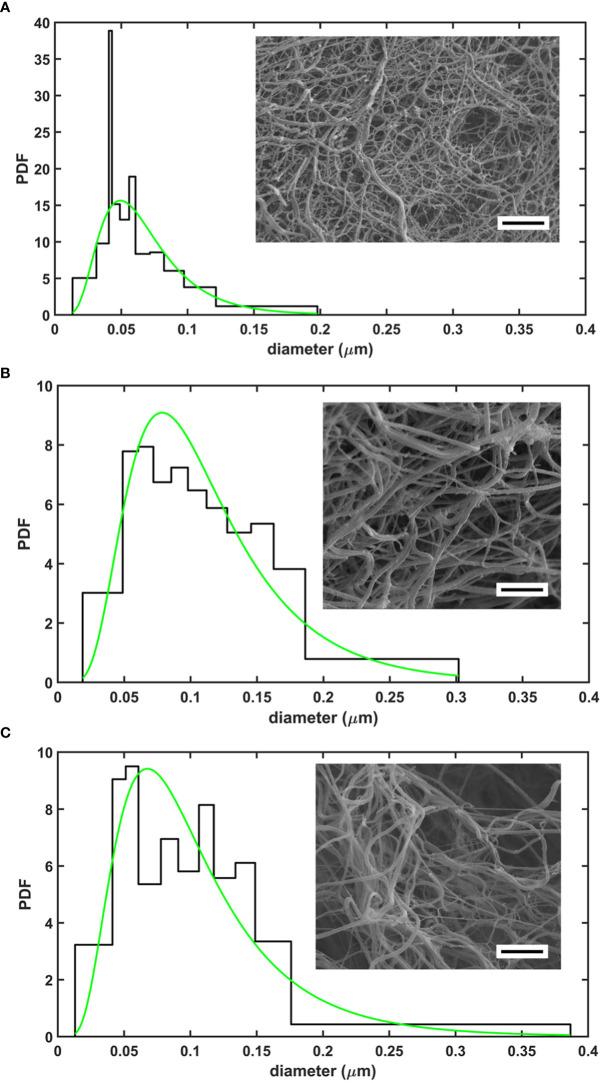
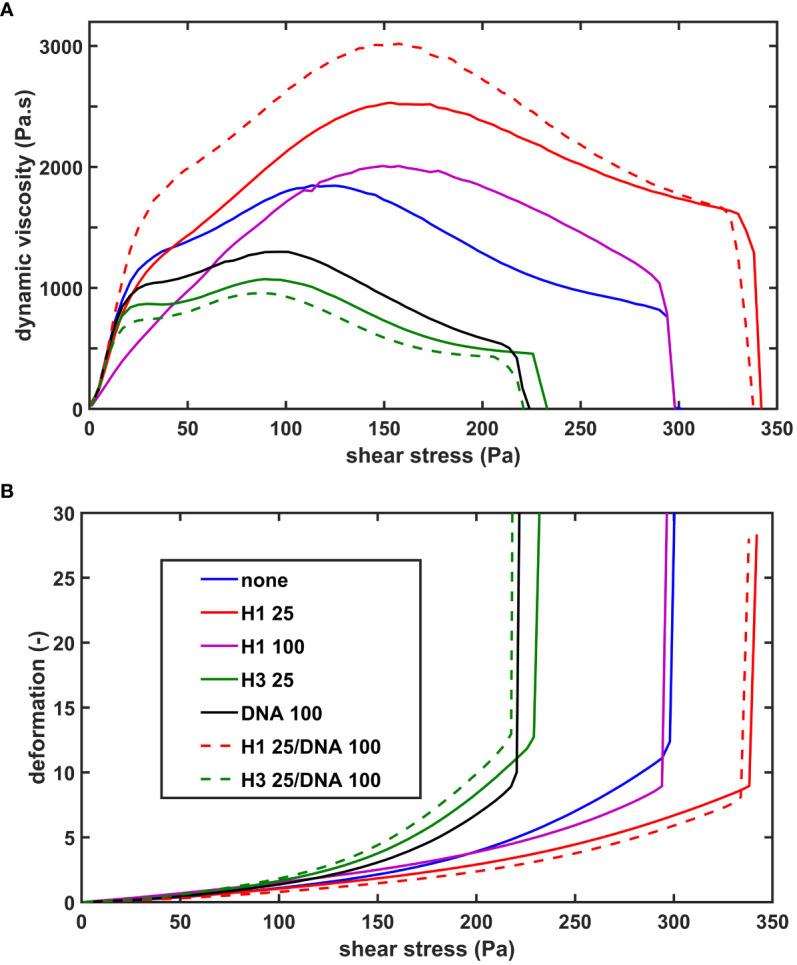
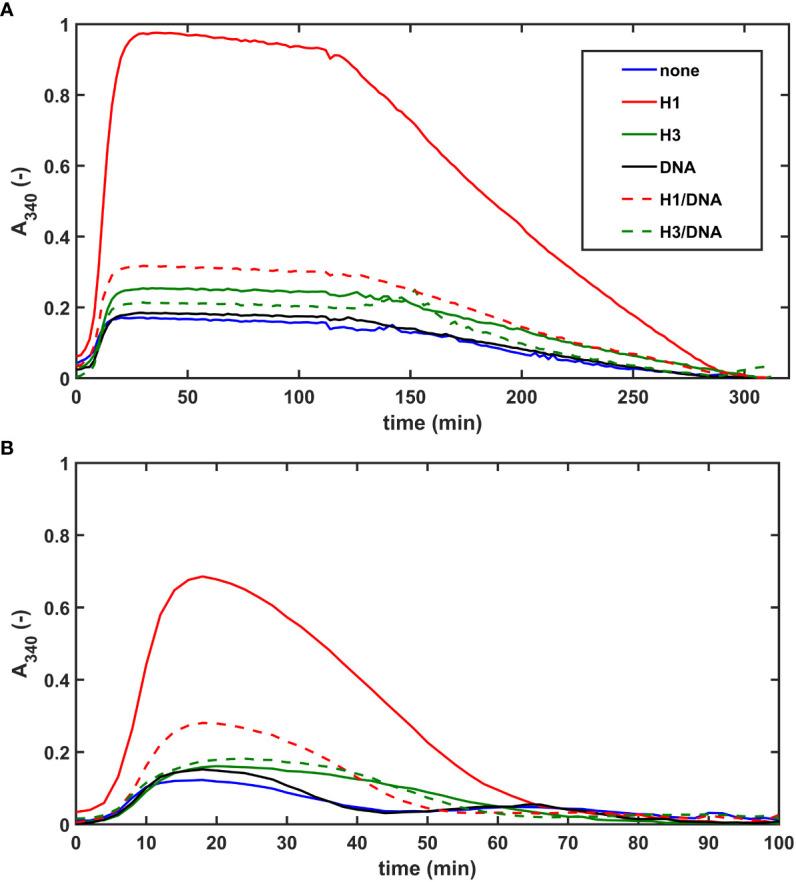
Histones and DNA favored the formation of thicker fibrin fibers and a more heterogeneous clot structure including high porosity with H1 histone, whereas low porosity with core histones and DNA. As opposed to previous observations with thrombin-induced clots, SCG/ProT-induced fibrin was not mechanically stabilized by histones. Similarly to thrombin-induced clots, the DNA-histone complexes prolonged fibrinolysis with tissue-type plasminogen activator (up to 2-fold). The anti-fibrinolytic effect of the DNA and DNA-H3 complex was observed in plasma clots too. Heparin (low molecular weight) accelerated the lysis of SCG/ProT-clots from plasma, even if DNA and histones were also present.
CONCLUSIONS
In the interplay of NETs and fibrin formed by SCG, DNA and histones promote structural heterogeneity in the clots, and fail to stabilize them against mechanical stress. The DNA-histone complexes render the SCG-fibrin more resistant to lysis and thereby less prone to embolization.
背景
凝固酶(SCG)是葡萄球菌的一种毒力因子,也是当今最致命的病原体之一。SCG 与凝血酶原(SCG/ProT)的复合物可以使纤维蛋白原凝结,并且已经描述了 SCG/ProT 诱导的纤维蛋白和血浆凝块显示出机械和溶解稳定性降低,这可能导致感染性心内膜炎的心脏赘生物中的感染性栓子。在感染部位,中性粒细胞可以释放 DNA 和组蛋白,作为中性粒细胞细胞外陷阱(NETs)的一部分,这反过来又有利于血栓形成、抑制纤维蛋白溶解并增强凝块结构。
目的
描述主要 NET 成分(DNA、组蛋白 H1 和 H3)对 SCG/ProT 诱导的凝块结构、机械和溶解稳定性的综合影响。
方法
使用重组 SCG 使纯化的纤维蛋白原和血浆凝结。通过浊度法跟踪 H1 组蛋白或核心组蛋白+/-DNA 存在时纤维蛋白和血浆凝块形成和溶解的动力学。通过扫描电子显微镜、压力驱动渗透和振荡流变学来表征纤维蛋白结构和机械稳定性。
结果
组蛋白和 DNA 有利于形成更厚的纤维蛋白纤维和更不均匀的凝块结构,包括 H1 组蛋白的高孔隙率,而核心组蛋白和 DNA 的孔隙率低。与以前用凝血酶诱导的凝块观察到的情况相反,组蛋白没有使 SCG/ProT 诱导的纤维蛋白机械稳定。与凝血酶诱导的凝块一样,DNA-组蛋白复合物延长了组织型纤溶酶原激活剂(最多 2 倍)诱导的纤维蛋白溶解。DNA 和 DNA-H3 复合物也在血浆凝块中观察到抗纤维蛋白溶解作用。肝素(低分子量)加速了来自血浆的 SCG/ProT 凝块的溶解,即使存在 DNA 和组蛋白也是如此。
结论
在 NETs 和 SCG 形成的纤维蛋白的相互作用中,DNA 和组蛋白促进凝块结构的异质性,并且不能使它们抵抗机械应力。DNA-组蛋白复合物使 SCG 纤维蛋白更能抵抗溶解,从而不易栓塞。

 Zotero 插件