
通过比较蛋白质组学分析确定,VmPacC介导的苹果黑腐皮壳菌pH调节赋予宿主酸化作用。
VmPacC-mediated pH regulation of Valsa mali confers to host acidification identified by comparative proteomics analysis.
作者信息
Xu Liangsheng, Liu Hailong, Zhu Shan, Meng Yangguang, Wang Yinghao, Li Jianyu, Zhang Feiran, Huang Lili
机构信息
State Key Laboratory of Crop Stress Biology for Arid Areas, College of Plant Protection, Northwest A&F University, Yangling, Shaanxi, 712100, China.
出版信息
Stress Biol. 2023 Jun 21;3(1):18. doi: 10.1007/s44154-023-00097-y.
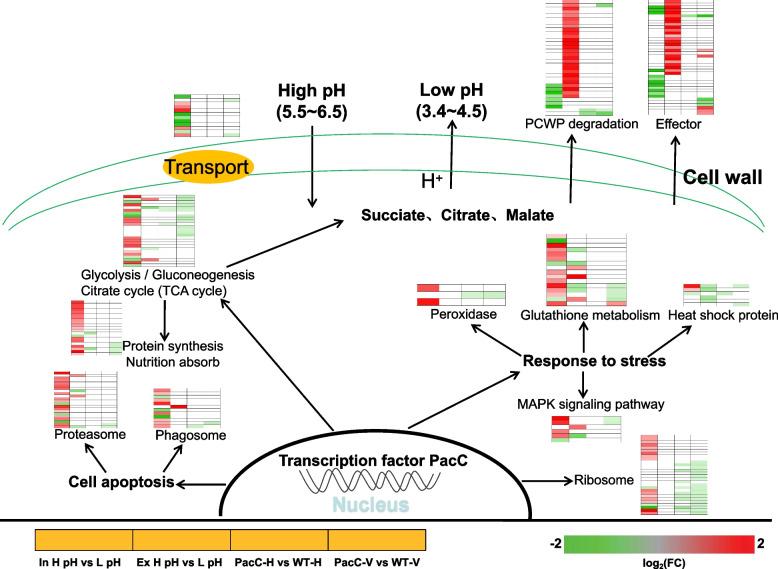
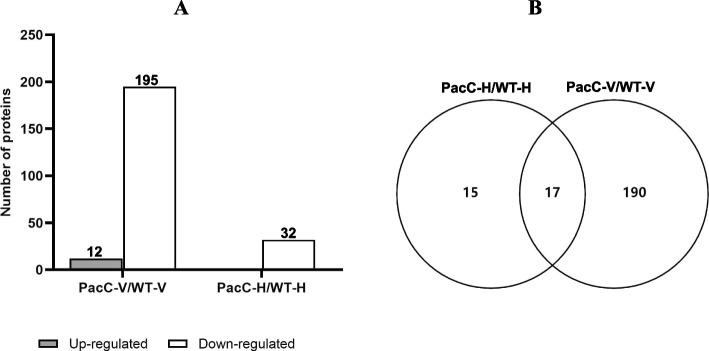
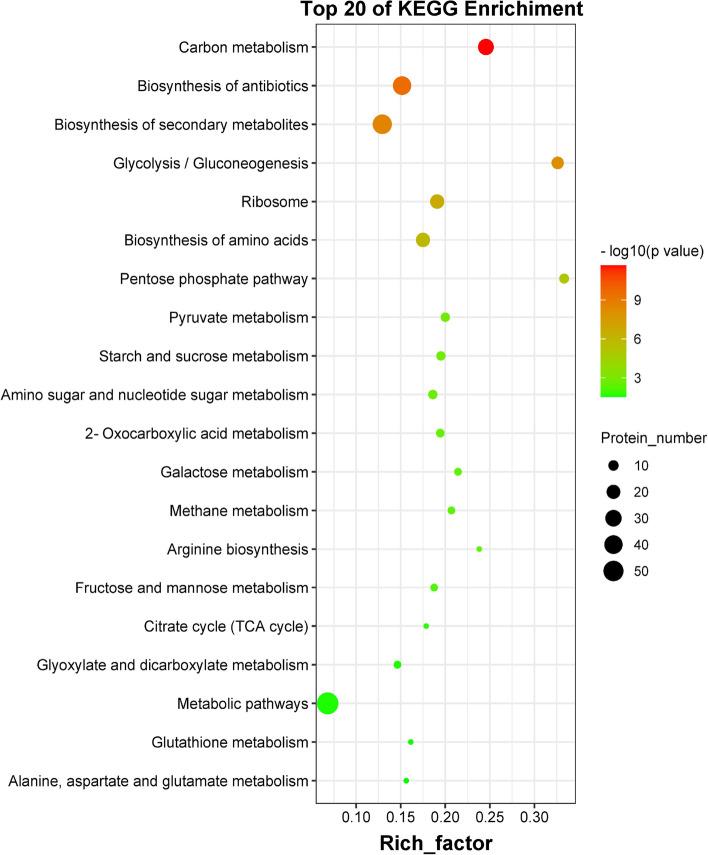
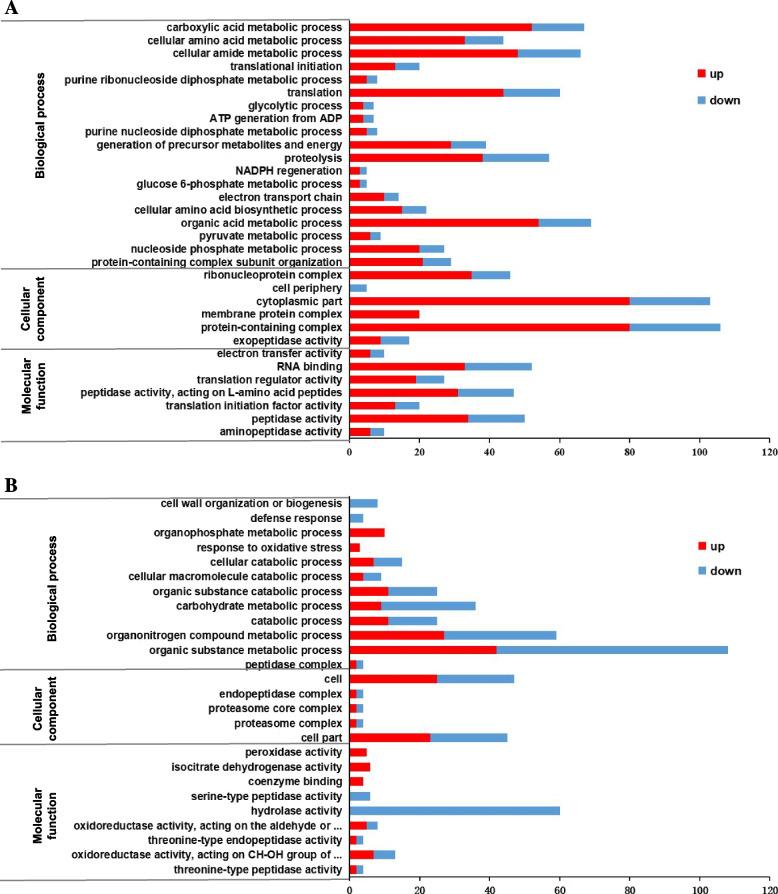
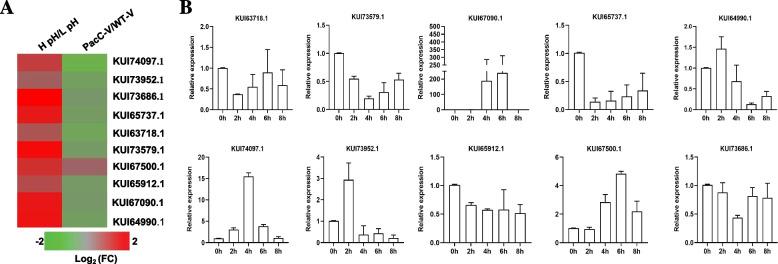
Apple valsa canker caused by the Ascomycete fungus Valsa mali is one of the most serious diseases of apple, resulting in huge economic losses in the apple-growing area of China. Previous study found that the pathogen could acidify the infected tissues to make lower ambient pH (from 6.0 to 3.5) for their successfully colonization. The pH signaling transcription factor VmPacC is required for acidification of its environment and for full virulence in V. mali. It is known that the functional cooperation of proteins secreted by V. mali plays pivotal role in its successful colonization of host plants. In this study, we used tandem mass tag (TMT) labeling coupled with LC-MS/MS-based quantitative proteomics to analyze the VmPacC-mediated pH regulation in V. mali, focusing on differentially expressed proteins (DEPs). We identified 222 DEPs specific to VmPacC deletion, and 921 DEPs specific to different pH conditions (pH 6.0 and 3.4). Gene Ontology (GO) and Kyoto Encyclopedia of Genes and Genomes (KEGG) pathway analyses indicated that these DEPs were mainly involved in pathways associated with carbon metabolism, biosynthesis of antibiotics, citrate cycle (TCA cycle), glycolysis/gluconeogenesis, glutathione metabolism, ribosomes, and pentose phosphate pathways. Additionally, we identified 119 DEPs that were shared among the VmPacC deletion mutant and different pH conditions, which were mainly related to energy metabolism pathways, providing the energy required for the hyphal growth and responses to environmental stresses. A protein-protein interaction (PPI) network analysis indicated that most of the shared proteins were mapped to an interaction network with a medium confidence score of 0.4. Notably, one uncharacterized protein (KUI69106.1), and two known proteins (heat shock protein 60 (KUI73579.1), aspartate aminotransferase (KUI73864.1)) located in the core of the network were highly connected (with ≥ 38 directed edges) with the other shared DEPs. Our results suggest that VmPacC participates in the pathogen's regulation to ambient pH through the regulation of energy metabolism pathways such as the glycolysis/gluconeogenesis pathway and TCA cycle. Finally, we proposed a sophisticated molecular regulatory network to explain pH decrease in V. mali. Our study, by providing insights into V. mali regulating pH, helps to elucidate the mechanisms of host acidification during pathogen infection.
由子囊菌真菌苹果黑腐皮壳菌引起的苹果腐烂病是苹果最严重的病害之一,在中国苹果种植区造成了巨大的经济损失。先前的研究发现,该病原菌能够酸化被感染组织,使周围环境pH值降低(从6.0降至3.5),以成功定殖。pH信号转录因子VmPacC是其环境酸化和苹果黑腐皮壳菌完全致病力所必需的。已知苹果黑腐皮壳菌分泌的蛋白质之间的功能协作在其成功定殖宿主植物中起关键作用。在本研究中,我们使用串联质谱标签(TMT)标记结合基于液相色谱-串联质谱的定量蛋白质组学来分析苹果黑腐皮壳菌中VmPacC介导的pH调节,重点关注差异表达蛋白(DEPs)。我们鉴定出222个特异性针对VmPacC缺失的DEPs,以及921个特异性针对不同pH条件(pH 6.0和3.4)的DEPs。基因本体(GO)和京都基因与基因组百科全书(KEGG)通路分析表明,这些DEPs主要参与与碳代谢、抗生素生物合成、柠檬酸循环(TCA循环)、糖酵解/糖异生、谷胱甘肽代谢、核糖体和磷酸戊糖途径相关的通路。此外,我们鉴定出119个在VmPacC缺失突变体和不同pH条件下共有的DEPs,它们主要与能量代谢途径相关,为菌丝生长和对环境胁迫的反应提供所需能量。蛋白质-蛋白质相互作用(PPI)网络分析表明,大多数共享蛋白被映射到一个置信度评分为0.4的相互作用网络中。值得注意的是,网络核心位置的一个未表征蛋白(KUI69106.1)以及两个已知蛋白(热休克蛋白60(KUI73579.1)、天冬氨酸转氨酶(KUI73864.1))与其他共享的DEPs高度连接(有≥38条有向边)。我们的结果表明,VmPacC通过调节糖酵解/糖异生途径和TCA循环等能量代谢途径参与病原菌对周围环境pH的调节。最后,我们提出了一个复杂的分子调控网络来解释苹果黑腐皮壳菌中pH的降低。我们的研究通过深入了解苹果黑腐皮壳菌对pH的调节,有助于阐明病原菌感染期间宿主酸化的机制。




 Zotero 插件