
玉米发育过程中质体DNA和线粒体DNA中的核糖核苷酸与R环损伤
Ribonucleotide and R-Loop Damage in Plastid DNA and Mitochondrial DNA during Maize Development.
作者信息
Tripathi Diwaker, Oldenburg Delene J, Bendich Arnold J
机构信息
Department of Biology, University of Washington, Seattle, WA 98195, USA.
出版信息
Plants (Basel). 2023 Sep 2;12(17):3161. doi: 10.3390/plants12173161.
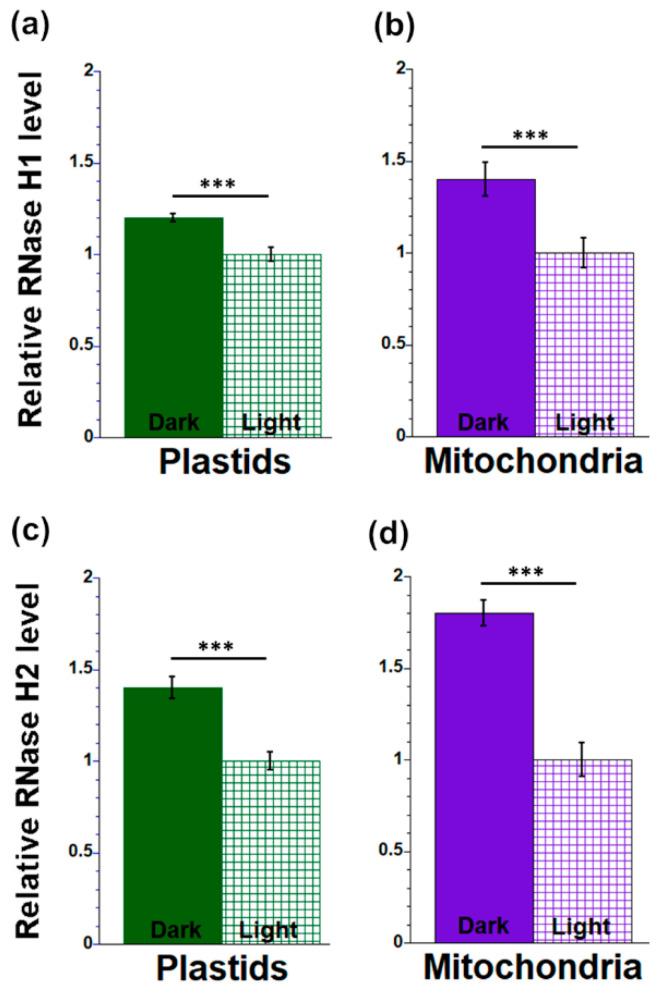
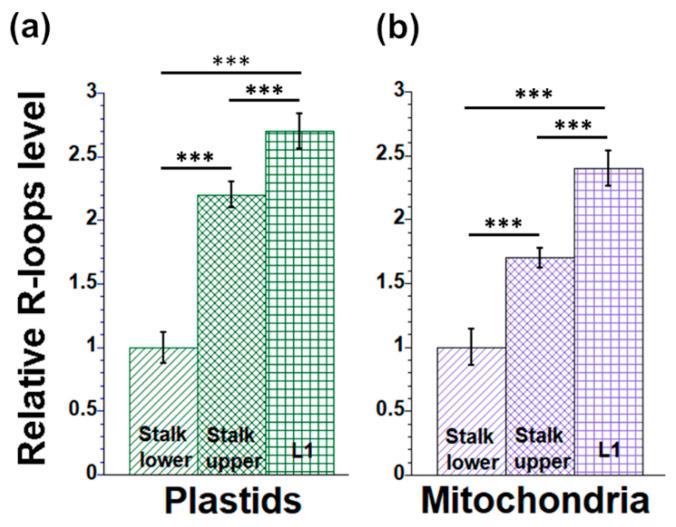
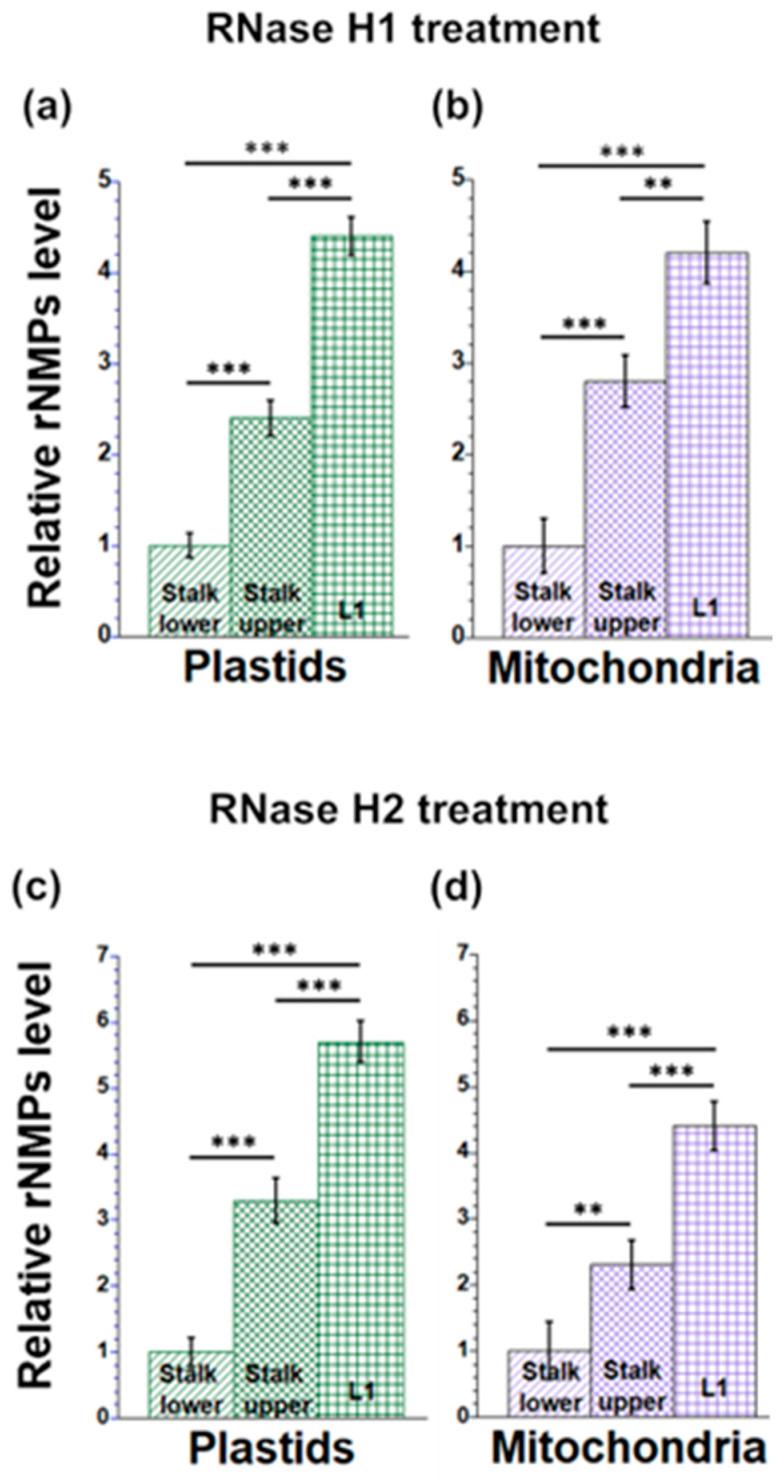
Although the temporary presence of ribonucleotides in DNA is normal, their persistence represents a form of DNA damage. Here, we assess such damage and damage defense to DNA in plastids and mitochondria of maize. Shoot development proceeds from meristematic, non-pigmented cells containing proplastids and promitochondria at the leaf base to non-dividing green cells in the leaf blade containing mature organelles. The organellar DNAs (orgDNAs) become fragmented during this transition. Previously, orgDNA damage and damage defense of two types, oxidative and glycation, was described in maize, and now a third type, ribonucleotide damage, is reported. We hypothesized that ribonucleotide damage changes during leaf development and could contribute to the demise of orgDNAs. The levels of ribonucleotides and R-loops in orgDNAs and of RNase H proteins in organelles were measured throughout leaf development and in leaves grown in light and dark conditions. The data reveal that ribonucleotide damage to orgDNAs increased by about 2- to 5-fold during normal maize development from basal meristem to green leaf and when leaves were grown in normal light conditions compared to in the dark. During this developmental transition, the levels of the major agent of defense, RNase H, declined. The decline in organellar genome integrity during maize development may be attributed to oxidative, glycation, and ribonucleotide damages that are not repaired.
尽管核糖核苷酸在DNA中的短暂存在是正常的,但它们的持续存在代表了一种DNA损伤形式。在此,我们评估玉米质体和线粒体中DNA的这种损伤及损伤防御机制。茎尖发育从叶基部含有原质体和原线粒体的分生、无色素细胞开始,到叶片中含有成熟细胞器的非分裂绿色细胞。在此转变过程中,细胞器DNA(orgDNA)会发生片段化。此前,已在玉米中描述了两种类型的orgDNA损伤及损伤防御机制,即氧化损伤和糖基化损伤,现在我们报道了第三种类型,即核糖核苷酸损伤。我们推测核糖核苷酸损伤在叶片发育过程中会发生变化,并且可能导致orgDNA的消亡。在整个叶片发育过程中以及在光照和黑暗条件下生长的叶片中,我们测量了orgDNA中的核糖核苷酸和R环水平以及细胞器中RNase H蛋白的水平。数据显示,在正常玉米从基部分生组织发育到绿叶的过程中,以及与黑暗条件下生长的叶片相比,在正常光照条件下生长的叶片中,orgDNA的核糖核苷酸损伤增加了约2至5倍。在这个发育转变过程中,主要防御因子RNase H的水平下降。玉米发育过程中细胞器基因组完整性的下降可能归因于未得到修复的氧化损伤、糖基化损伤和核糖核苷酸损伤。



 Zotero 插件