
中国动态清零 COVID-19 策略调整后疫苗接种和突破性感染评估:一项在线调查。
Assessment of vaccinations and breakthrough infections after adjustment of the dynamic zero-COVID-19 strategy in China: an online survey.
机构信息
Institute of Pediatrics, Shenzhen Children's Hospital, Shenzhen, People's Republic of China.
CAS Key Laboratory of Pathogen Microbiology and Immunology, Institute of Microbiology, Chinese Academy of Sciences (CAS), Beijing, People's Republic of China.
出版信息
Emerg Microbes Infect. 2023 Dec;12(2):2258232. doi: 10.1080/22221751.2023.2258232. Epub 2023 Sep 11.
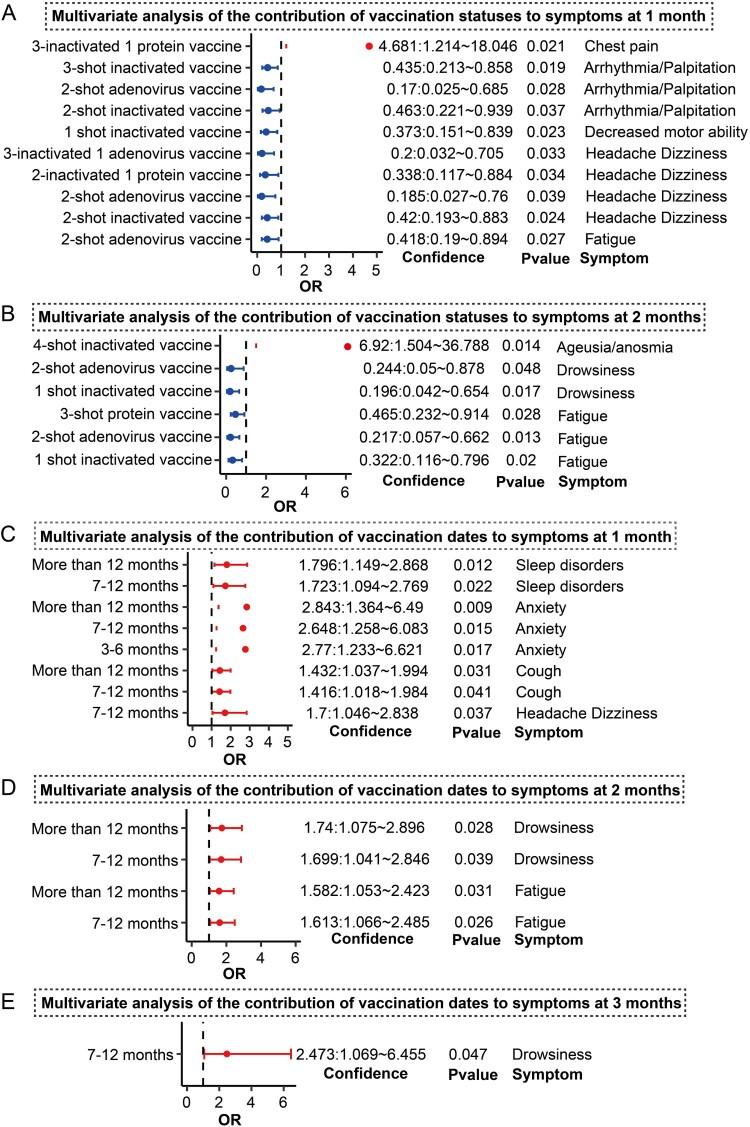
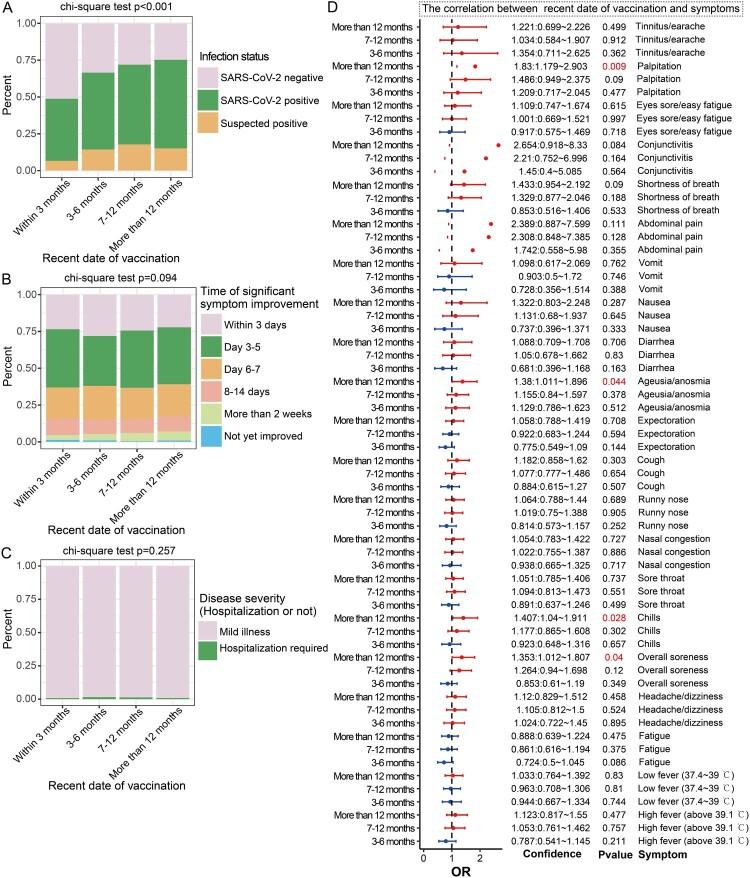
Coronavirus disease 2019 (COVID-19) cases in China has grown rapidly after adjustment of the dynamic zero-COVID-19 strategy. However, how different vaccination states affect symptoms, severity and post COVID conditions was unclear. Here, we used an online questionnaire to investigate the infection status of severe acute respiratory syndrome coronavirus 2 (SARS-CoV-2) among 11,897 participants, with 55.55% positive and 28.42% negative. The common COVID-19 symptoms were fatigue (73.31%), cough (70.02%), fever (65.25%) and overall soreness (58.64%); self-reported asymptomatic infection accounted for 0.7% of participants. The persistent symptoms at 1 month after infection included fatigue (48.7%), drowsiness (34.3%), cough (30.1%), decreased exercise ability (23.1%) and pharyngeal discomfort (19.4%), which was reduced by more than 200% at 2 months. Participants with complications such as chronic obstructive pulmonary disease, respiratory diseases, diabetes, hypertension, etc. have a higher proportion of hospitalization and longer recovery time (< = 0.01). Multiple vaccination statuses reduced the infection ( < 0.001) and severity rates ( = 0.022) by varying degrees as well as reduced the risk of high fever (>39.1 °C), chills, diarrhea and ageusia/anosmia, respectively ( < 0.05). Vaccination may enhance some upper respiratory symptoms, including sore throat, nasal congestion and runny nose, respectively ( < 0.05). Participants who had been vaccinated within 3 months were better protected by helping reduce their risk of overall soreness, chills and ageusia/anosmia, respectively ( < 0.05). In conclusion, our work has updated the epidemic characteristics of the breakthrough infection (BTI) wave after the dynamic zero-COVID-19 strategy, providing data and insights on how different vaccination statuses affect COVID-19 symptoms and disease prognosis.
新型冠状病毒病 2019(COVID-19)病例在中国动态零新冠病毒-19 策略调整后迅速增加。然而,不同的疫苗接种状态如何影响症状、严重程度和新冠后状况尚不清楚。在这里,我们使用在线问卷调查了 11897 名参与者中严重急性呼吸综合征冠状病毒 2(SARS-CoV-2)的感染状况,其中 55.55%呈阳性,28.42%呈阴性。COVID-19 的常见症状包括疲劳(73.31%)、咳嗽(70.02%)、发热(65.25%)和全身酸痛(58.64%);自报告无症状感染占参与者的 0.7%。感染后 1 个月持续存在的症状包括疲劳(48.7%)、嗜睡(34.3%)、咳嗽(30.1%)、运动能力下降(23.1%)和咽部不适(19.4%),2 个月后下降了 200%以上。患有慢性阻塞性肺疾病、呼吸道疾病、糖尿病、高血压等并发症的患者住院比例和康复时间较长(<=0.01)。多种疫苗接种状态不同程度地降低了感染(<=0.001)和严重程度(=0.022)的发生率,并降低了高热(>39.1°C)、寒战、腹泻和味觉丧失/嗅觉丧失的风险(<=0.05)。接种疫苗分别可增强咽痛、鼻塞和流涕等上呼吸道症状(<=0.05)。接种疫苗后 3 个月内的参与者,全身酸痛、寒战和味觉丧失/嗅觉丧失的风险分别降低(<=0.05),保护效果更好。综上所述,我们的工作更新了动态零新冠病毒-19 策略后突破感染(BTI)波的流行特征,提供了不同疫苗接种状态如何影响 COVID-19 症状和疾病预后的数据和见解。



 Zotero 插件