
过氧化物酶体增殖物激活受体作为癌症的治疗靶点。
Peroxisome proliferator-activated receptors as therapeutic target for cancer.
机构信息
Department of Internal Medicine, Montefiore Medical Center, Wakefield Campus, Bronx, New York, USA.
Department of Infectious Disease, Lab of Liver Disease, Renmin Hospital, Hubei University of Medicine, Shiyan, China.
出版信息
J Cell Mol Med. 2024 Mar;28(5):e17931. doi: 10.1111/jcmm.17931. Epub 2023 Sep 12.
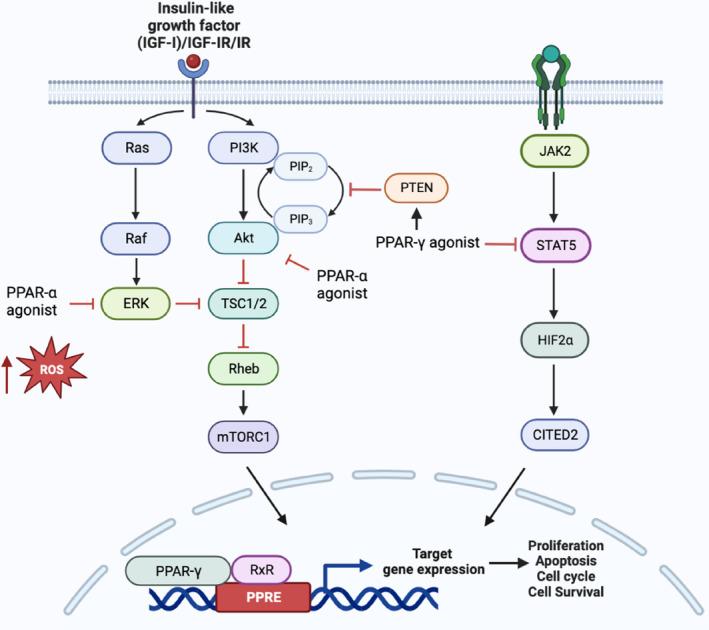
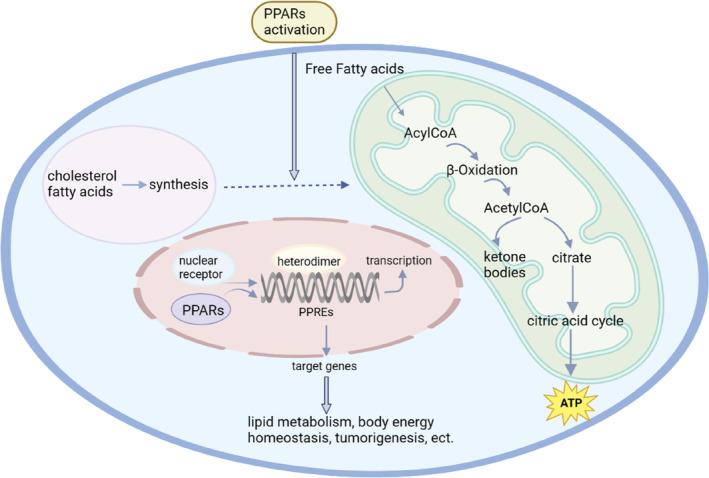
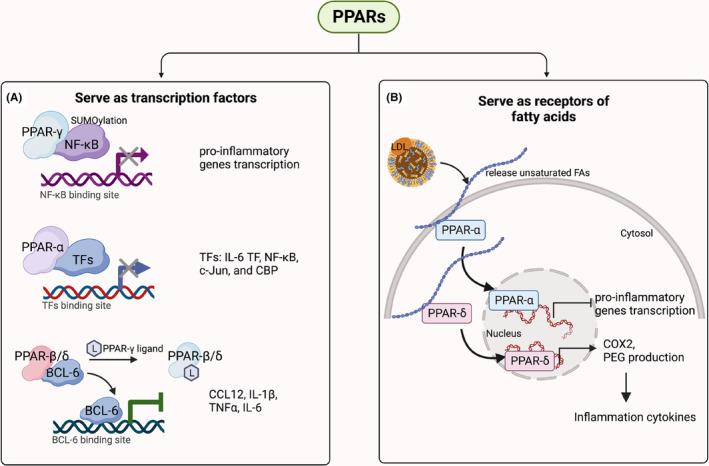
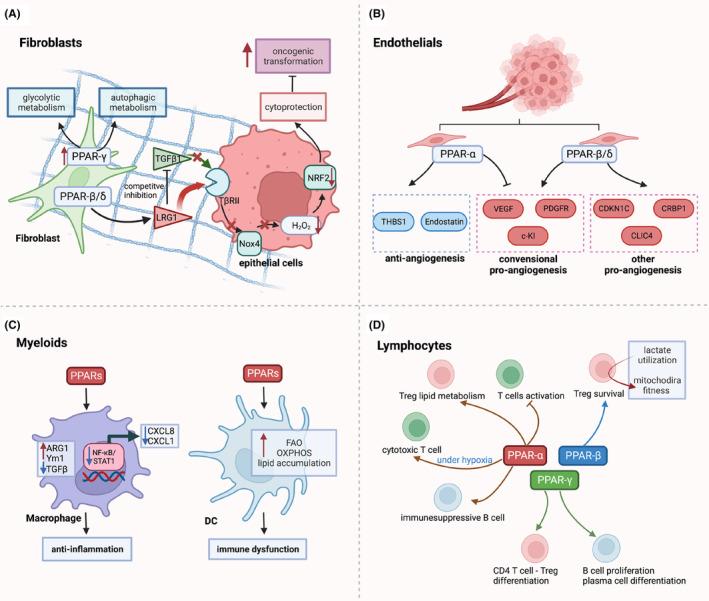
Peroxisome proliferator-activated receptors (PPARs) are transcription factors belonging to the nuclear receptor family. There are three subtypes of PPARs, including PPAR-α, PPAR-β/δ and PPAR-γ. They are expressed in different tissues and act by regulating the expression of target genes in the form of binding to ligands. Various subtypes of PPAR have been shown to have significant roles in a wide range of biological processes including lipid metabolism, body energy homeostasis, cell proliferation and differentiation, bone formation, tissue repair and remodelling. Recent studies have found that PPARs are closely related to tumours. They are involved in cancer cell growth, angiogenesis and tumour immune response, and are essential components in tumour progression and metastasis. As such, they have become a target for cancer therapy research. In this review, we discussed the current state of knowledge on the involvement of PPARs in cancer, including their role in tumourigenesis, the impact of PPARs in tumour microenvironment and the potential of using PPARs combinational therapy to treat cancer by targeting essential signal pathways, or as adjuvants to boost the effects of current chemo and immunotherapies. Our review highlights the complexity of PPARs in cancer and the need for a better understanding of the mechanism in order to design effective cancer therapies.
过氧化物酶体增殖物激活受体(PPARs)是核受体家族的转录因子。有三种亚型的 PPAR,包括 PPAR-α、PPAR-β/δ 和 PPAR-γ。它们在不同的组织中表达,并通过与配体结合以调节靶基因的表达来发挥作用。各种亚型的 PPAR 在广泛的生物学过程中具有重要作用,包括脂质代谢、身体能量稳态、细胞增殖和分化、骨形成、组织修复和重塑。最近的研究发现,PPARs 与肿瘤密切相关。它们参与癌细胞生长、血管生成和肿瘤免疫反应,是肿瘤进展和转移的重要组成部分。因此,它们已成为癌症治疗研究的靶点。在这篇综述中,我们讨论了 PPARs 参与癌症的最新知识状况,包括它们在肿瘤发生中的作用、PPARs 在肿瘤微环境中的影响以及通过靶向关键信号通路或作为辅助药物来增强当前化疗和免疫治疗效果来使用 PPARs 联合治疗癌症的潜力。我们的综述强调了 PPARs 在癌症中的复杂性,需要更好地了解其机制,以便设计有效的癌症治疗方法。

 Zotero 插件