
呼吸道合胞病毒:大流行后毛细支气管炎不再是公共卫生的重大问题,我们还能相信这一点吗?
Respiratory syncytial virus: can we still believe that after pandemic bronchiolitis is not a critical issue for public health?
机构信息
Emergency, Acceptance and General Pediatrics Department, Bambino Gesù Children's Hospital IRCCS, Piazza Sant'Onofrio 4-00165, Rome, Italy.
Microbiology and Diagnostic Immunology Unit, Bambino Gesù Childrens Hospital, IRCCS, Rome, Italy.
出版信息
Eur J Pediatr. 2023 Dec;182(12):5303-5313. doi: 10.1007/s00431-023-05201-y. Epub 2023 Sep 20.
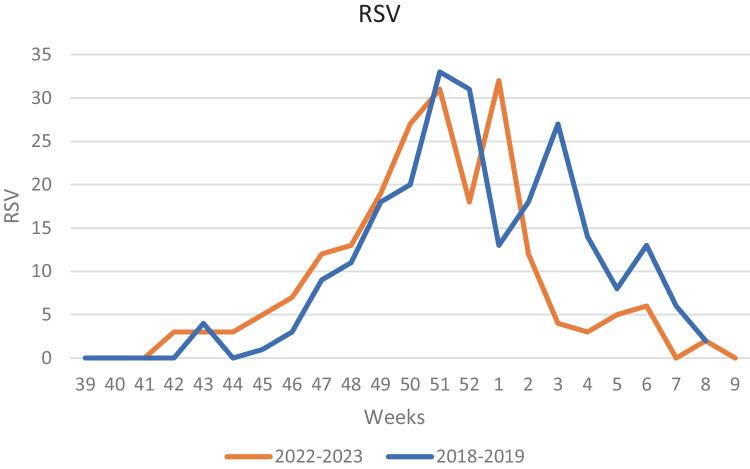
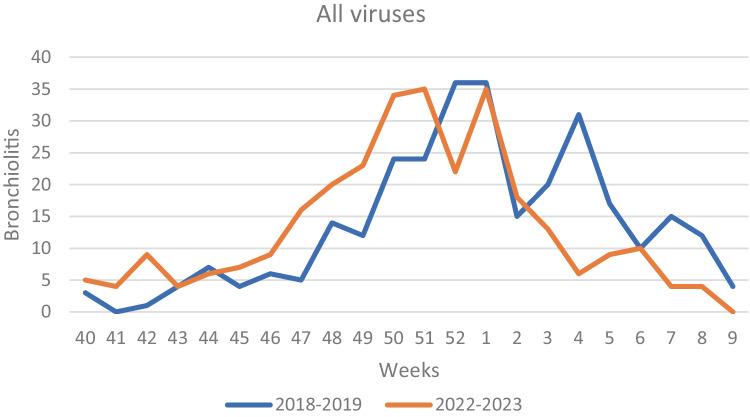
Respiratory syncytial virus (RSV) is the leading cause of lower respiratory tract infection among infants and young children, resulting in annual epidemics worldwide. Since the beginning of the COVID-19 pandemic, non-pharmacological interventions were applied, interfering with the circulation of most respiratory viruses, including RSV. The aim of this study is to analyze the RSV infection trend among hospitalized infants during the actual epidemic season (2022-2023) in comparison with the last pre-pandemic season (2018-2019), in order to outline whether significant differences emerge due to COVID-19 pandemia. We retrospectively reviewed medical data on infants hospitalized at the Bambino Gesù Children's Hospital with diagnosis of bronchiolitis in the current epidemic season and in the last pre-pandemic season, 2018-2019. RSV remains the main etiological agent of bronchiolitis in terms of frequency and severity of infections in the ongoing epidemic season. The first RSV case of the 2022-2023 season was detected at week 42 vs week 47 in the 2018-2019 season. The length of epidemic season was of 17 weeks in 2022-2023 vs 18 weeks in 2018-2019. Comparing the two seasons, age at admission was significantly higher in the current season (median age 2022-2023 65 days vs median age 2018-2019 58 days), but the disease severity was similar. Conclusions: The 2022-2023 bronchiolitis season in Italy started earlier than the usual pre-pandemic seasons but seasonality pattern may be going back to the pre-pandemic one. This season was not more severe than the previous ones. The impact of RSV disease on health care systems and costs remains a critical issue. What is Known: • RSV is one of the major leading causes of hospitalization among children aged less than 3 months. SarsCOV2 pandemic interfered with the seasonal circulation of most respiratory viruses, Including RSV. What is New: • The 2022-2023 bronchiolitis season in Italy started and peaked earlier than the usual pre-pandemic seasons but seasonality pattern may be realigning to the pre-pandemic one. The impact of RSV disease on health care systems and costs is concerning.
呼吸道合胞病毒(RSV)是导致婴儿和幼儿下呼吸道感染的主要原因,在全球范围内每年都会引发流行。自 COVID-19 大流行开始以来,已采取非药物干预措施,这干扰了包括 RSV 在内的大多数呼吸道病毒的传播。本研究旨在分析实际流行季节(2022-2023 年)与上一个大流行前季节(2018-2019 年)期间住院婴儿的 RSV 感染趋势,以概述 COVID-19 大流行是否会产生显著差异。我们回顾性分析了当前流行季节(2022-2023 年)和上一个大流行前季节(2018-2019 年)在 Bambino Gesù 儿童医院因毛细支气管炎住院的婴儿的医疗数据。在当前流行季节,RSV 仍然是毛细支气管炎的主要病因,其感染的频率和严重程度都很高。2022-2023 年季节的首例 RSV 病例发生在第 42 周,而 2018-2019 年则发生在第 47 周。2022-2023 年的流行季节持续了 17 周,而 2018-2019 年则持续了 18 周。与两个季节相比,当前季节的入院年龄明显更高(中位数年龄 2022-2023 年为 65 天,中位数年龄 2018-2019 年为 58 天),但疾病严重程度相似。结论:意大利 2022-2023 年毛细支气管炎季节比往常的大流行前季节开始得更早,但季节性模式可能正在回归到大流行前的模式。本季节的严重程度不比以前的季节严重。RSV 疾病对医疗保健系统和成本的影响仍然是一个关键问题。已知信息:• RSV 是导致 3 个月以下儿童住院的主要原因之一。SarsCOV2 大流行干扰了大多数呼吸道病毒的季节性流行,包括 RSV。新信息:• 意大利 2022-2023 年毛细支气管炎季节比往常的大流行前季节开始得更早,达到高峰的时间也更早,但季节性模式可能正在回归到大流行前的模式。RSV 疾病对医疗保健系统和成本的影响令人担忧。


 Zotero 插件