
SARS-CoV-2 感染及其管理策略概述:最新进展。
A brief overview of SARS-CoV-2 infection and its management strategies: a recent update.
机构信息
Faculty of Allied Health Sciences, Chettinad Hospital and Research Institute (CHRI), Chettinad Academy of Research and Education (CARE), Kelambakkam, Chennai, Tamil Nadu, 603103, India.
Department of Nutrition, Faculty of Medicine, Institute of Basic Medical Sciences, University of Oslo, Oslo, Norway.
出版信息
Mol Cell Biochem. 2024 Sep;479(9):2195-2215. doi: 10.1007/s11010-023-04848-3. Epub 2023 Sep 24.
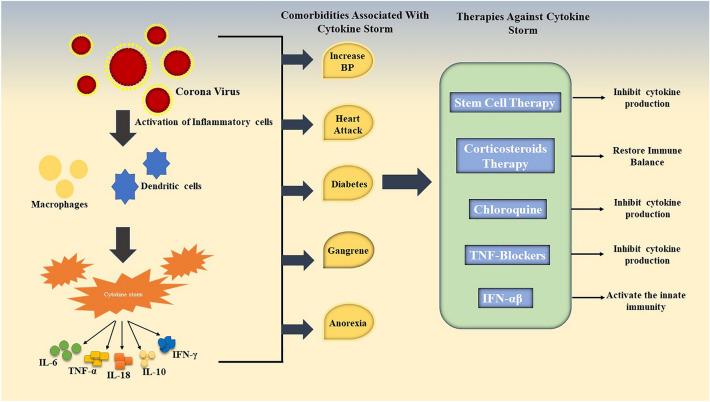
The COVID-19 pandemic has become a global health crisis, inflicting substantial morbidity and mortality worldwide. A diverse range of symptoms, including fever, cough, dyspnea, and fatigue, characterizes COVID-19. A cytokine surge can exacerbate the disease's severity. This phenomenon involves an increased immune response, marked by the excessive release of inflammatory cytokines like IL-6, IL-8, TNF-α, and IFNγ, leading to tissue damage and organ dysfunction. Efforts to reduce the cytokine surge and its associated complications have garnered significant attention. Standardized management protocols have incorporated treatment strategies, with corticosteroids, chloroquine, and intravenous immunoglobulin taking the forefront. The recent therapeutic intervention has also assisted in novel strategies like repurposing existing medications and the utilization of in vitro drug screening methods to choose effective molecules against viral infections. Beyond acute management, the significance of comprehensive post-COVID-19 management strategies, like remedial measures including nutritional guidance, multidisciplinary care, and follow-up, has become increasingly evident. As the understanding of COVID-19 pathogenesis deepens, it is becoming increasingly evident that a tailored approach to therapy is imperative. This review focuses on effective treatment measures aimed at mitigating COVID-19 severity and highlights the significance of comprehensive COVID-19 management strategies that show promise in the battle against COVID-19.
COVID-19 大流行已成为全球卫生危机,在全球范围内造成了大量发病率和死亡率。COVID-19 的特征是出现各种症状,包括发热、咳嗽、呼吸困难和疲劳。细胞因子激增会使疾病恶化。这种现象涉及免疫反应增强,表现为炎症细胞因子如 IL-6、IL-8、TNF-α 和 IFNγ 的过度释放,导致组织损伤和器官功能障碍。降低细胞因子激增及其相关并发症的努力引起了广泛关注。标准化管理方案纳入了治疗策略,皮质类固醇、氯喹和静脉注射免疫球蛋白成为主要治疗方法。最近的治疗干预措施还辅助了新的策略,如重新利用现有药物和利用体外药物筛选方法选择针对病毒感染的有效分子。除了急性管理,综合 COVID-19 后管理策略的重要性,如补救措施,包括营养指导、多学科护理和随访,变得越来越明显。随着对 COVID-19 发病机制的深入了解,很明显,针对治疗的个体化方法至关重要。这篇综述重点介绍了旨在减轻 COVID-19 严重程度的有效治疗措施,并强调了综合 COVID-19 管理策略的重要性,这些策略在对抗 COVID-19 方面显示出了希望。


 Zotero 插件