
不同饲养方式对新生犊牛回肠发育、消化能力及健康状况的影响。
The effects of differential feeding on ileum development, digestive ability and health status of newborn calves.
作者信息
Wang Jie, Chen Yang, Li Mianying, Xia Siqi, Zhao Kaisen, Fan Huimei, Ni Jiale, Sun Wenqiang, Jia Xianbo, Lai Songjia
机构信息
College of Animal Science and Technology, Sichuan Agricultural University, Chengdu, China.
出版信息
Front Vet Sci. 2023 Sep 8;10:1255122. doi: 10.3389/fvets.2023.1255122. eCollection 2023.
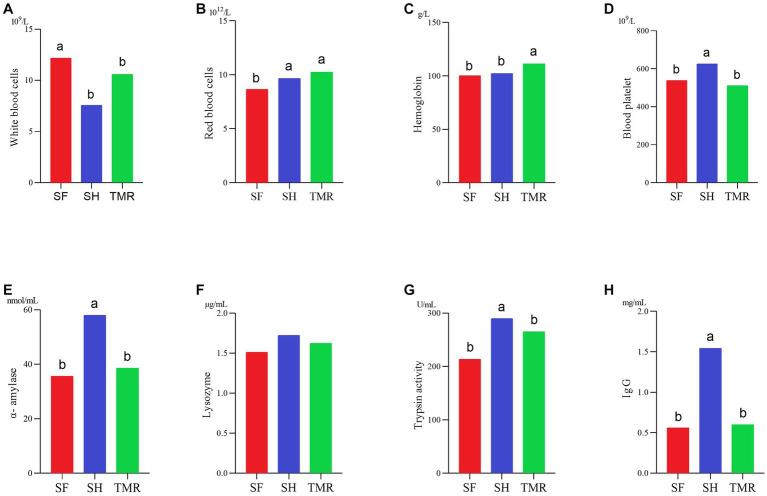
Pre-weaning is the most important period for the growth and development of calves. Intestinal morphology, microbial community and immunity are initially constructed at this stage, and even have a lifelong impact on calves. Early feeding patterns have a significant impact on gastrointestinal development and microbial communities. This study mainly analyzed the effects of three feeding methods on the gastrointestinal development of calves, and provided a theoretical basis for further improving the feeding mode of calves. it is very important to develop a suitable feeding mode. In this study, we selected nine newborn healthy Holstein bull calves were randomly selected and divided into three groups ( = 3), which were fed with starter + hay + milk (SH group), starter + milk (SF group), total mixed ration + milk (TMR group). After 80 days of feeding Feeding to 80 days of age after, the ileum contents and blood samples were collected, and the differences were compared and analyzed by metagenomic analysis and serum metabolomics analysis. Results show that compared with the other two groups, the intestinal epithelium of the SH group was more complete and the goblet cells developed better. The feeding method of SH group was more conducive to the development of calves, with higher daily gain and no pathological inflammatory reaction. The intestinal microbial community was more conducive to digestion and absorption, and the immunity was stronger. These findings are helpful for us to explore better calf feeding patterns. In the next step, we will set up more biological replicates to study the deep-seated reasons for the differences in the development of pre-weaning calves. At the same time, the new discoveries of neuro microbiology broaden our horizons and are the focus of our future attention.
断奶前是犊牛生长发育的最重要时期。肠道形态、微生物群落和免疫力在这个阶段初步构建,甚至对犊牛产生终身影响。早期喂养模式对胃肠道发育和微生物群落有显著影响。本研究主要分析了三种喂养方式对犊牛胃肠道发育的影响,为进一步改进犊牛喂养模式提供理论依据。制定合适的喂养模式非常重要。在本研究中,我们随机选取了9头新生健康荷斯坦公牛犊,分为三组(每组n = 3),分别采用开食料+干草+牛奶(SH组)、开食料+牛奶(SF组)、全混合日粮+牛奶(TMR组)进行喂养。喂养至80日龄后,采集回肠内容物和血液样本,通过宏基因组分析和血清代谢组学分析进行差异比较和分析。结果表明,与其他两组相比,SH组的肠上皮更完整,杯状细胞发育更好。SH组的喂养方式更有利于犊牛的发育,日增重更高且无病理性炎症反应。肠道微生物群落更有利于消化吸收,免疫力更强。这些发现有助于我们探索更好的犊牛喂养模式。下一步,我们将设置更多生物学重复来研究断奶前犊牛发育差异的深层次原因。同时,神经微生物学的新发现拓宽了我们的视野,是我们未来关注的重点。
 Zotero 插件