
全基因组范围内对……中基因家族的鉴定与分析
Genome-Wide Identification and Analysis of the Gene Family in .
作者信息
Chen Jing, Hou Sijia, Zhang Qianqian, Meng Jianqiao, Zhang Yingying, Du Junhong, Wang Cong, Liang Dan, Guo Yunqian
机构信息
College of Biological Science and Technology, Center for Computational Biology, National Engineering Laboratory for Tree Breeding, Beijing Forestry University, Beijing 100083, China.
Chinese Institute for Brain Research, Beijing 102206, China.
出版信息
Genes (Basel). 2023 Aug 27;14(9):1704. doi: 10.3390/genes14091704.
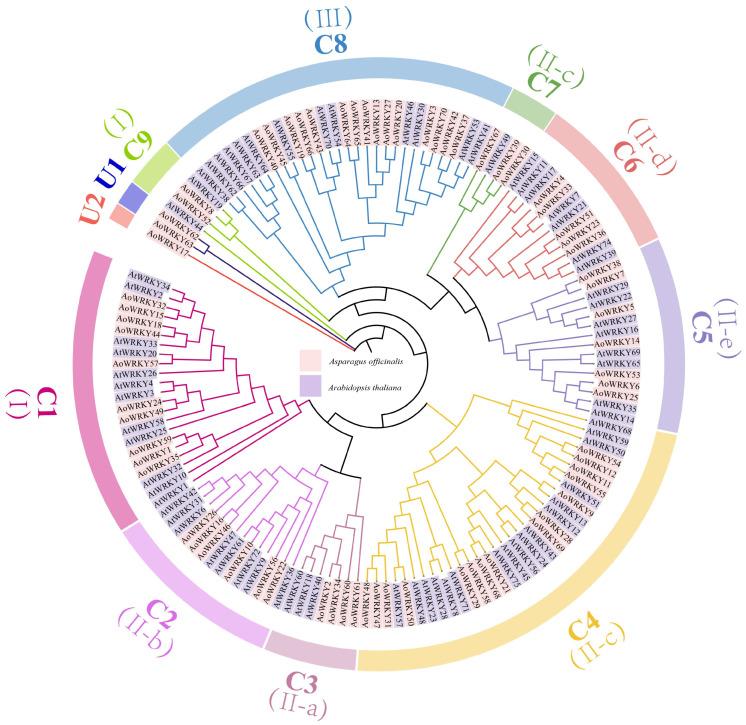
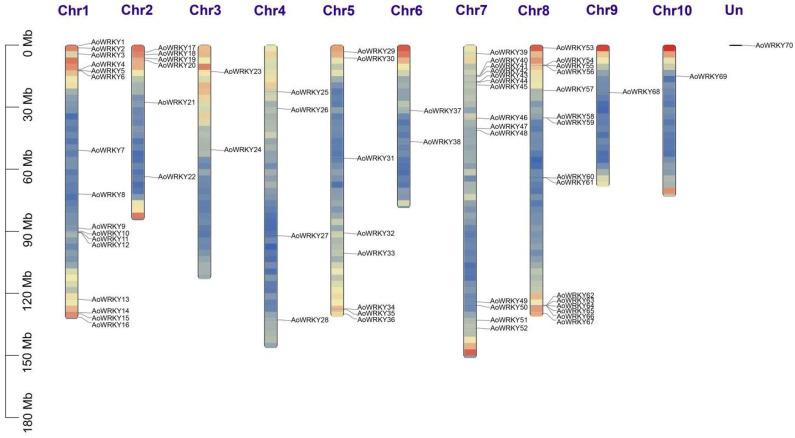
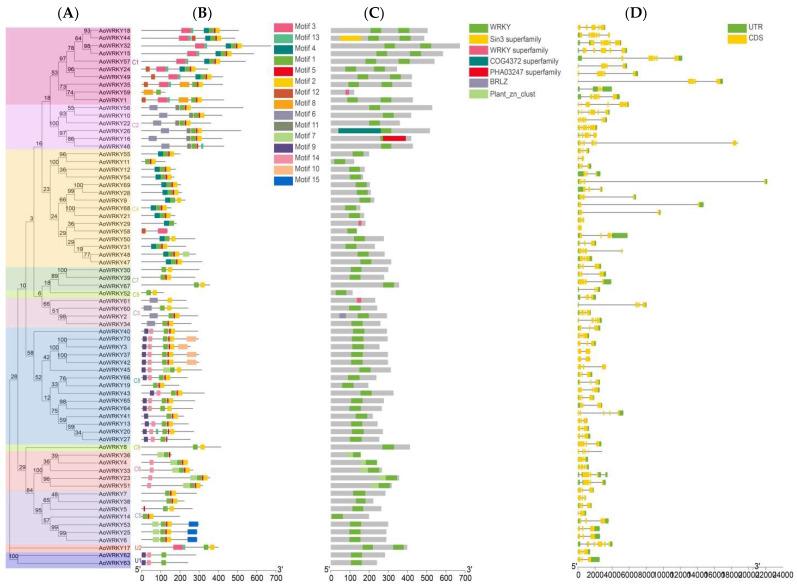
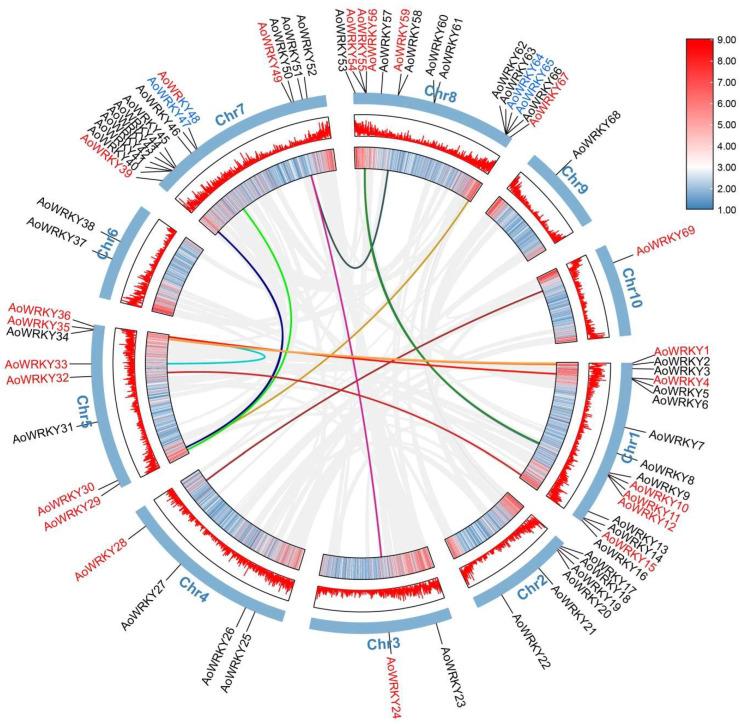
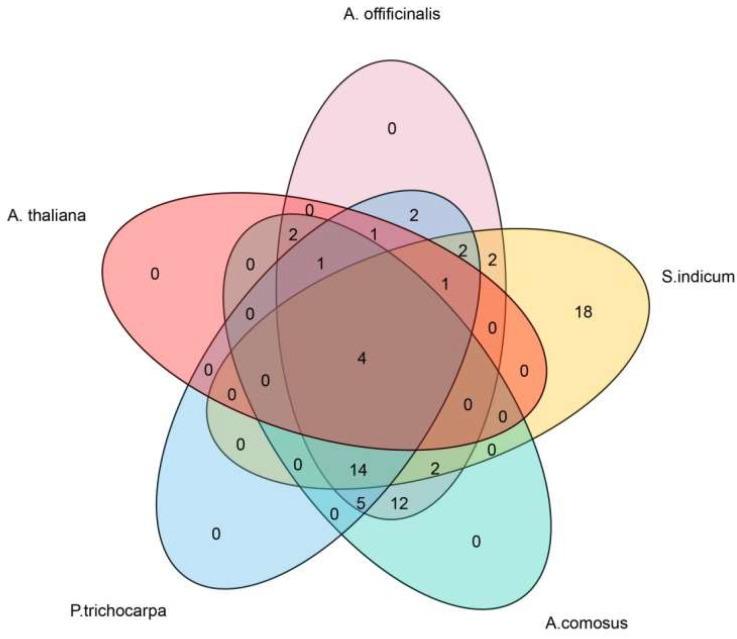
In recent years, the related research of the gene family has been gradually promoted, which is mainly reflected in the aspects of environmental stress and hormone response. However, to make the study of the gene family more complete, we also need to focus on the whole-genome analysis and identification of the family. In previous studies, the whole gene family of , legumes and other plants has been thoroughly studied. However, since the publication of genome-wide data, there has never been an analysis of the whole gene family. To understand more broadly the function of the gene family, the whole genome and salt stress transcriptome data of asparagus were used for comprehensive analysis in this study, including gene family identification, phylogenetic tree construction, analysis of conserved mods and gene domains, extraction of cis-acting elements, intron/exon analysis, species collinearity analysis, and expression analysis under salt stress. The results showed that a total of 70 genes were selected and randomly distributed on 10 chromosomes and one undefined chromosome. According to the functional classification of , the family of asparagus was divided into 11 subgroups (C1-C9, U1, U2). It is worth considering that the distribution rules of gene-conserved motifs, gene domains and introns/exons in the same subfamily are similar, which suggests that genes in the same subfamily may regulate similar physiological processes. In this study, 11 cis-acting elements of family were selected, among which auxin, gibberellin, abscisic acid, salicylic acid and other hormone-regulated induction elements were involved. In addition, environmental stress (such as drought stress and low-temperature response) also accounted for a large proportion. Interestingly, we analyzed a total of two tandem duplicate genes and 13 segmental duplication genes, suggesting that this is related to the amplification of the gene family. Transcriptome data analysis showed that family genes could regulate plant growth and development by up-regulating and down-regulating gene expression under salt stress. Volcanic maps showed that 3 and 15 genes were significantly up-regulated or down-regulated in NI&NI+S and AMF&AMF+S, respectively. These results provide a new way to analyze the evolution and function of the gene family, and can provide a reference for the production and research of asparagus.
近年来,该基因家族的相关研究逐渐推进,主要体现在环境胁迫和激素应答等方面。然而,为使该基因家族的研究更加完善,我们还需要关注其全基因组分析与鉴定。在以往研究中,已对[具体植物名称]、豆科植物等的整个基因家族进行了深入研究。然而,自[具体植物名称]全基因组数据公布以来,从未有过对整个基因家族的分析。为更广泛地了解该基因家族的功能,本研究利用芦笋的全基因组和盐胁迫转录组数据进行综合分析,包括基因家族鉴定、系统发育树构建、保守模体和基因结构域分析、顺式作用元件提取、内含子/外显子分析、物种共线性分析以及盐胁迫下的基因表达分析。结果表明,共筛选出70个基因,随机分布在10条染色体和1条未定义染色体上。根据[具体分类标准]的功能分类,芦笋的该家族被分为11个亚组(C1 - C9、U1、U2)。值得注意的是,同一亚组中基因保守模体、基因结构域和内含子/外显子的分布规律相似,这表明同一亚组中的基因可能调控相似的生理过程。本研究筛选出该家族的11个顺式作用元件,其中涉及生长素、赤霉素、脱落酸、水杨酸等激素调控诱导元件。此外,环境胁迫(如干旱胁迫和低温应答)也占很大比例。有趣的是,我们共分析出两个串联重复基因和13个片段重复基因,表明这与该基因家族的扩增有关。转录组数据分析表明,该家族基因可通过在盐胁迫下上调和下调基因表达来调控植物生长发育。火山图显示,在NI&NI + S和AMF&AMF + S中,分别有3个和15个该基因显著上调或下调。这些结果为分析该基因家族的进化和功能提供了新途径,并可为芦笋的生产和研究提供参考。


 Zotero 插件