
具核梭杆菌负荷与结直肠腺癌中的 KRAS 突变和无蒂锯齿状发病机制相关。
Fusobacterium nucleatum Load Correlates with KRAS Mutation and Sessile Serrated Pathogenesis in Colorectal Adenocarcinoma.
机构信息
Division of Gastroenterology and Hepatology, Department of Internal Medicine and Rogel Cancer Center, University of Michigan, Ann Arbor, Michigan.
Divsion of Gastroenterology and Hepatology, Department of Medicine and Moores Cancer Center, University of California San Diego, San Diego, California.
出版信息
Cancer Res Commun. 2023 Sep 26;3(9):1940-1951. doi: 10.1158/2767-9764.CRC-23-0179.
UNLABELLED
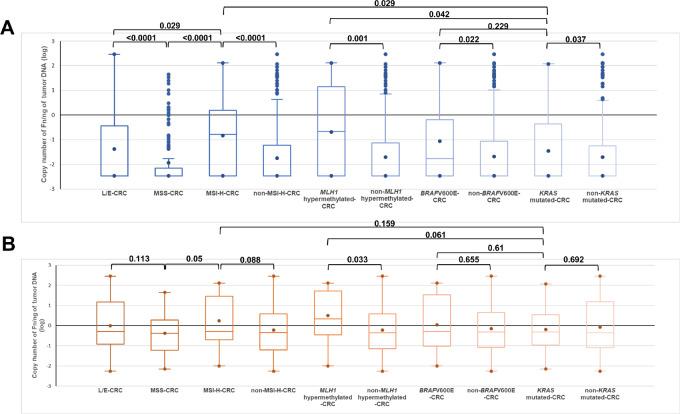
Fusobacterium nucleatum (Fn) has been frequently detected in colorectal cancer. A high load of Fn has been associated with subtypes of colorectal cancers, located in the proximal colon, exhibiting microsatellite instability-high (MSI-H), MLH1 promoter hypermethylation, the CpG island hypermethylation phenotype-high, or BRAF mutation in some studies. Although these features characterize the sessile serrated pathway (SSP) of colon cancers, other studies have shown that Fn infection is associated with KRAS mutations mainly characteristic of non-serrated neoplasia. It is also not clear at what point the association of Fn infection with these genomic alterations is established during colorectal carcinogenesis. Here we show that MSI-H, MLH1 hypermethylation, BRAF mutation or KRAS mutations were independently associated with Fn infection in colorectal cancer. On the other hand, increasing Fn copy number in tissues was associated with increased probability to exhibit MSI-H, MLH1 hypermethylation or BRAF mutations but not KRAS mutations in colorectal cancer. We also show that Fn load was significantly less than that of colorectal cancer and no association was detected between BRAF/KRAS mutations or MLH1 hypermethylation and Fn infection in adenomas. Our combined data suggest that increasing loads of Fn during and/or after adenomacarcinoma transition might promote SSP but not KRAS-driven colorectal carcinogenesis. Alternatively, Fn preferentially colonizes colorectal cancers with SSP and KRAS mutations but can expand more in colorectal cancers with SSP.
SIGNIFICANCE
The authors demonstrated that Fn is enriched in colorectal cancers exhibiting the SSP phenotype, and in colorectal cancers carrying KRAS mutations. Fn infection should be considered as a candidate risk factor specific to colorectal cancers with the SSP phenotype and with KRAS mutations.
未加标签
梭杆菌属(Fn)经常在结直肠癌中检测到。在一些研究中,Fn 负荷高与位于近端结肠的结直肠癌亚型相关,这些亚型表现为微卫星不稳定高(MSI-H)、MLH1 启动子超甲基化、CpG 岛高甲基化表型或 BRAF 突变。尽管这些特征表征了结直肠癌的静止锯齿状途径(SSP),但其他研究表明,Fn 感染与 KRAS 突变有关,主要特征是非锯齿状肿瘤。在结直肠癌变过程中,Fn 感染与这些基因组改变相关的确切时间尚不清楚。在这里,我们表明 MSI-H、MLH1 超甲基化、BRAF 突变或 KRAS 突变与结直肠癌中的 Fn 感染独立相关。另一方面,组织中 Fn 拷贝数的增加与 MSI-H、MLH1 超甲基化或 BRAF 突变的可能性增加相关,但与结直肠癌中的 KRAS 突变无关。我们还表明,Fn 负荷明显低于结直肠癌,并且在腺瘤中未检测到 BRAF/KRAS 突变或 MLH1 超甲基化与 Fn 感染之间的关联。我们的综合数据表明,在腺瘤-癌转变期间和/或之后,Fn 负荷的增加可能会促进 SSP,但不会促进 KRAS 驱动的结直肠癌发生。或者,Fn 优先定植于具有 SSP 和 KRAS 突变的结直肠癌,但在具有 SSP 的结直肠癌中可以更广泛地定植。
意义
作者证明 Fn 在表现出 SSP 表型的结直肠癌和携带 KRAS 突变的结直肠癌中富集。Fn 感染应被视为具有 SSP 表型和 KRAS 突变的结直肠癌的特定候选风险因素。
 Zotero 插件