
1990 年至 2018 年期间,185 个国家成年人的含糖饮料摄入量。
Sugar-sweetened beverage intakes among adults between 1990 and 2018 in 185 countries.
机构信息
Friedman School of Nutrition Science and Policy, Tufts University, Boston, MA, USA.
University of Thessaly, Volos, Greece.
出版信息
Nat Commun. 2023 Oct 3;14(1):5957. doi: 10.1038/s41467-023-41269-8.
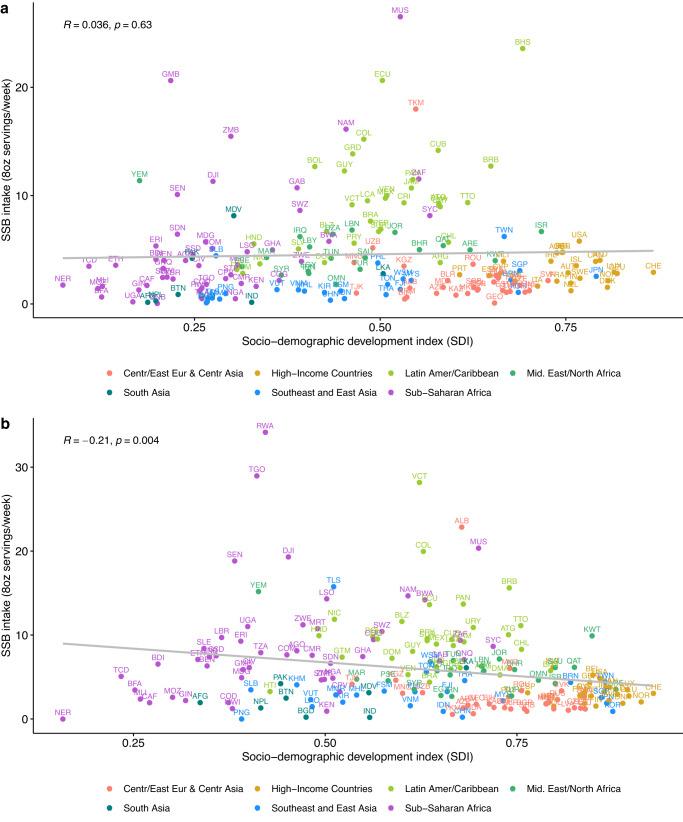
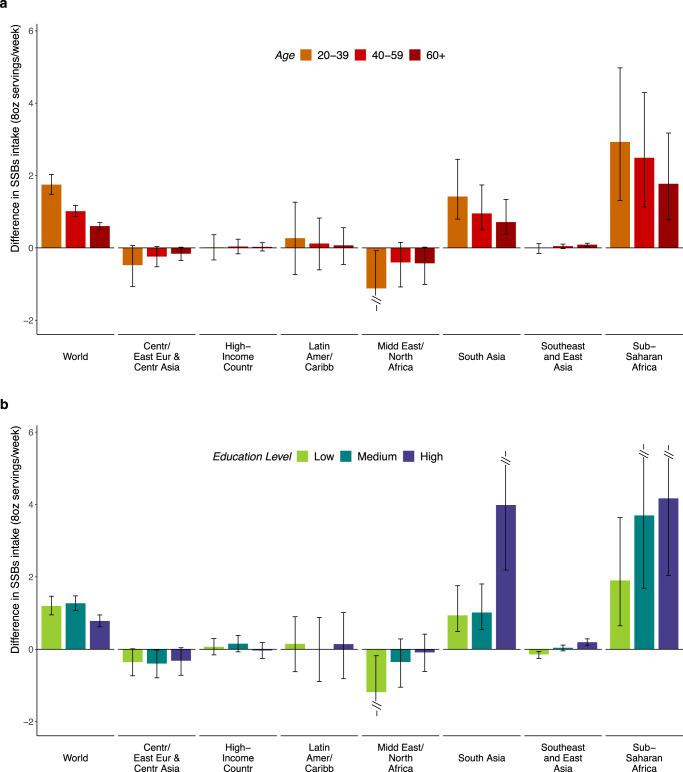
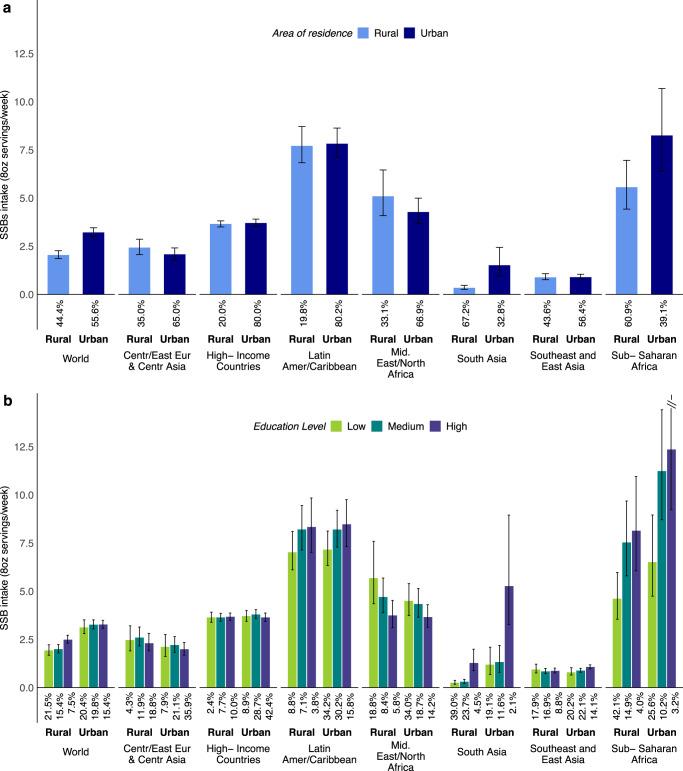
Sugar-sweetened beverages (SSBs) are associated with cardiometabolic diseases and social inequities. For most nations, recent estimates and trends of intake are not available; nor variation by education or urbanicity. We investigated SSB intakes among adults between 1990 and 2018 in 185 countries, stratified subnationally by age, sex, education, and rural/urban residence, using data from the Global Dietary Database. In 2018, mean global SSB intake was 2.7 (8 oz = 248 grams) servings/week (95% UI 2.5-2.9) (range: 0.7 (0.5-1.1) in South Asia to 7.8 (7.1-8.6) in Latin America/Caribbean). Intakes were higher in male vs. female, younger vs. older, more vs. less educated, and urban vs. rural adults. Variations by education and urbanicity were largest in Sub-Saharan Africa. Between 1990 and 2018, SSB intakes increased by +0.37 (+0.29, +0.47), with the largest increase in Sub-Saharan Africa. These findings inform intervention, surveillance, and policy actions worldwide, highlighting the growing problem of SSBs for public health in Sub-Saharan Africa.
含糖饮料(SSB)与心血管代谢疾病和社会不平等有关。对于大多数国家来说,最近的摄入量估计和趋势都不可用;也没有按教育程度或城市/农村居住情况进行划分。我们使用全球饮食数据库中的数据,在 185 个国家/地区,按年龄、性别、教育程度和城乡居住情况进行分层,调查了 1990 年至 2018 年期间成年人的 SSB 摄入量。2018 年,全球 SSB 摄入量的平均值为每周 2.7(8 盎司=248 克)份(95%UI 2.5-2.9)(范围:南亚为 0.7(0.5-1.1),拉丁美洲/加勒比为 7.8(7.1-8.6))。男性比女性、年轻人比老年人、受教育程度高的人比受教育程度低的人、城市居民比农村居民的摄入量更高。撒哈拉以南非洲的教育程度和城乡差异最大。1990 年至 2018 年,SSB 摄入量增加了+0.37(+0.29,+0.47),撒哈拉以南非洲的增幅最大。这些发现为全球的干预、监测和政策行动提供了信息,突显了 SSB 对撒哈拉以南非洲公共卫生日益严重的问题。




 Zotero 插件