
碳点——类型、获取方法及在生物技术和食品技术中的应用。
Carbon Dots-Types, Obtaining and Application in Biotechnology and Food Technology.
机构信息
Faculty of Biotechnology and Horticulture, University of Agriculture in Krakow, Al. Mickiewicza 21, 31-120 Krakow, Poland.
Faculty of Food Technology, University of Agriculture in Krakow, Al. Mickiewicza 21, 31-120 Krakow, Poland.
出版信息
Int J Mol Sci. 2023 Oct 7;24(19):14984. doi: 10.3390/ijms241914984.
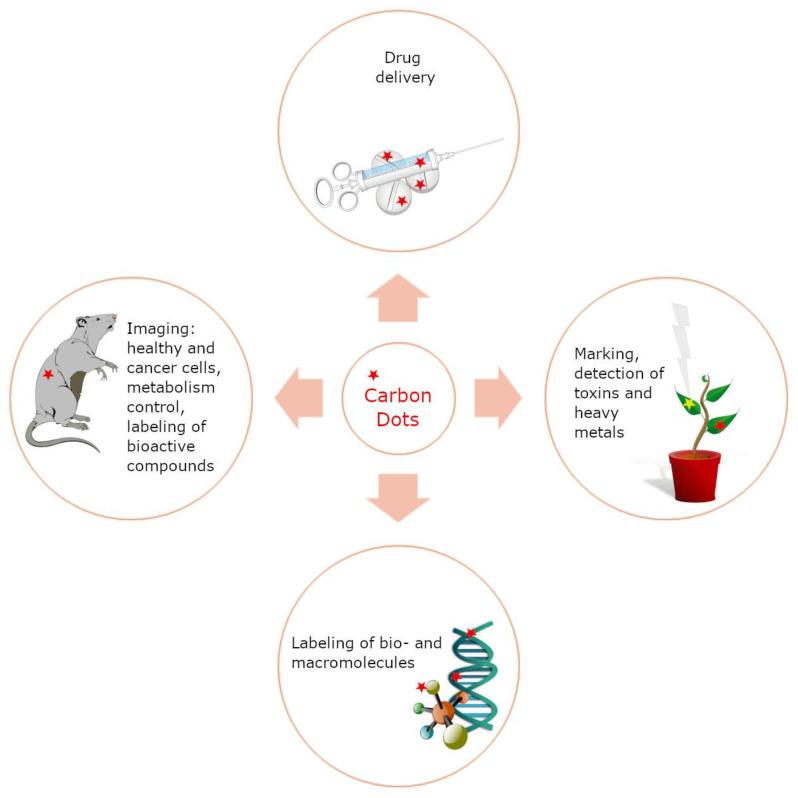
Materials with a "nano" structure are increasingly used in medicine and biotechnology as drug delivery systems, bioimaging agents or biosensors in the monitoring of toxic substances, heavy metals and environmental variations. Furthermore, in the food industry, they have found applications as detectors of food adulteration, microbial contamination and even in packaging for monitoring product freshness. Carbon dots (CDs) as materials with broad as well as unprecedented possibilities could revolutionize the economy, if only their synthesis was based on low-cost natural sources. So far, a number of studies point to the positive possibilities of obtaining CDs from natural sources. This review describes the types of carbon dots and the most important methods of obtaining them. It also focuses on presenting the potential application of carbon dots in biotechnology and food technology.
具有“纳米”结构的材料越来越多地被应用于医学和生物技术中,作为药物输送系统、生物成像剂或生物传感器,用于监测有毒物质、重金属和环境变化。此外,在食品工业中,它们已被应用于检测食品掺假、微生物污染,甚至用于包装以监测产品的新鲜度。碳点(CDs)作为具有广泛且前所未有的可能性的材料,如果它们的合成基于低成本的天然来源,可能会彻底改变经济。到目前为止,许多研究都指出了从天然来源获得 CDs 的积极可能性。这篇综述描述了碳点的类型和获得它们的最重要方法。它还侧重于介绍碳点在生物技术和食品技术中的潜在应用。


 Zotero 插件