
骨转移中的免疫检查点抑制剂:临床挑战、毒性及机制
Immune checkpoint inhibitors in bone metastasis: Clinical challenges, toxicities, and mechanisms.
作者信息
Joseph Gwenyth J, Johnson Douglas B, Johnson Rachelle W
机构信息
Program in Cancer Biology, Vanderbilt University, Nashville, TN 37232, USA.
Vanderbilt Center for Bone Biology, Vanderbilt University Medical Center, Nashville, TN 37232, USA.
出版信息
J Bone Oncol. 2023 Sep 30;43:100505. doi: 10.1016/j.jbo.2023.100505. eCollection 2023 Dec.
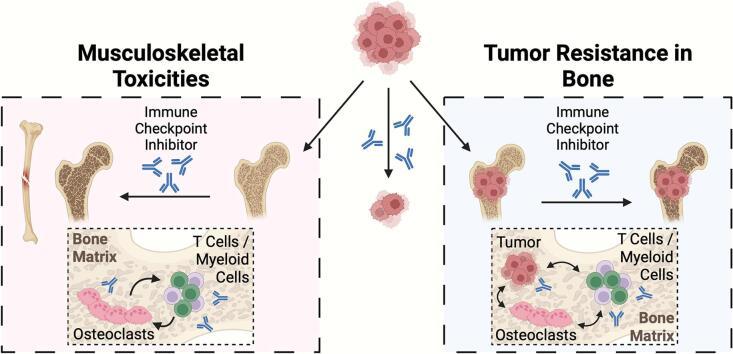
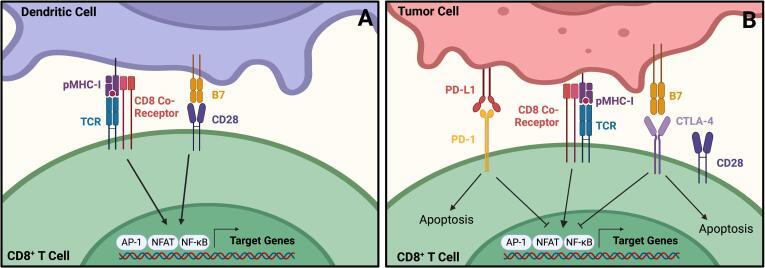
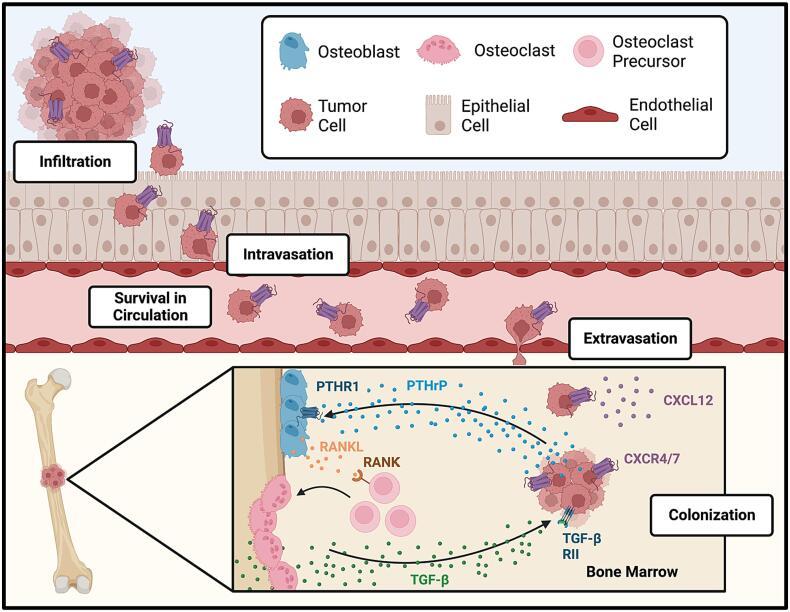
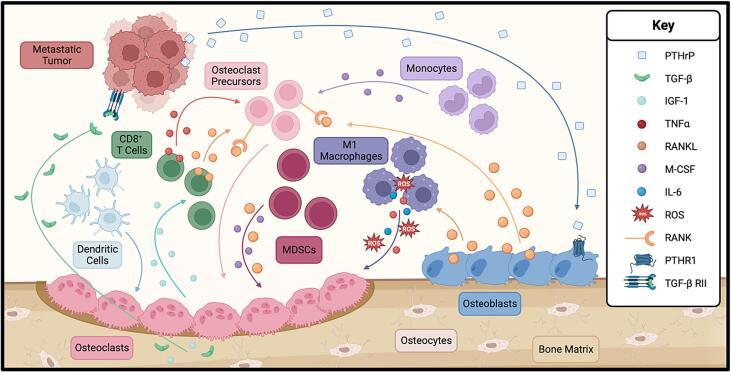
Immune checkpoint inhibitors (ICIs) have revolutionized the field of anti-cancer therapy over the last decade; they provide durable clinical responses against tumors by inhibiting immune checkpoint proteins that canonically regulate the T cell-mediated immune response. Despite their success in many primary tumors and soft tissue metastases, ICIs function poorly in patients with bone metastases, and these patients do not have the same survival benefit as patients with the same primary tumor type (e.g., non-small cell lung cancer [NSCLC], urothelial, renal cell carcinoma [RCC], etc.) that has not metastasized to the bone. Additionally, immune-related adverse events including rheumatologic and musculoskeletal toxicities, bone loss, and increased fracture risk develop after treatment with ICIs. There are few preclinical studies that investigate the interplay of the immune system in bone metastases; however, the current literature suggests a role for CD8 T cells and myeloid cell subsets in bone homeostasis. As such, this review focuses on findings from the clinical and pre-clinical studies that have investigated immune checkpoint blockade in the bone metastatic setting and highlights the need for more comprehensive investigations into the relationship between immune cell subsets, ICIs, and the bone-tumor microenvironment.
在过去十年中,免疫检查点抑制剂(ICIs)彻底改变了抗癌治疗领域;它们通过抑制通常调节T细胞介导的免疫反应的免疫检查点蛋白,对肿瘤产生持久的临床反应。尽管ICIs在许多原发性肿瘤和软组织转移瘤中取得了成功,但在骨转移患者中效果不佳,而且这些患者与未发生骨转移的相同原发性肿瘤类型(如非小细胞肺癌[NSCLC]、尿路上皮癌、肾细胞癌[RCC]等)患者相比,没有相同的生存获益。此外,免疫相关不良事件,包括风湿和肌肉骨骼毒性、骨质流失以及骨折风险增加,会在ICIs治疗后出现。很少有临床前研究调查免疫系统在骨转移中的相互作用;然而,目前的文献表明CD8 T细胞和髓系细胞亚群在骨稳态中发挥作用。因此,本综述重点关注临床和临床前研究中关于在骨转移背景下研究免疫检查点阻断的结果,并强调需要更全面地研究免疫细胞亚群、ICIs和骨肿瘤微环境之间的关系。

 Zotero 插件