
基于优化的机器学习,为帕金森病患者制定药物服用计划。
Machine learning with optimization to create medicine intake schedules for Parkinson's disease patients.
机构信息
Military University of Technology, Warsaw, Poland.
Medical University of Warsaw, Warsaw, Poland.
出版信息
PLoS One. 2023 Oct 18;18(10):e0293123. doi: 10.1371/journal.pone.0293123. eCollection 2023.
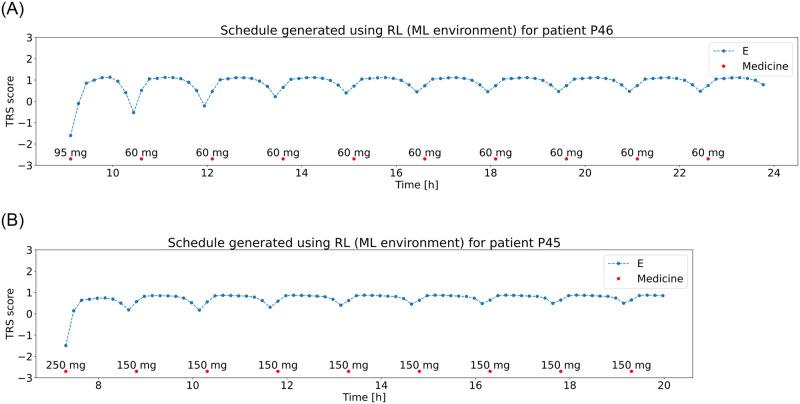
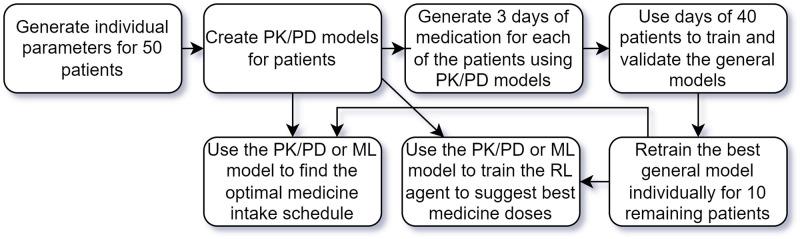
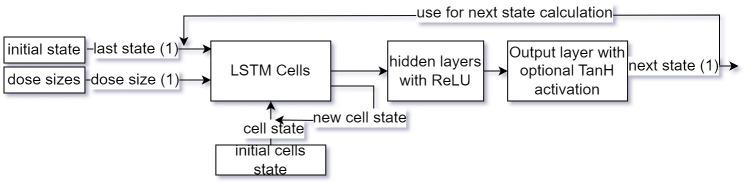
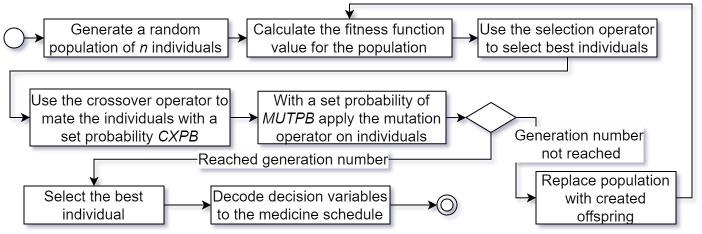
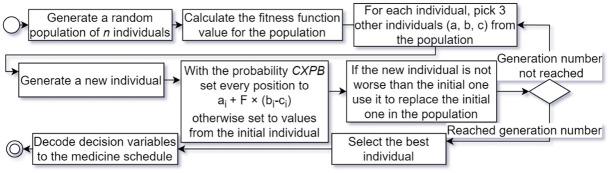
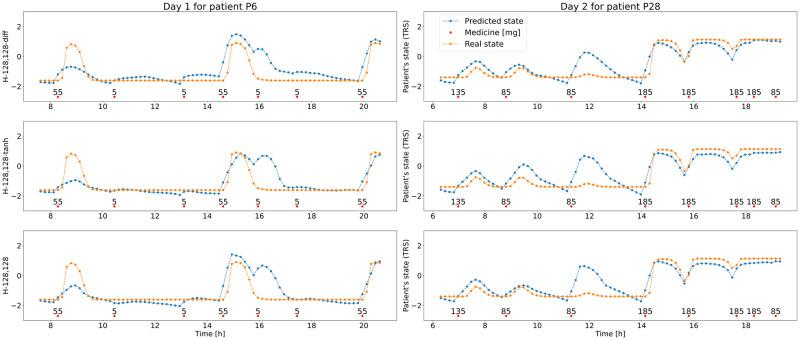
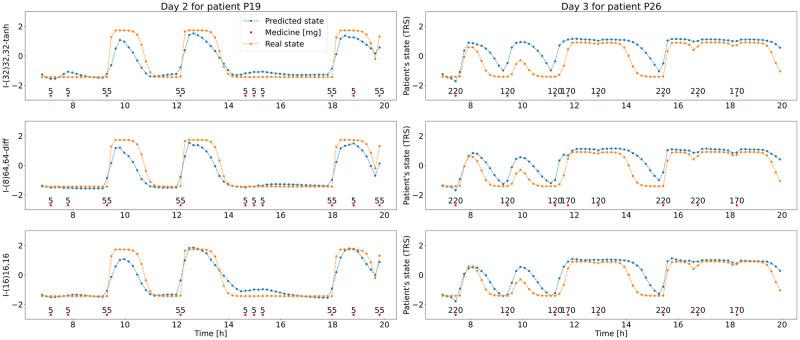
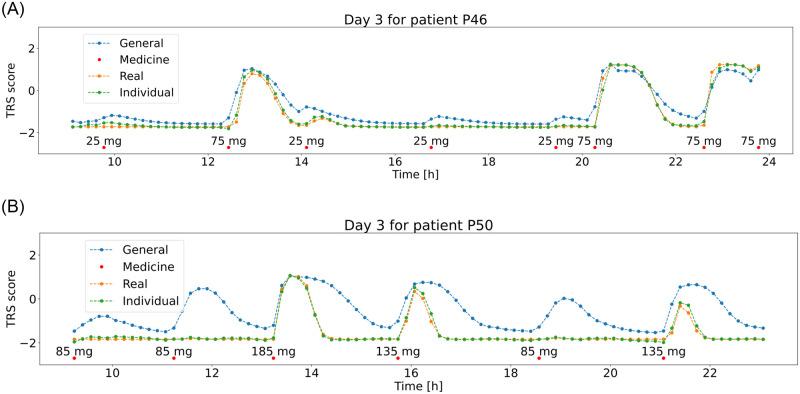
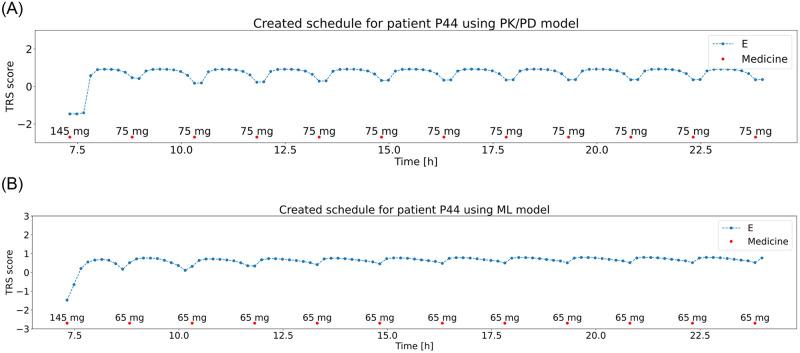
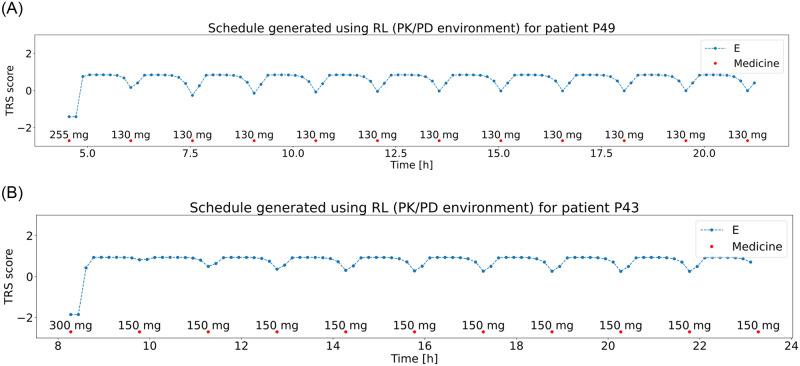
This paper presents a solution for creating individualized medicine intake schedules for Parkinson's disease patients. Dosing medicine in Parkinson's disease is a difficult and a time-consuming task and wrongly assigned therapy affects patient's quality of life making the disease more uncomfortable. The method presented in this paper may decrease errors in therapy and time required to establish a suitable medicine intake schedule by using objective measures to predict patient's response to medication. Firstly, it demonstrates the use of machine learning models to predict the patient's medicine response based on their state evaluation acquired during examination with biomedical sensors. Two architectures, a multilayer perceptron and a deep neural network with LSTM cells are proposed to evaluate the patient's future state based on their past condition and medication history, with the best patient-specific models achieving R2 value exceeding 0.96. These models serve as a foundation for conventional optimization, specifically genetic algorithm and differential evolution. These methods are applied to find optimal medicine intake schedules for patient's daily routine, resulting in a 7% reduction in the objective function value compared to existing approaches. To achieve this goal and be able to adapt the schedule during the day, reinforcement learning is also utilized. An agent is trained to suggest medicine doses that maintain the patient in an optimal state. The conducted experiments demonstrate that machine learning models can effectively model a patient's response to medication and both optimization approaches prove capable of finding optimal medicine schedules for patients. With further training on larger datasets from real patients the method has the potential to significantly improve the treatment of Parkinson's disease.
本文提出了一种为帕金森病患者制定个体化药物服用计划的解决方案。在帕金森病中给药物剂量是一项困难且耗时的任务,错误的治疗会影响患者的生活质量,使疾病更加不适。本文提出的方法可以通过使用客观措施来预测患者对药物的反应,从而减少治疗中的错误和建立合适的药物服用计划所需的时间。首先,它展示了如何使用机器学习模型来预测患者的药物反应,基于他们在使用生物医学传感器进行检查时获得的状态评估。提出了两种架构,多层感知器和具有 LSTM 细胞的深度神经网络,用于根据患者过去的状况和药物历史来评估患者的未来状态,最佳的患者特定模型的 R2 值超过 0.96。这些模型为传统的优化方法,特别是遗传算法和差分进化,提供了基础。这些方法用于为患者的日常例行活动找到最佳的药物服用计划,与现有方法相比,目标函数值降低了 7%。为了实现这一目标并能够在白天适应计划,还利用了强化学习。训练一个代理来建议维持患者最佳状态的药物剂量。进行的实验表明,机器学习模型可以有效地模拟患者对药物的反应,并且两种优化方法都能够为患者找到最佳的药物计划。通过对来自真实患者的更大数据集进行进一步的训练,该方法有可能显著改善帕金森病的治疗。









 Zotero 插件