Department of Cardiovascular Surgery, The Second Xiangya Hospital of Central South University, Changsha, Hunan, China.
Clinical Center for Gene Diagnosis and Therapy, The Second Xiangya Hospital of Central South University, Changsha, Hunan, China.
Signal Transduct Target Ther. 2023 Oct 27;8(1):412. doi: 10.1038/s41392-023-01638-7.
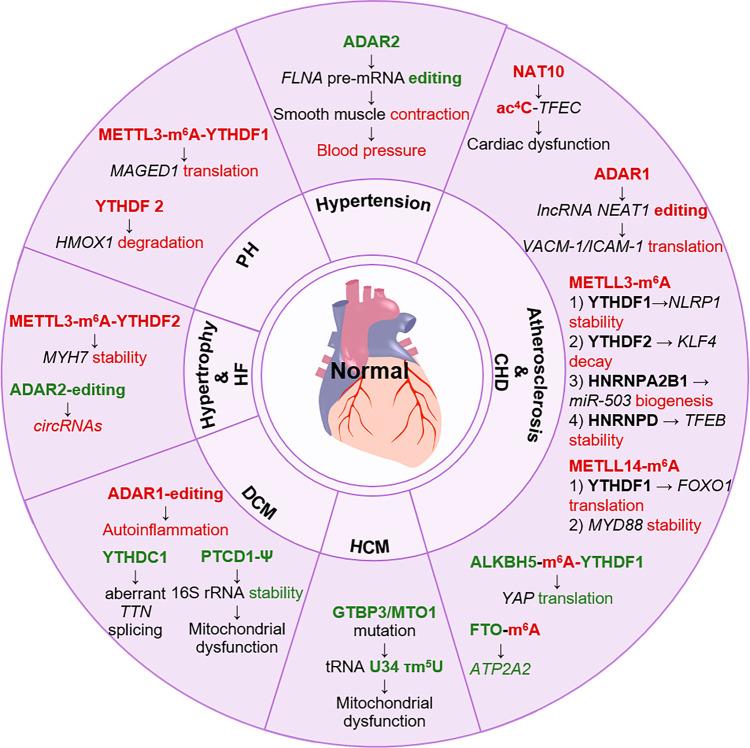
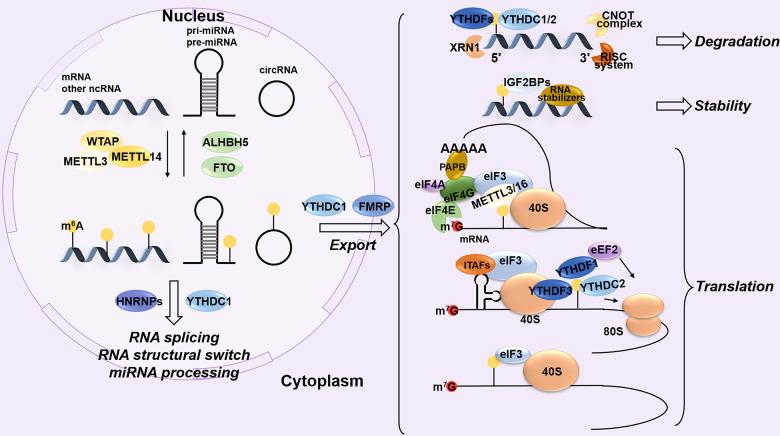
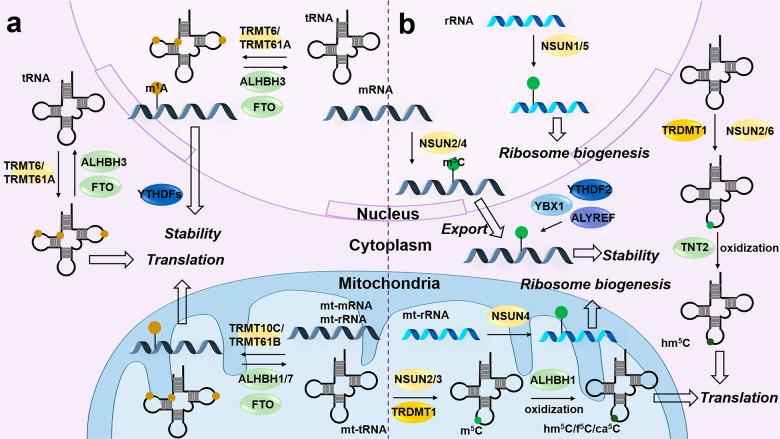
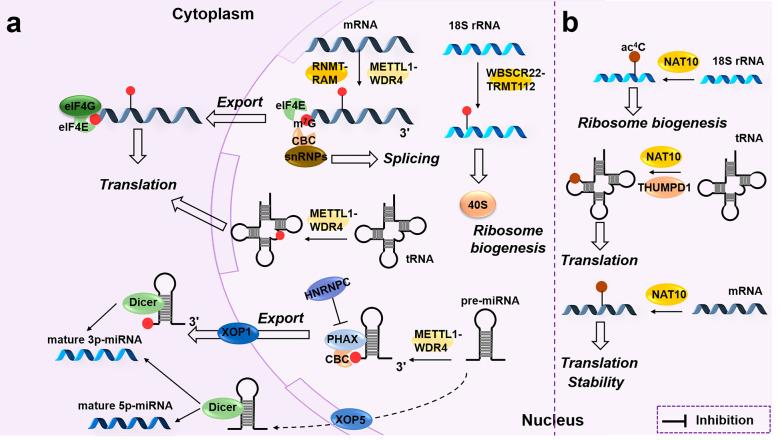
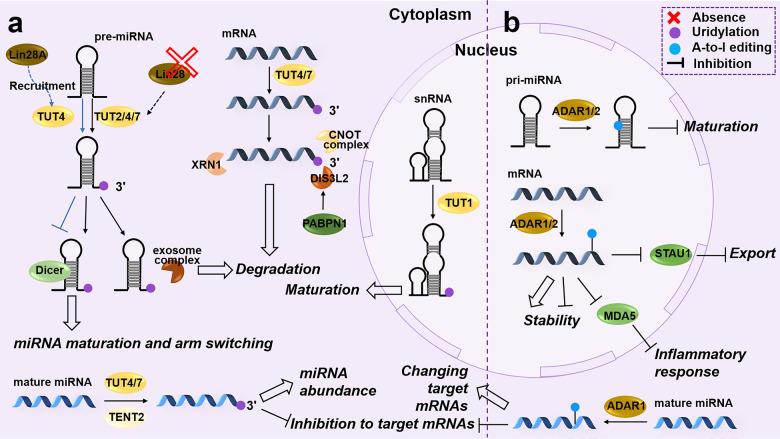
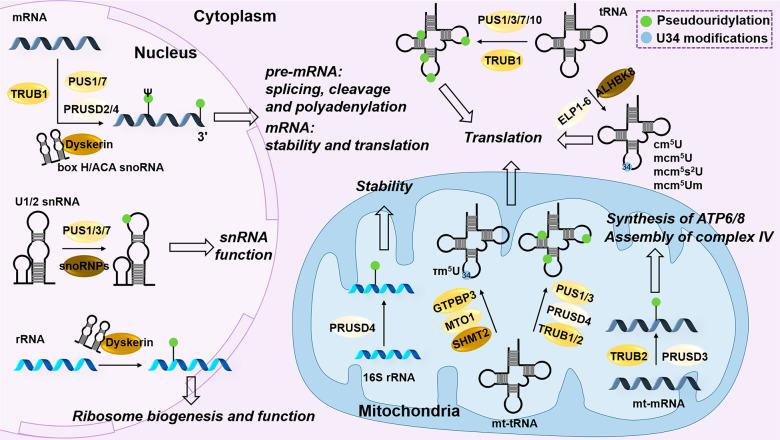
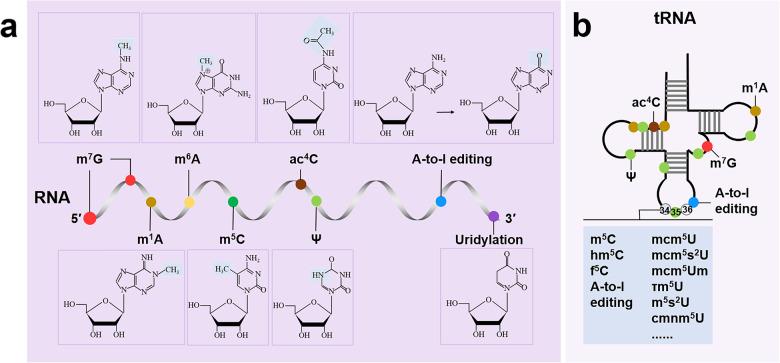
Cardiovascular disease (CVD) is the leading cause of death in the world, with a high incidence and a youth-oriented tendency. RNA modification is ubiquitous and indispensable in cell, maintaining cell homeostasis and function by dynamically regulating gene expression. Accumulating evidence has revealed the role of aberrant gene expression in CVD caused by dysregulated RNA modification. In this review, we focus on nine common RNA modifications: N-methyladenosine (mA), N-methyladenosine (mA), 5-methylcytosine (mC), N-methylguanosine (mG), N-acetylcytosine (acC), pseudouridine (Ψ), uridylation, adenosine-to-inosine (A-to-I) RNA editing, and modifications of U34 on tRNA wobble. We summarize the key regulators of RNA modification and their effects on gene expression, such as RNA splicing, maturation, transport, stability, and translation. Then, based on the classification of CVD, the mechanisms by which the disease occurs and progresses through RNA modifications are discussed. Potential therapeutic strategies, such as gene therapy, are reviewed based on these mechanisms. Herein, some of the CVD (such as stroke and peripheral vascular disease) are not included due to the limited availability of literature. Finally, the prospective applications and challenges of RNA modification in CVD are discussed for the purpose of facilitating clinical translation. Moreover, we look forward to more studies exploring the mechanisms and roles of RNA modification in CVD in the future, as there are substantial uncultivated areas to be explored.
心血管疾病 (CVD) 是世界范围内的主要死亡原因,具有较高的发病率和年轻化趋势。RNA 修饰在细胞中普遍存在且不可或缺,通过动态调节基因表达来维持细胞内稳态和功能。越来越多的证据揭示了 RNA 修饰失调导致 CVD 中异常基因表达的作用。在这篇综述中,我们重点介绍了九种常见的 RNA 修饰:N6-甲基腺苷 (m6A)、N1-甲基腺苷 (m1A)、5-甲基胞嘧啶 (m5C)、N7-甲基鸟苷 (m7G)、N6-乙酰胞嘧啶 (ac6C)、假尿嘧啶 (Ψ)、尿嘧啶核苷酰化、腺苷到肌苷 (A-to-I) RNA 编辑以及 tRNA wobble 上的 U34 修饰。我们总结了 RNA 修饰的关键调控因子及其对基因表达的影响,如 RNA 剪接、成熟、运输、稳定性和翻译。然后,基于 CVD 的分类,讨论了 RNA 修饰导致疾病发生和进展的机制。基于这些机制,我们综述了潜在的治疗策略,如基因治疗。由于文献有限,一些 CVD(如中风和外周血管疾病)未包含在此处。最后,讨论了 RNA 修饰在 CVD 中的应用前景和挑战,旨在促进临床转化。此外,我们期待未来有更多的研究探索 RNA 修饰在 CVD 中的机制和作用,因为还有大量未开发的领域有待探索。

 Zotero 插件