
探索癌症患者耐甲氧西林金黄色葡萄球菌中免疫逃逸簇基因的毒力潜力。
Exploring the virulence potential of immune evasion cluster genes in methicillin-resistant from cancer patients.
作者信息
Bano Abida, Asghar Farah, Ejaz Hasan, Junaid Kashaf, Bashier Eltayeb Lienda, Javed Numan
机构信息
Institute of Microbiology & Molecular Genetics (MMG), University of the Punjab, Quaid e Azam (New) Campus, Lahore 54590, Pakistan.
Department of Clinical Laboratory Sciences, College of Applied Medical Sciences, Jouf University, Sakaka 72388, Saudi Arabia.
出版信息
Saudi J Biol Sci. 2023 Nov;30(11):103835. doi: 10.1016/j.sjbs.2023.103835. Epub 2023 Oct 11.
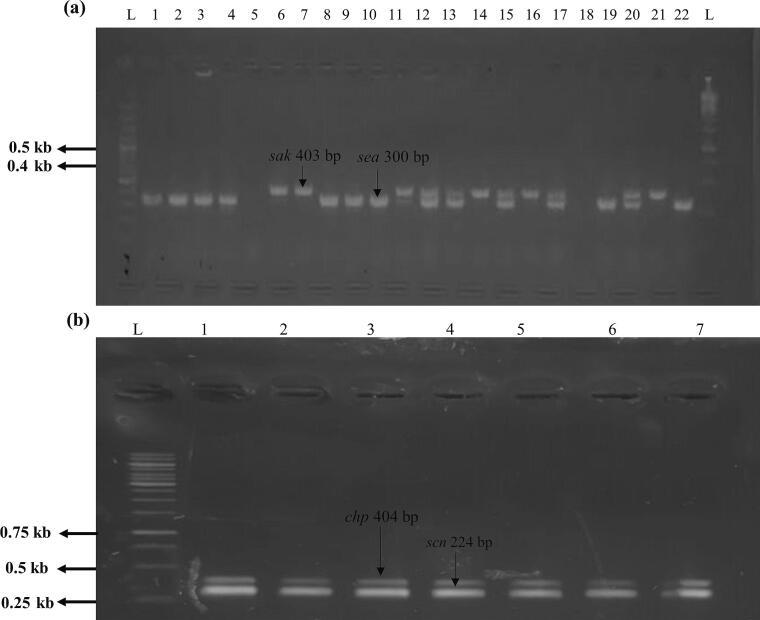
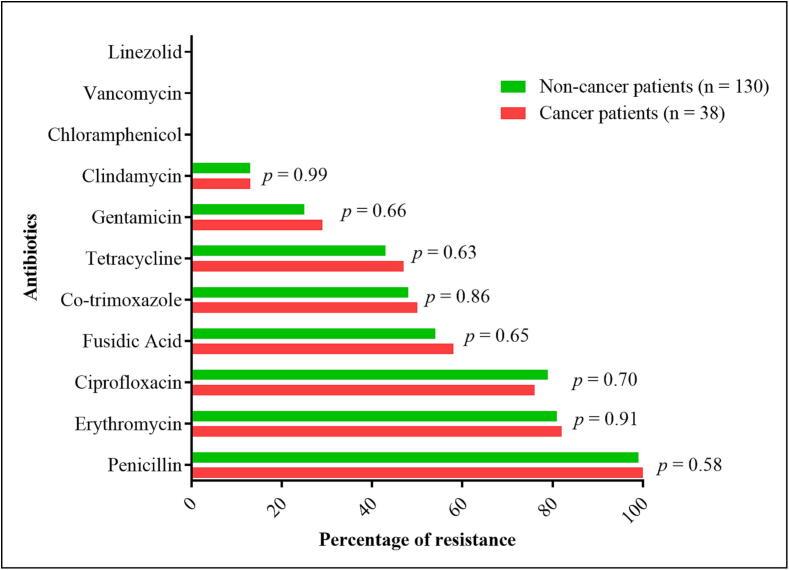
Methicillin-resistant (MRSA) is accountable for a plethora of infections, ranging from minor cutaneous manifestations to grave metastatic conditions. The dissemination of MRSA among cancer patients poses a substantial public health hazard on a global scale. This study explores the association between MRSA and bacteriophage-encoded immune evasion cluster (IEC) genes. This investigation employed a total of 168 pathogenic MRSA collected from 38 cancer and 130 non-cancer patients. A cefoxitin disc diffusion method followed by PCR analysis was used to identify the gene. In this study, we employed singleplex and multiplexed PCR techniques to detect specific IEC genes. No association ( = 0.98) was observed between the sex and age of patients and MRSA isolates. However, MRSA isolates demonstrated a notable association ( = 0.01) with pus samples in non-cancer patients and skin swabs in cancer patients. The resistance profiles of MRSA strains from cancer and non-cancer patients did not show significant differences ( > 0.05). Notably, the gene was found to be more prevalent in MRSA isolates from cancer patients, displaying a significant association ( = 0.03). Additionally, this study identified two novel and distinct combinations of IEC types, namely V1 (, , ) and V2 (, ). Cancer patients had higher multidrug resistance and toxin gene abundance than non-cancer patients. The identification of two novel IEC patterns underscores the urgent need to control MRSA dissemination in hospitals and monitor emerging clones.
耐甲氧西林金黄色葡萄球菌(MRSA)引发了大量感染,范围从轻微的皮肤表现到严重的转移性疾病。MRSA在癌症患者中的传播在全球范围内构成了重大的公共卫生危害。本研究探讨了MRSA与噬菌体编码的免疫逃避簇(IEC)基因之间的关联。这项调查共使用了从38名癌症患者和130名非癌症患者中收集的168株致病性MRSA。采用头孢西丁纸片扩散法,随后进行PCR分析来鉴定该基因。在本研究中,我们采用单重和多重PCR技术来检测特定的IEC基因。未观察到患者的性别和年龄与MRSA分离株之间存在关联(P = 0.98)。然而,MRSA分离株与非癌症患者的脓液样本以及癌症患者的皮肤拭子显示出显著关联(P = 0.01)。来自癌症患者和非癌症患者的MRSA菌株的耐药谱没有显示出显著差异(P>0.05)。值得注意的是,该基因在来自癌症患者的MRSA分离株中更为普遍,显示出显著关联(P = 0.03)。此外,本研究确定了两种新的、不同的IEC类型组合,即V1(、、)和V2(、)。癌症患者比非癌症患者具有更高的多药耐药性和毒素基因丰度。两种新的IEC模式的鉴定强调了控制医院中MRSA传播并监测新出现克隆的迫切需求。



 Zotero 插件