
亚致死剂量芬太尼对成年山羊重要生理功能及戒断样行为的影响。
Effects of sub-lethal doses of fentanyl on vital physiologic functions and withdrawal-like behaviors in adult goats.
作者信息
Neumueller Suzanne E, Buiter Nicole, Hilbert Grace, Grams Kirstyn, Taylor Reiauna, Desalvo John, Hodges Grace L, Hodges Madeline M, Pan Lawrence G, Lewis Stephen J, Forster Hubert V, Hodges Matthew R
机构信息
Department of Physiology, Medical College of Wisconsin, Milwaukee, WI, United States.
Department of Physical Therapy, Marquette University, Milwaukee, WI, United States.
出版信息
Front Physiol. 2023 Oct 11;14:1277601. doi: 10.3389/fphys.2023.1277601. eCollection 2023.
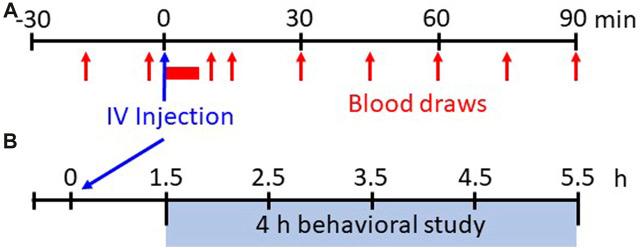
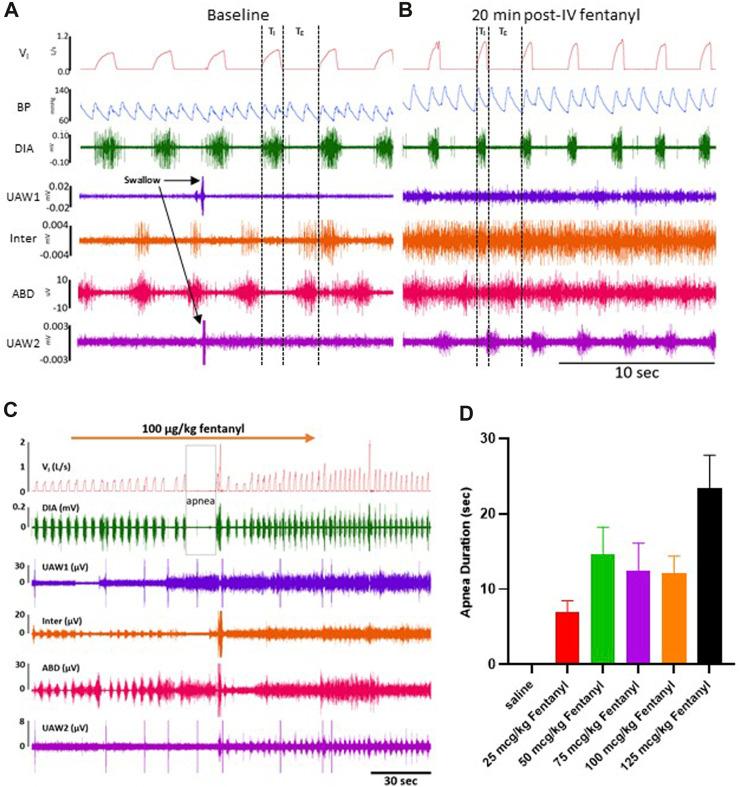
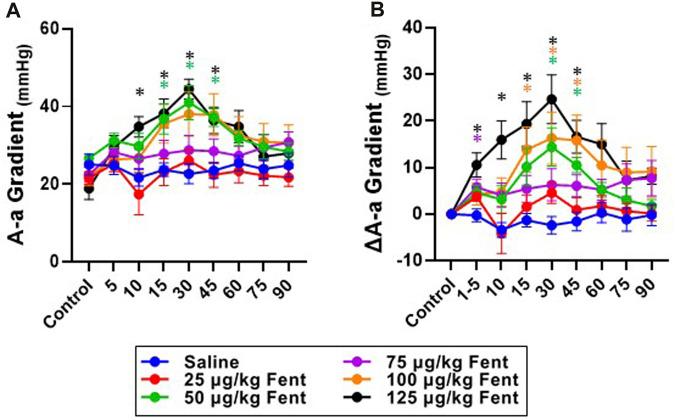
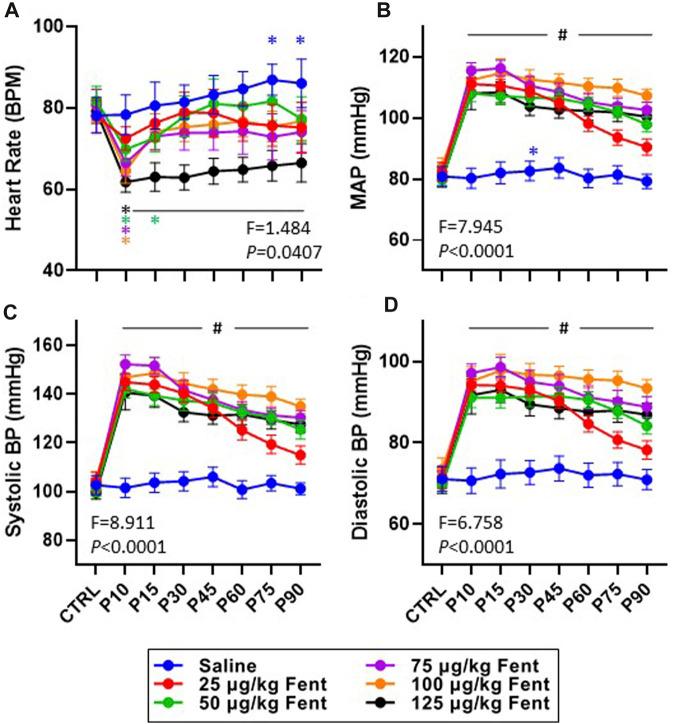
Synthetic opioids like fentanyl have improved the standard of care for many patients in the clinical setting, but their abuse leads to tens of thousands of overdose deaths annually. The current opioid epidemic underscores a critical need for insights into the physiological effects of fentanyl on vital functions. High doses of opioids in small mammals cause opioid-induced respiratory depression (OIRD) leading to hypoventilation, hypoxemia, and hypercapnia. In addition, opioids can also increase the alveolar to arterial oxygen (A-a) gradient and airway dysfunction. However, little is known about the physiologic effects of sub-lethal doses of opioids in large mammals. Here we report the effects of a sub-lethal dose range of fentanyl (25-125 μg/kg; IV) on vital physiologic functions over 90 min (min) and withdrawal-like behaviors over the subsequent 4 h (h) in adult female goats ( = 13). Fentanyl induced decreases in breathing frequency in the first few min post-injection, but then led to a sustained increase in tidal volume, total ventilation, and blood pressure with a reduced heart rate for ≥90 min. These ventilatory changes resulted in time-dependent arterial hypocapnia and hypoxemia and an increased alveolar to arterial oxygen gradient ∼30 min post-injection indicative of impaired gas exchange in the lung. The predominant effects of fentanyl on breathing were stimulatory, underscored by an increased rate of rise of the diaphragm muscle activity and increased activation of upper airway, intercostal and abdominal muscles. Beginning 90 min post-injection we also quantified withdrawal-like behaviors over 4 h, demonstrating dose- and time-dependent increases in locomotor, biting, itching, and pawing behaviors. We conclude that fentanyl at sublethal doses induces multiple physiologic and behavior changes that emerge along different time courses suggesting multiple independent mechanisms underlying effects of opioids.
像芬太尼这样的合成阿片类药物在临床环境中提高了许多患者的护理标准,但它们的滥用每年导致数万人因过量用药死亡。当前的阿片类药物流行凸显了深入了解芬太尼对重要功能的生理影响的迫切需求。在小型哺乳动物中,高剂量的阿片类药物会导致阿片类药物引起的呼吸抑制(OIRD),进而导致通气不足、低氧血症和高碳酸血症。此外,阿片类药物还会增加肺泡-动脉氧(A-a)梯度和气道功能障碍。然而,关于亚致死剂量的阿片类药物对大型哺乳动物的生理影响知之甚少。在此,我们报告了亚致死剂量范围的芬太尼(25-125μg/kg;静脉注射)对成年雌性山羊(n = 13)在90分钟内重要生理功能的影响以及在随后4小时内类似戒断行为的影响。芬太尼在注射后的最初几分钟内导致呼吸频率下降,但随后导致潮气量、总通气量和血压持续增加,心率降低,且这种状态持续≥90分钟。这些通气变化导致随时间推移出现动脉低碳酸血症和低氧血症,并且在注射后约30分钟肺泡-动脉氧梯度增加,表明肺部气体交换受损。芬太尼对呼吸的主要影响是刺激性的,膈肌活动上升速率增加以及上呼吸道、肋间肌和腹肌的激活增加突出了这一点。从注射后90分钟开始,我们还对4小时内的类似戒断行为进行了量化,结果表明运动、咬、抓痒和刨地行为呈剂量和时间依赖性增加。我们得出结论,亚致死剂量的芬太尼会引起多种生理和行为变化,这些变化在不同的时间进程中出现,提示阿片类药物作用存在多种独立机制。



 Zotero 插件