
通过析因设计优化的红吼猴精油纳米结构脂质载体:细胞毒性和细胞活性氧水平
Red sacaca essential oil-loaded nanostructured lipid carriers optimized by factorial design: cytotoxicity and cellular reactive oxygen species levels.
作者信息
Chura Sofia Santos Donaire, Memória Kathelen Anne Sudo, Lopes Amanda Tibães, Pelissari Franciele Maria, Da Silveira João Vinícios Wirbitzki, Bezerra Jaqueline de Araújo, Chaves Francisco Celio Maia, Rodrigues Ana Paula, Faria Jerusa Araújo Quintão Arantes, Carneiro Guilherme
机构信息
Department of Pharmacy, Faculty of Biological and Health Sciences, Federal University of Jequitinhonha and Mucuri Valleys, Diamantina, Brazil.
Postgraduation Program in Basic and Applied Immunology, Federal University of Amazonas, Manaus, Brazil.
出版信息
Front Pharmacol. 2023 Oct 11;14:1176629. doi: 10.3389/fphar.2023.1176629. eCollection 2023.
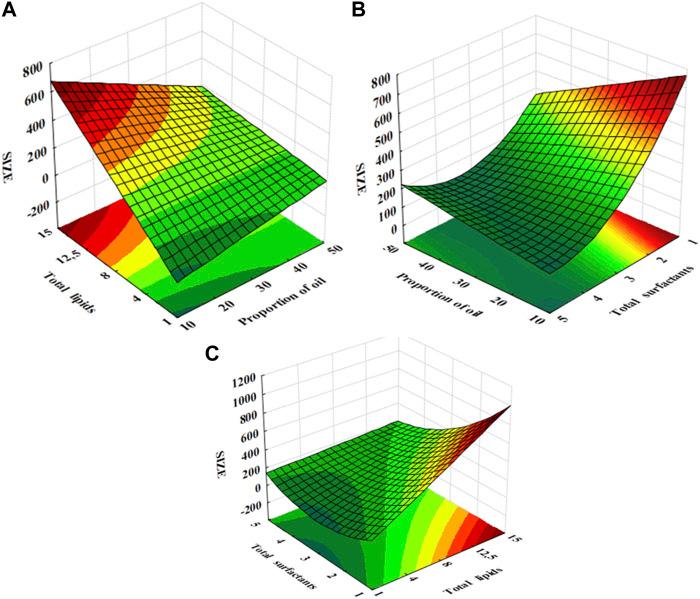
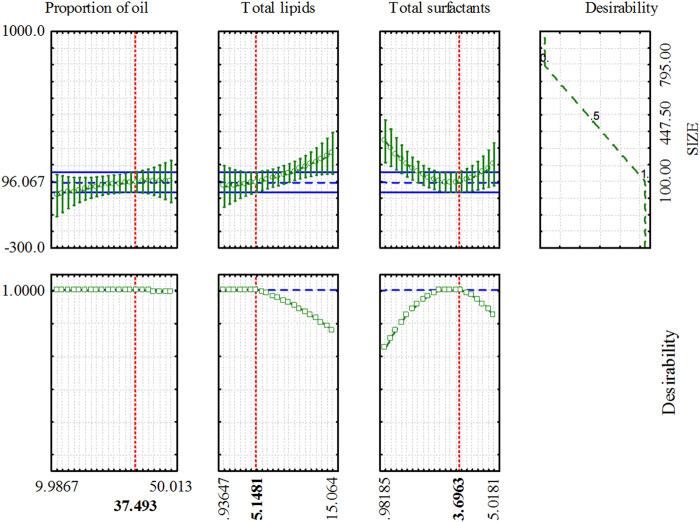
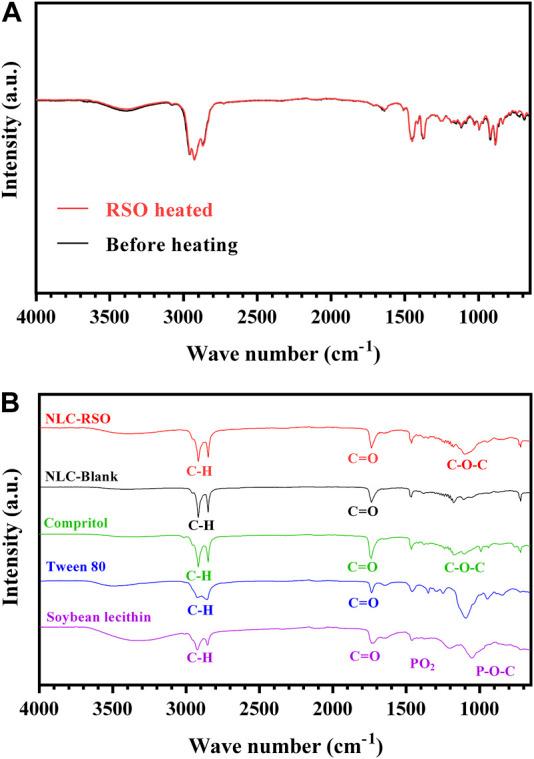
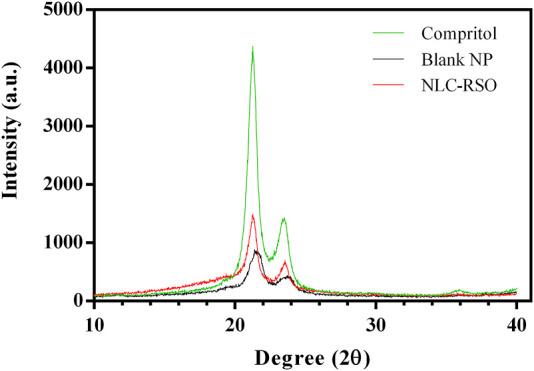
Amazonian flora includes several species with the potential to develop pharmaceutical and biotechnological products. The essential oils from Amazonian species possess some biological properties, such as antioxidant, antibacterial, and cytotoxic activities. The essential oil of red sacaca (RSO), Benth., contains metabolites characterized by antioxidant and anti-inflammatory activities. Nanostructured lipid carriers (NLC) are an advantageous alternative for the effective delivery of drugs because they can solubilize lipophilic actives and reduce their cytotoxicity. This study aimed to optimize the synthesis of RSO-loaded nanostructured lipid carriers (NLC-RSO) using a 2 factorial design and investigate their antioxidant and cytotoxic effects. The red sacaca essential oil (RSO) metabolite profile was characterized using gas chromatography coupled with a mass spectrometer (GC-MS), identifying 33 metabolites, with linalool and 7-hydroxy-calamenene as the major ones, as reported in the literature. The optimized NLC-RSO formulation had a particle size less than 100 nm and a polydispersity index lower than 0.25. After characterizing NLC-RSO using Fourier-transform infrared spectroscopy, powder X-ray diffraction, zeta potential, moisture content, and wettability, cytotoxicity were performed in A549 and BEAS-2B cell lines using the resazurin metabolism assay. The data indicated a lower IC50 for RSO than for NLC-RSOs in both cell lines. Furthermore, low cytotoxicity of blank nanoparticles (blank NP) and medium chain triglycerides-loaded nanostructured lipid carriers (NLC-MCT) towards both pulmonary cell lines was noted. At a concentration of 50-100 μg/mL, free RSO exhibited higher cytotoxicity than NLC-RSO, demonstrating the protective effect of this lipid carrier in reducing cytotoxicity during metabolite delivery. Similarly, free RSO showed higher 2,2-diphenyl-1-picrylhydrazyl (DPPH) radical scavenging than NLC-RSO, also indicating this protective effect. The 2',7'-dichlorofluorescein diacetate (DCFH-DA) intracellular reactive oxygen species (ROS) level assay did not show differences between the treatments at higher but non-cytotoxic dosages. Taken together, our results suggest that NLC-RSOs are potential RSO delivery systems for applications related to cancer treatment.
亚马逊植物群包括几种有潜力开发医药和生物技术产品的物种。亚马逊物种的精油具有一些生物学特性,如抗氧化、抗菌和细胞毒性活性。红萨卡卡(RSO),Benth.的精油含有具有抗氧化和抗炎活性的代谢物。纳米结构脂质载体(NLC)是有效递送药物的一种有利选择,因为它们可以溶解亲脂性活性成分并降低其细胞毒性。本研究旨在使用二因素设计优化负载RSO的纳米结构脂质载体(NLC-RSO)的合成,并研究其抗氧化和细胞毒性作用。使用气相色谱-质谱联用(GC-MS)对红萨卡卡精油(RSO)的代谢物谱进行了表征,鉴定出33种代谢物,文献报道以芳樟醇和7-羟基菖蒲烯为主要成分。优化后的NLC-RSO制剂的粒径小于100nm,多分散指数低于0.25。使用傅里叶变换红外光谱、粉末X射线衍射、zeta电位、水分含量和润湿性对NLC-RSO进行表征后,使用刃天青代谢试验在A549和BEAS-2B细胞系中进行细胞毒性试验。数据表明,在两种细胞系中,RSO的IC50均低于NLC-RSO。此外,还注意到空白纳米颗粒(空白NP)和负载中链甘油三酯的纳米结构脂质载体(NLC-MCT)对两种肺细胞系的细胞毒性较低。在浓度为50-100μg/mL时,游离RSO比NLC-RSO表现出更高的细胞毒性,表明这种脂质载体在代谢物递送过程中具有降低细胞毒性的保护作用。同样,游离RSO比NLC-RSO表现出更高的2,2-二苯基-1-苦基肼(DPPH)自由基清除能力,也表明了这种保护作用。在较高但无细胞毒性的剂量下,2',7'-二氯荧光素二乙酸酯(DCFH-DA)细胞内活性氧(ROS)水平测定未显示各处理之间存在差异。综上所述,我们的结果表明,NLC-RSO是用于癌症治疗相关应用的潜在RSO递送系统。


 Zotero 插件