
细菌淀粉样蛋白酚溶性调节素α3对与阿尔茨海默病相关的β淀粉样蛋白聚集的影响。
Effect of Bacterial Amyloid Protein Phenol-Soluble Modulin Alpha 3 on the Aggregation of Amyloid Beta Protein Associated with Alzheimer's Disease.
作者信息
Peng Bushu, Xu Shaoying, Liang Yue, Dong Xiaoyan, Sun Yan
机构信息
Department of Biochemical Engineering, School of Chemical Engineering and Technology, Key Laboratory of Systems Bioengineering and Frontiers Science Center for Synthetic Biology (Ministry of Education), Tianjin University, Tianjin 300350, China.
出版信息
Biomimetics (Basel). 2023 Oct 1;8(6):459. doi: 10.3390/biomimetics8060459.
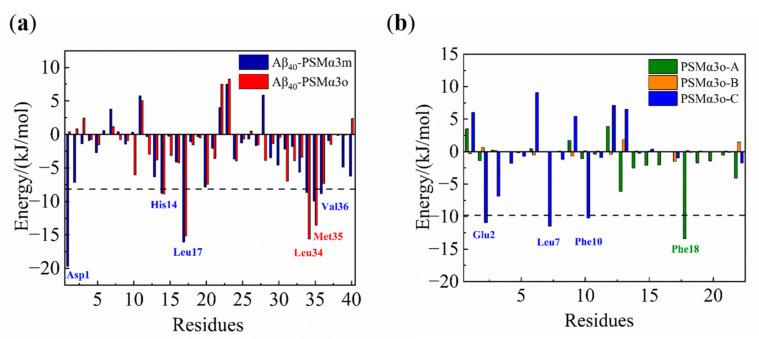
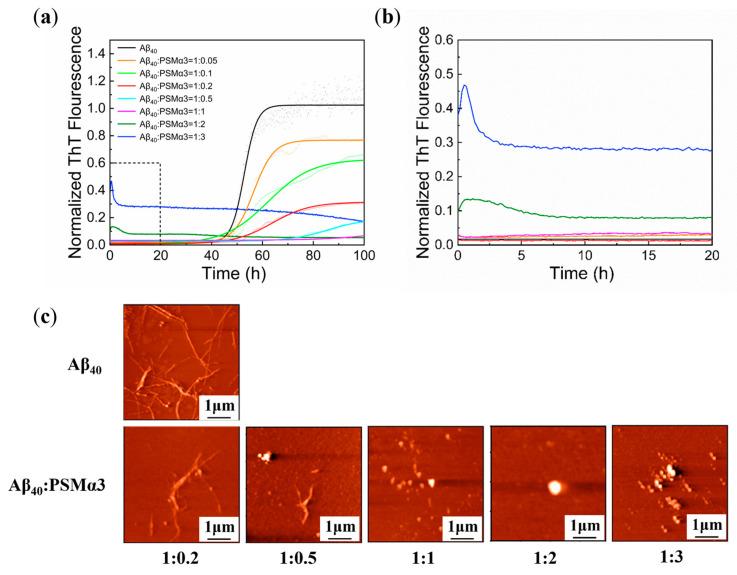
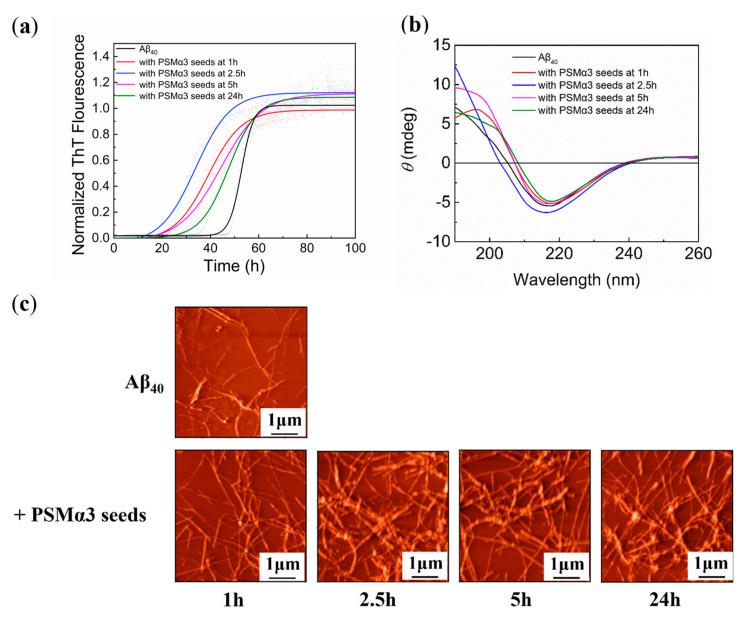
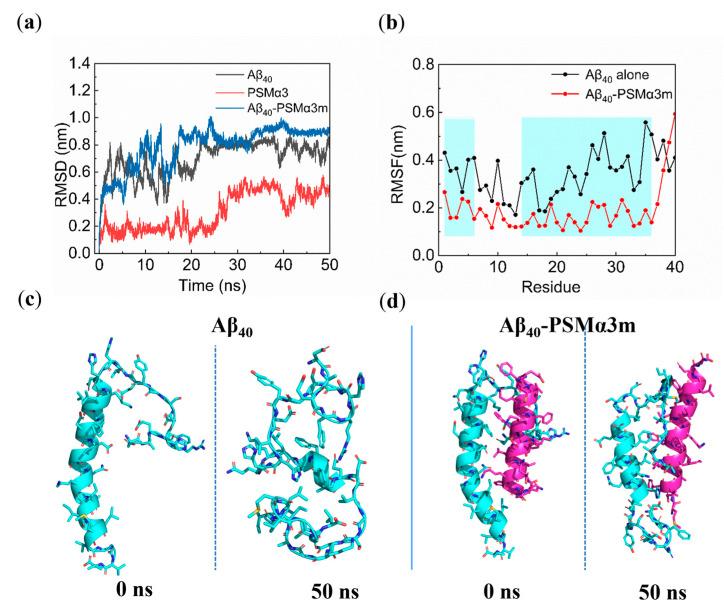
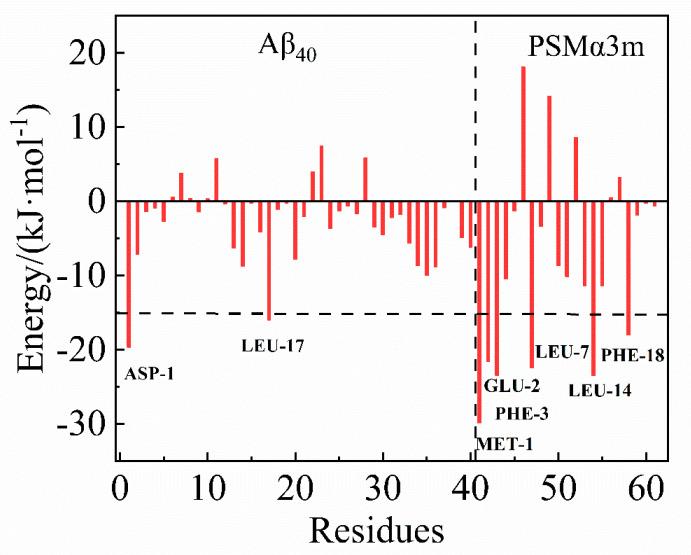
Since the proposal of the brainstem axis theory, increasing research attention has been paid to the interactions between bacterial amyloids produced by intestinal flora and the amyloid β-protein (Aβ) related to Alzheimer's disease (AD), and it has been considered as the possible cause of AD. Therefore, phenol-soluble modulin (PSM) α3, the most virulent protein secreted by , has attracted much attention. In this work, the effect of PSMα3 with a unique cross-α fibril architecture on the aggregation of pathogenic Aβ of AD was studied by extensive biophysical characterizations. The results proposed that the PSMα3 monomer inhibited the aggregation of Aβ in a concentration-dependent manner and changed the aggregation pathway to form granular aggregates. However, PSMα3 oligomers promoted the generation of the β-sheet structure, thus shortening the lag phase of Aβ aggregation. Moreover, the higher the cross-α content of PSMα3, the stronger the effect of the promotion, indicating that the cross-α structure of PSMα3 plays a crucial role in the aggregation of Aβ. Further molecular dynamics (MD) simulations have shown that the Met1-Gly20 region in the PSMα3 monomer can be combined with the Asp1-Ala2 and His13-Val36 regions in the Aβ monomer by hydrophobic and electrostatic interactions, which prevents the conformational conversion of Aβ from the α-helix to β-sheet structure. By contrast, PSMα3 oligomers mainly combined with the central hydrophobic core (CHC) and the C-terminal region of the Aβ monomer by weak H-bonding and hydrophobic interactions, which could not inhibit the transition to the β-sheet structure in the aggregation pathway. Thus, the research has unraveled molecular interactions between Aβ and PSMα3 of different structures and provided a deeper understanding of the complex interactions between bacterial amyloids and AD-related pathogenic Aβ.
自从脑干轴理论提出以来,肠道菌群产生的细菌淀粉样蛋白与阿尔茨海默病(AD)相关的淀粉样β蛋白(Aβ)之间的相互作用受到了越来越多的研究关注,并被认为是AD的可能病因。因此,金黄色葡萄球菌分泌的毒性最强的蛋白——酚溶性调节素(PSM)α3受到了广泛关注。在这项工作中,通过广泛的生物物理表征研究了具有独特交叉α纤维结构的PSMα3对AD致病性Aβ聚集的影响。结果表明,PSMα3单体以浓度依赖的方式抑制Aβ的聚集,并改变聚集途径形成颗粒状聚集体。然而,PSMα3寡聚体促进了β折叠结构的生成,从而缩短了Aβ聚集的延迟期。此外,PSMα3的交叉α含量越高,促进作用越强,表明PSMα3的交叉α结构在Aβ聚集过程中起关键作用。进一步的分子动力学(MD)模拟表明,PSMα3单体中的Met1-Gly20区域可通过疏水和静电相互作用与Aβ单体中的Asp1-Ala2和His13-Val36区域结合,从而阻止Aβ从α螺旋构象转变为β折叠结构。相比之下,PSMα3寡聚体主要通过弱氢键和疏水相互作用与Aβ单体的中央疏水核心(CHC)和C末端区域结合,这不能抑制聚集途径中向β折叠结构的转变。因此,该研究揭示了不同结构的Aβ与PSMα3之间的分子相互作用,为深入了解细菌淀粉样蛋白与AD相关致病性Aβ之间的复杂相互作用提供了依据。

 Zotero 插件