
布加勒斯特空气中的颗粒物与新冠病毒大流行之间的联系。
Linkage between Airborne Particulate Matter and Viral Pandemic COVID-19 in Bucharest.
作者信息
Zoran Maria, Savastru Roxana, Savastru Dan, Tautan Marina, Tenciu Daniel
机构信息
C Department, National Institute of R&D for Optoelectronics, 409 Atomistilor Street, MG5, 077125 Magurele, Romania.
出版信息
Microorganisms. 2023 Oct 10;11(10):2531. doi: 10.3390/microorganisms11102531.
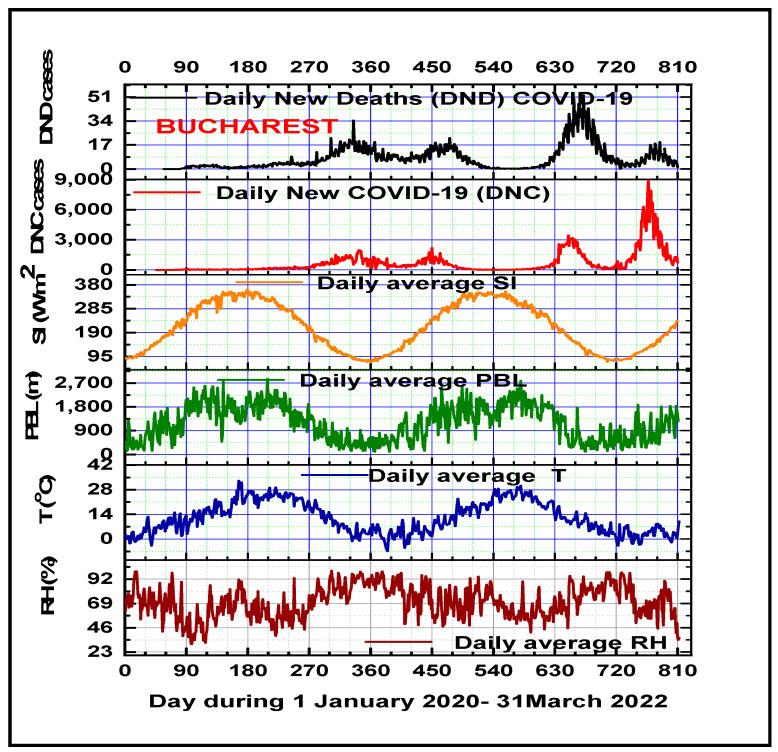
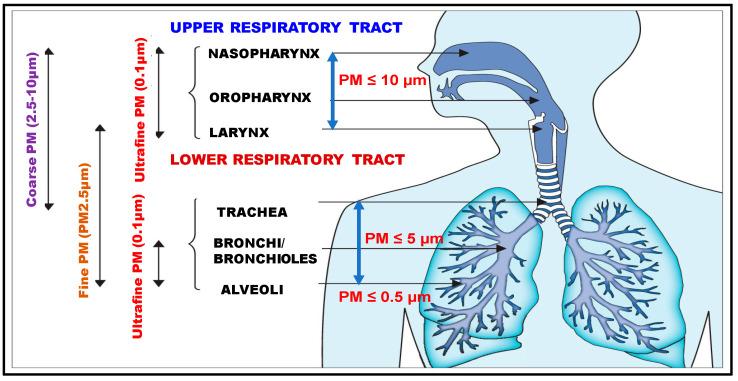
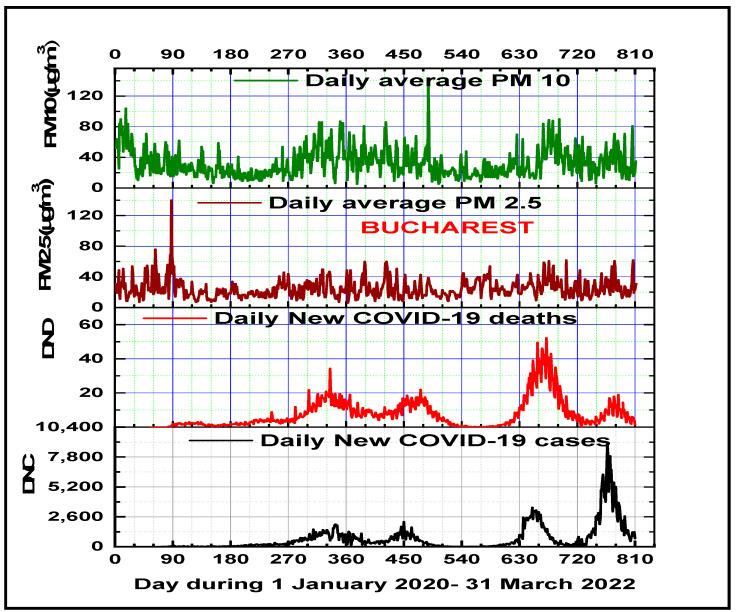
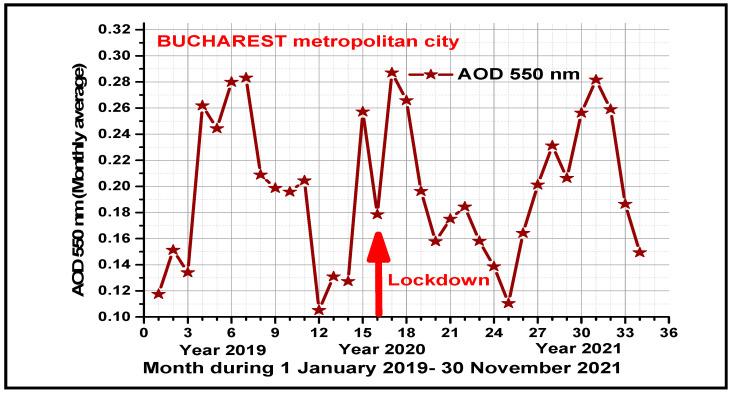
The long-distance spreading and transport of airborne particulate matter (PM) of biogenic or chemical compounds, which are thought to be possible carriers of SARS-CoV-2 virions, can have a negative impact on the incidence and severity of COVID-19 viral disease. Considering the total Aerosol Optical Depth at 550 nm (AOD) as an atmospheric aerosol loading variable, inhalable fine PM with a diameter ≤2.5 µm (PM2.5) or coarse PM with a diameter ≤10 µm (PM10) during 26 February 2020-31 March 2022, and COVID-19's five waves in Romania, the current study investigates the impact of outdoor PM on the COVID-19 pandemic in Bucharest city. Through descriptive statistics analysis applied to average daily time series in situ and satellite data of PM2.5, PM10, and climate parameters, this study found decreased trends of PM2.5 and PM10 concentrations of 24.58% and 18.9%, respectively compared to the pre-pandemic period (2015-2019). Exposure to high levels of PM2.5 and PM10 particles was positively correlated with COVID-19 incidence and mortality. The derived average PM2.5/PM10 ratios during the entire pandemic period are relatively low (<0.44), indicating a dominance of coarse traffic-related particles' fraction. Significant reductions of the averaged AOD levels over Bucharest were recorded during the first and third waves of COVID-19 pandemic and their associated lockdowns (~28.2% and ~16.4%, respectively) compared to pre-pandemic period (2015-2019) average AOD levels. The findings of this research are important for decision-makers implementing COVID-19 safety controls and health measures during viral infections.
生物源或化合物的空气传播颗粒物(PM)的远距离扩散和传输被认为可能是SARS-CoV-2病毒粒子的载体,这可能对COVID-19病毒性疾病的发病率和严重程度产生负面影响。将550纳米处的总气溶胶光学厚度(AOD)作为大气气溶胶负荷变量,考虑2020年2月26日至2022年3月31日期间直径≤2.5微米的可吸入细颗粒物(PM2.5)或直径≤10微米的粗颗粒物(PM10),以及罗马尼亚的COVID-19五波疫情,本研究调查了室外PM对布加勒斯特市COVID-19大流行的影响。通过对PM2.5、PM10和气候参数的平均每日时间序列原位和卫星数据进行描述性统计分析,本研究发现,与大流行前时期(2015-2019年)相比,PM2.5和PM10浓度分别下降了24.58%和18.9%。暴露于高水平的PM2.5和PM10颗粒与COVID-19的发病率和死亡率呈正相关。在整个大流行期间得出的平均PM2.5/PM10比率相对较低(<0.44),表明与交通相关的粗颗粒部分占主导地位。与大流行前时期(2015-2019年)的平均AOD水平相比,在COVID-19大流行的第一波和第三波及其相关封锁期间,布加勒斯特的平均AOD水平显著降低(分别约为28.2%和16.4%)。本研究结果对在病毒感染期间实施COVID-19安全控制和健康措施的决策者具有重要意义。

 Zotero 插件