
免疫检查点抑制剂在转移性胰腺癌中的作用:现状与展望
The Role of Immune Checkpoint Inhibitors in Metastatic Pancreatic Cancer: Current State and Outlook.
作者信息
Tran Linh Chi, Özdemir Berna C, Berger Martin D
机构信息
Department of Medical Oncology, Inselspital, Bern University Hospital, University of Bern, 3010 Bern, Switzerland.
出版信息
Pharmaceuticals (Basel). 2023 Oct 4;16(10):1411. doi: 10.3390/ph16101411.
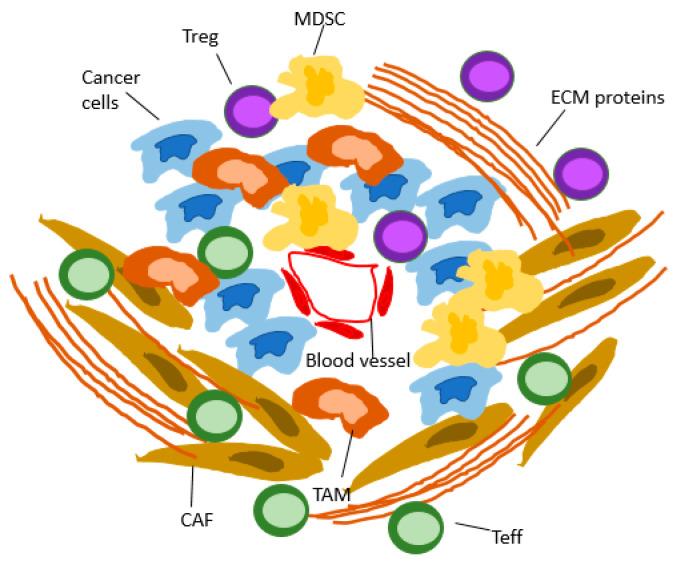
Pancreatic ductal adenocarcinoma (PDAC) is one of the deadliest tumors, characterized by its aggressive tumor biology and poor prognosis. While immune checkpoint inhibitors (ICIs) play a major part in the treatment algorithm of various solid tumors, there is still no evidence of clinical benefit from ICI in patients with metastatic PDAC (mPDAC). This might be due to several reasons, such as the inherent low immunogenicity of pancreatic cancer, the dense stroma-rich tumor microenvironment that precludes an efficient migration of antitumoral effector T cells to the cancer cells, and the increased proportion of immunosuppressive immune cells, such as regulatory T cells (Tregs), cancer-associated fibroblasts (CAFs), and myeloid-derived suppressor cells (MDSCs), facilitating tumor growth and invasion. In this review, we provide an overview of the current state of ICIs in mPDAC, report on the biological rationale to implement ICIs into the treatment strategy of pancreatic cancer, and discuss preclinical studies and clinical trials in this field. Additionally, we shed light on the challenges of implementing ICIs into the treatment strategy of PDAC and discuss potential future directions.
胰腺导管腺癌(PDAC)是最致命的肿瘤之一,其特点是具有侵袭性的肿瘤生物学行为和较差的预后。虽然免疫检查点抑制剂(ICIs)在各种实体瘤的治疗方案中发挥着重要作用,但在转移性胰腺导管腺癌(mPDAC)患者中,仍没有证据表明ICIs具有临床获益。这可能是由于多种原因,例如胰腺癌固有的低免疫原性、富含基质的致密肿瘤微环境阻碍了抗肿瘤效应T细胞向癌细胞的有效迁移,以及免疫抑制性免疫细胞比例增加,如调节性T细胞(Tregs)、癌症相关成纤维细胞(CAFs)和骨髓来源的抑制细胞(MDSCs),促进了肿瘤的生长和侵袭。在这篇综述中,我们概述了ICIs在mPDAC中的现状,报告了将ICIs纳入胰腺癌治疗策略的生物学原理,并讨论了该领域的临床前研究和临床试验。此外,我们阐明了将ICIs纳入PDAC治疗策略所面临的挑战,并讨论了潜在的未来方向。

 Zotero 插件