
硅酸和腐殖酸引发处理可提高小扁豆( 种)对微量和大量养分的吸收、耐盐胁迫能力、种子质量以及生理生化参数。
Silicic and Humic Acid Priming Improves Micro- and Macronutrient Uptake, Salinity Stress Tolerance, Seed Quality, and Physio-Biochemical Parameters in Lentil ( spp. ).
作者信息
Rao Deepak, Yadav Sangita, Choudhary Ravish, Singh Dharmendra, Bhardwaj Rakesh, Barthakur Sharmistha, Yadav Shiv Kumar
机构信息
Division of Seed Science and Technology, ICAR-Indian Agricultural Research Institute, New Delhi 110012, India.
Division of Genetics, ICAR-Indian Agricultural Research Institute, New Delhi 110012, India.
出版信息
Plants (Basel). 2023 Oct 11;12(20):3539. doi: 10.3390/plants12203539.
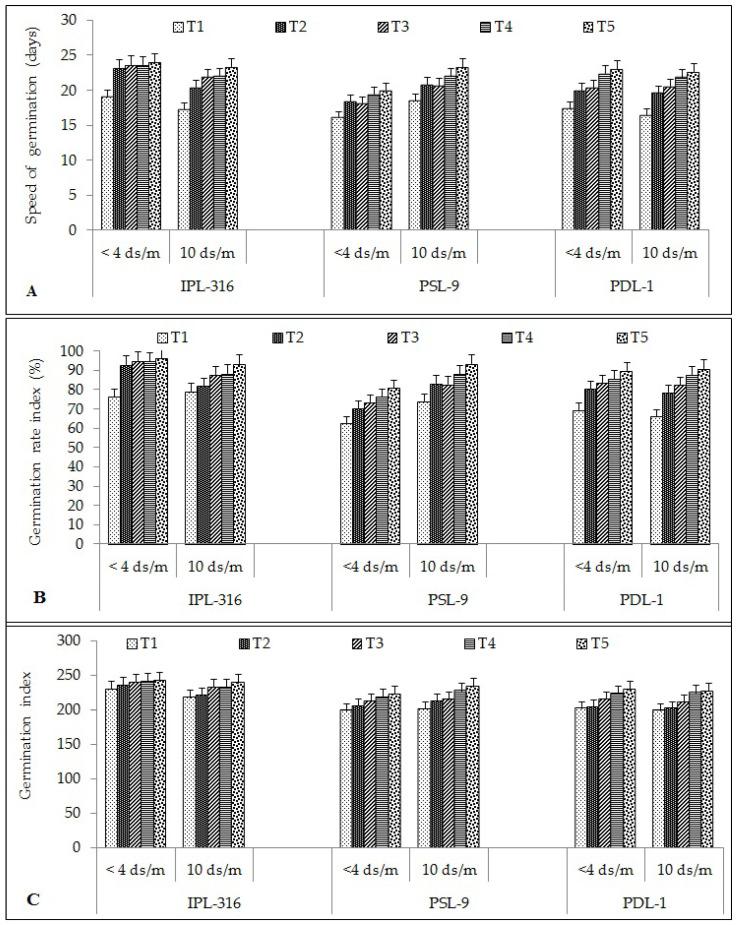
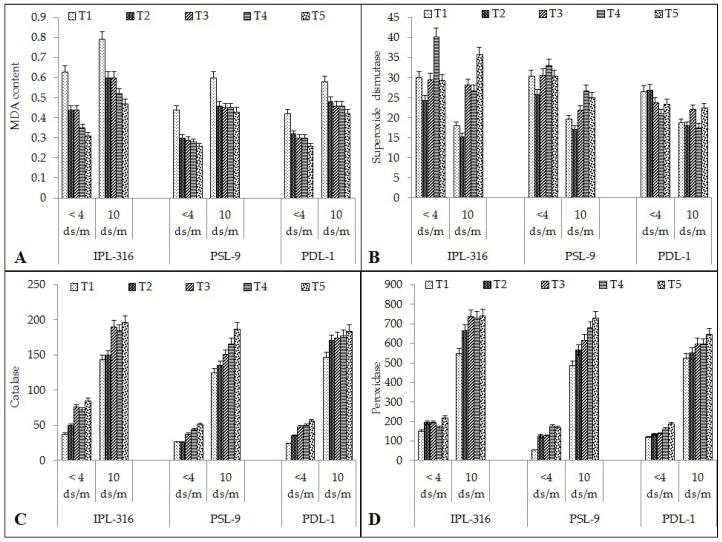
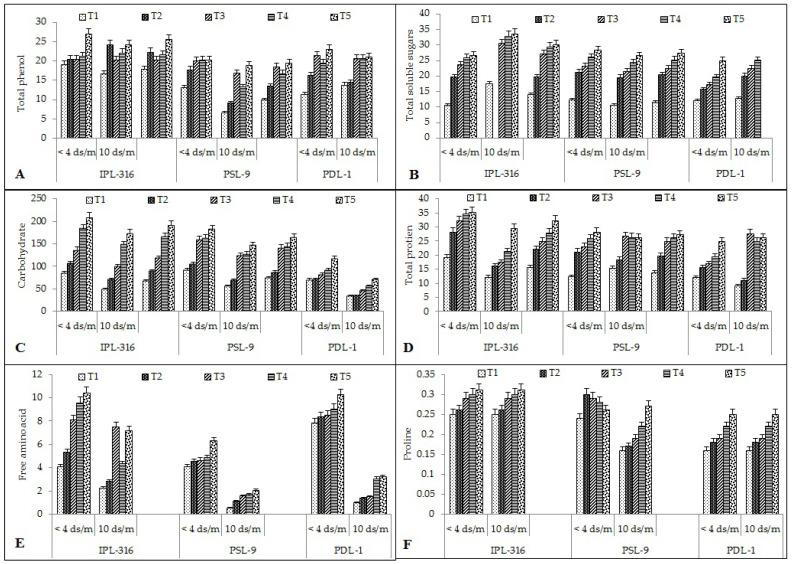
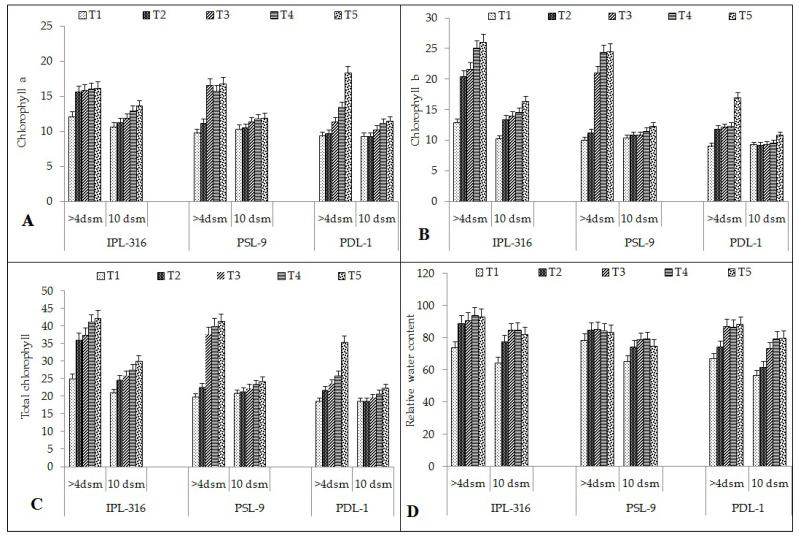
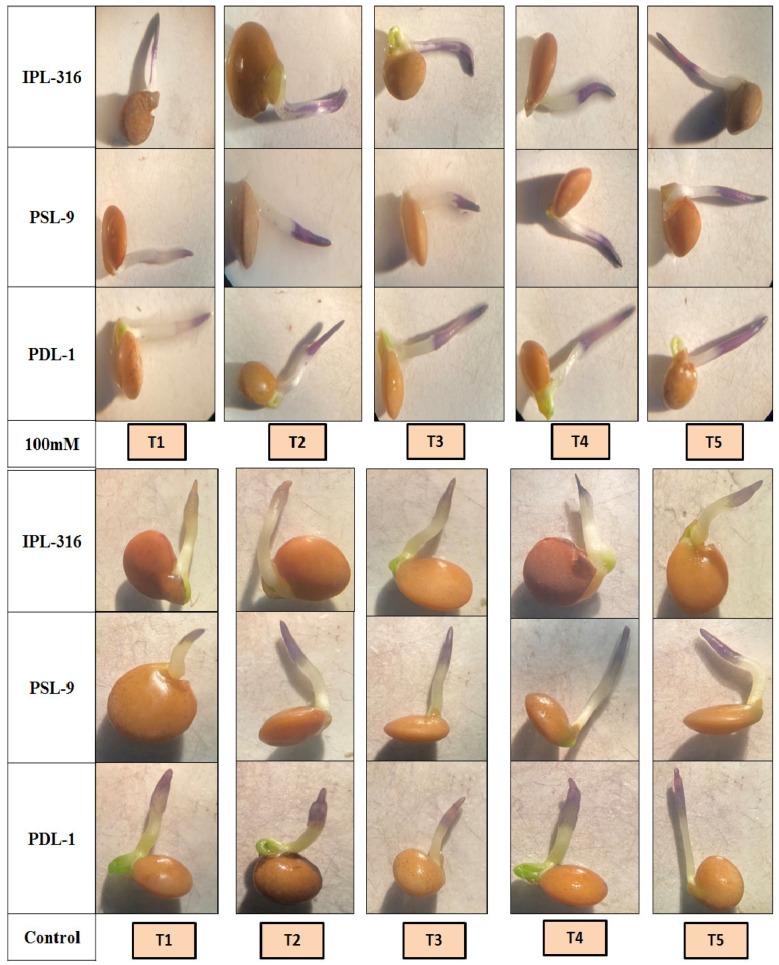
Lentil is an important grain legume crop which is mostly grown on marginal soils that hamper its productivity. Improvement of salt tolerance in lentils is considered to be a useful strategy of utilizing salt-affected lands in an economic manner. This study was conducted to evaluate the effectiveness of seed priming using silicic acid and humic acid both seperately and in combination to improve salt stress tolerance among three different lentil varieties: IPL-316 (tolerant), PSL-9, and PDL-1 (susceptible). The concentrations and durations of treatments were standardized under the normal condition and the salinity stress condition. Salt stress hindered seedling emergence and biomass production and accelerated Na toxicity and oxidative damage at the seedling stage in untreated seeds. Nevertheless, chemical priming improved early seedling emergence, increased root length, shoot length, and seed vigor index I and II, and reduced the mean germination time. A significant quantitative change in biochemical parameters under normal and salinity stress conditions was observed in IPL-316,viz. Specifically, for IPL-316, the following parameters were observed (values under the normal condition and values under salt stress conditions, respectively): chlorophyll-a (16 and 13 mg/g Fw), chlorophyll-b (25 and 16 mg/g FW), total chlorophyll content (42 and 30 mg/g FW), relative leaf water content (92% and 82%), total soluble sugars (26 and 33 ug/g FW), free amino acid (10 and 7 mg/g FW), total phenol (26 and 24 mg of GAE/g FW), total protein (35 and 29 mg/g FW), carbohydrate (208 and 173 mg/g FW), superoxide dismutase (SOD) (29 and 35 unit/min./g FW), proline (0.28 and 0.32 u mol/g FW), catalase (CAT) (84 and 196 unit/mL/g FW), and peroxidase (POX) (217 and 738 unit/mL/g FW). Furthermore, histochemical analysis of HO and O, micronutrients, and macronutrients also increased, while malondialdehyde (MDA) (0.31 and 0.47 nmol/mL FW) content decreased using silicic and humic acid priming under salt stress conditions. The combination of silicic and humic acids improved seedling growth and reduced oxidative damage in lentil plants under salt stress conditions. The combination of silicic and humic acid priming hastened seedling emergence, seed quality parameters, and biochemical parameters under salt stress over respective control. To the best of our knowledge, this is the first report of integrated chemical priming in lentils for salinity stress. In conclusion, chemical priming using a combination of silicic and humic acid performed better in terms of seed quality due to enhanced antioxidant machinery, better membrane stability and osmolyte protection, and enhanced nutrient uptake under salt stress conditions.
小扁豆是一种重要的食用豆类作物,主要种植在边际土壤上,这限制了其产量。提高小扁豆的耐盐性被认为是以经济方式利用盐渍土地的一种有效策略。本研究旨在评估单独使用硅酸和腐殖酸以及两者组合进行种子引发,对三种不同小扁豆品种(IPL - 316(耐盐)、PSL - 9和PDL - 1(敏感))提高盐胁迫耐受性的效果。在正常条件和盐胁迫条件下对处理的浓度和持续时间进行了标准化。盐胁迫阻碍了未处理种子在幼苗期的出苗和生物量生产,并加速了钠毒性和氧化损伤。然而,化学引发改善了早期幼苗出苗,增加了根长、茎长以及种子活力指数I和II,并缩短了平均发芽时间。在正常和盐胁迫条件下,IPL - 316的生化参数发生了显著的定量变化。具体而言,对于IPL - 316,观察到以下参数(分别为正常条件下的值和盐胁迫条件下的值):叶绿素 - a(16和13 mg/g鲜重)、叶绿素 - b(25和16 mg/g鲜重)、总叶绿素含量(42和30 mg/g鲜重)、相对叶片含水量(92%和82%)、总可溶性糖(26和33 μg/g鲜重)、游离氨基酸(10和7 mg/g鲜重)、总酚(26和24 mg没食子酸当量/g鲜重)、总蛋白(35和29 mg/g鲜重)、碳水化合物(208和173 mg/g鲜重)、超氧化物歧化酶(SOD)(29和35单位/分钟/g鲜重)、脯氨酸(0.28和0.32 μmol/g鲜重)、过氧化氢酶(CAT)(84和196单位/毫升/g鲜重)以及过氧化物酶(POX)(217和738单位/毫升/g鲜重)。此外,在盐胁迫条件下,使用硅酸和腐殖酸引发进行组织化学分析时,HO和O、微量营养素以及大量营养素也增加了,而丙二醛(MDA)(0.31和0.47 nmol/毫升鲜重)含量降低。在盐胁迫条件下,硅酸和腐殖酸的组合改善了小扁豆植株的幼苗生长并减少了氧化损伤。在盐胁迫下,硅酸和腐殖酸引发的组合比各自的对照更快地促进了幼苗出苗、种子质量参数和生化参数。据我们所知,这是关于小扁豆综合化学引发应对盐胁迫的首次报道。总之,由于增强了抗氧化机制、更好的膜稳定性和渗透溶质保护以及在盐胁迫条件下增强了养分吸收,使用硅酸和腐殖酸组合进行化学引发在种子质量方面表现更好。


 Zotero 插件