
多基因风险评分在非洲疾病风险预测中的应用:当前的挑战与未来方向。
Polygenic risk scores for disease risk prediction in Africa: current challenges and future directions.
机构信息
The African Computational Genomics (TACG) Research Group, MRC/UVRI and LSHTM, Entebbe, Uganda.
H3Africa Bioinformatics Network (H3ABioNet) Node, Centre for Genomics Research and Innovation, NABDA/FMST, Abuja, Nigeria.
出版信息
Genome Med. 2023 Oct 30;15(1):87. doi: 10.1186/s13073-023-01245-9.
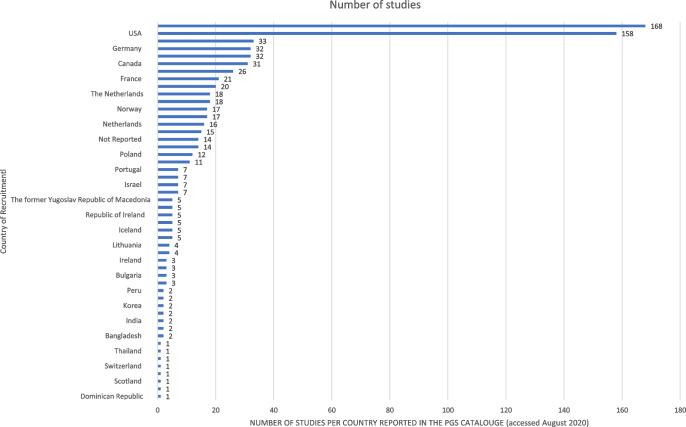
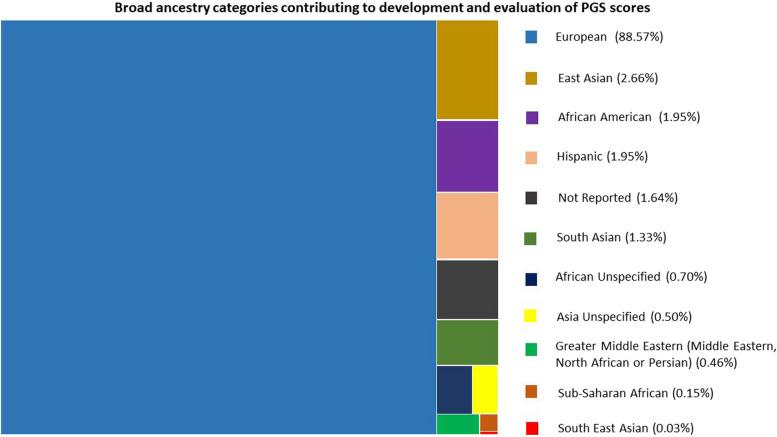
Early identification of genetic risk factors for complex diseases can enable timely interventions and prevent serious outcomes, including mortality. While the genetics underlying many Mendelian diseases have been elucidated, it is harder to predict risk for complex diseases arising from the combined effects of many genetic variants with smaller individual effects on disease aetiology. Polygenic risk scores (PRS), which combine multiple contributing variants to predict disease risk, have the potential to influence the implementation for precision medicine. However, the majority of existing PRS were developed from European data with limited transferability to African populations. Notably, African populations have diverse genetic backgrounds, and a genomic architecture with smaller haplotype blocks compared to European genomes. Subsequently, growing evidence shows that using large-scale African ancestry cohorts as discovery for PRS development may generate more generalizable findings. Here, we (1) discuss the factors contributing to the poor transferability of PRS in African populations, (2) showcase the novel Africa genomic datasets for PRS development, (3) explore the potential clinical utility of PRS in African populations, and (4) provide insight into the future of PRS in Africa.
早期识别复杂疾病的遗传风险因素可以实现及时干预,预防严重后果,包括死亡。虽然许多孟德尔疾病的遗传学基础已经阐明,但预测由许多遗传变异共同作用引起的复杂疾病的风险更为困难,这些遗传变异对疾病病因的影响较小。多基因风险评分(PRS)可以结合多个致病变异来预测疾病风险,具有影响精准医学实施的潜力。然而,大多数现有的 PRS 是基于欧洲数据开发的,对非洲人群的可转移性有限。值得注意的是,非洲人群具有多样化的遗传背景,与欧洲基因组相比,其单倍型块的基因组结构更小。随后,越来越多的证据表明,使用大规模的非洲血统队列作为 PRS 开发的发现,可以产生更具普遍性的发现。在这里,我们(1)讨论了导致 PRS 在非洲人群中可转移性差的因素,(2)展示了用于 PRS 开发的新型非洲基因组数据集,(3)探讨了 PRS 在非洲人群中的潜在临床应用,以及(4)深入了解 PRS 在非洲的未来。
 Zotero 插件