
基因组挖掘产生了具有明显缺陷的推定疾病相关 ROMK 变体。
Genome mining yields putative disease-associated ROMK variants with distinct defects.
机构信息
Department of Biological Sciences, University of Pittsburgh, Pittsburgh, Pennsylvania, United States of America.
Paradigm4, Inc., Waltham, Massachusetts, United States of America.
出版信息
PLoS Genet. 2023 Nov 13;19(11):e1011051. doi: 10.1371/journal.pgen.1011051. eCollection 2023 Nov.
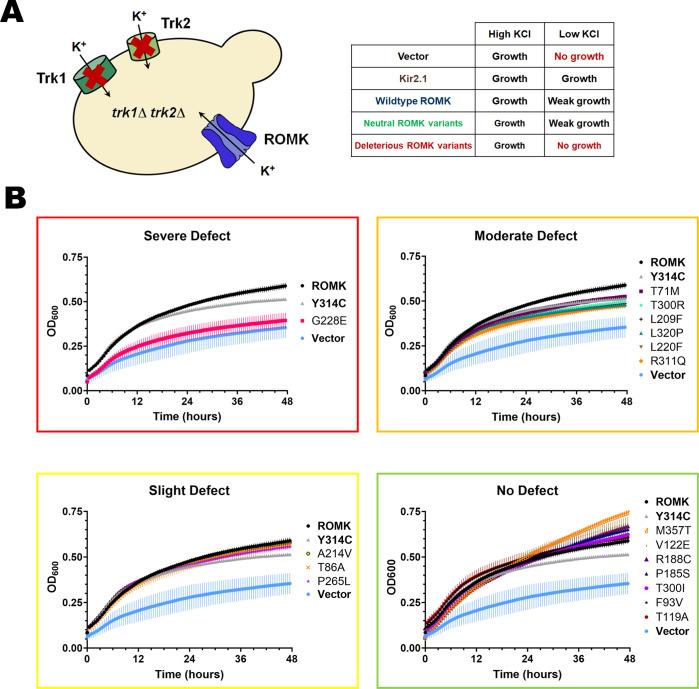
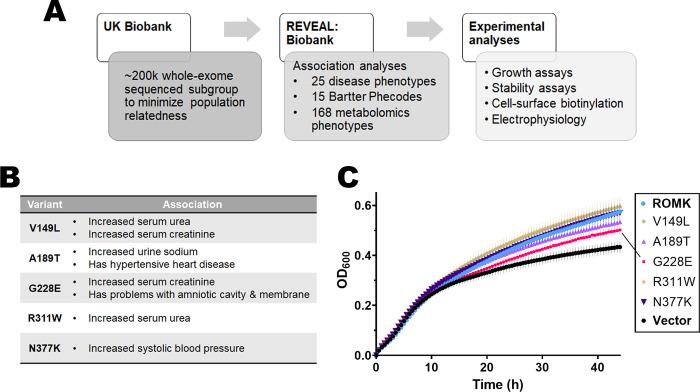
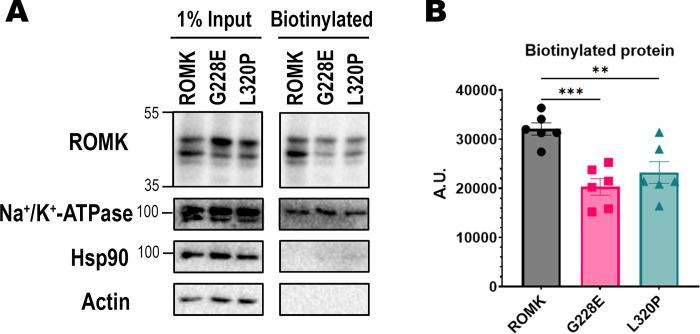
Bartter syndrome is a group of rare genetic disorders that compromise kidney function by impairing electrolyte reabsorption. Left untreated, the resulting hyponatremia, hypokalemia, and dehydration can be fatal, and there is currently no cure. Bartter syndrome type II specifically arises from mutations in KCNJ1, which encodes the renal outer medullary potassium channel, ROMK. Over 40 Bartter syndrome-associated mutations in KCNJ1 have been identified, yet their molecular defects are mostly uncharacterized. Nevertheless, a subset of disease-linked mutations compromise ROMK folding in the endoplasmic reticulum (ER), which in turn results in premature degradation via the ER associated degradation (ERAD) pathway. To identify uncharacterized human variants that might similarly lead to premature degradation and thus disease, we mined three genomic databases. First, phenotypic data in the UK Biobank were analyzed using a recently developed computational platform to identify individuals carrying KCNJ1 variants with clinical features consistent with Bartter syndrome type II. In parallel, we examined genomic data in both the NIH TOPMed and ClinVar databases with the aid of Rhapsody, a verified computational algorithm that predicts mutation pathogenicity and disease severity. Subsequent phenotypic studies using a yeast screen to assess ROMK function-and analyses of ROMK biogenesis in yeast and human cells-identified four previously uncharacterized mutations. Among these, one mutation uncovered from the two parallel approaches (G228E) destabilized ROMK and targeted it for ERAD, resulting in reduced cell surface expression. Another mutation (T300R) was ERAD-resistant, but defects in channel activity were apparent based on two-electrode voltage clamp measurements in X. laevis oocytes. Together, our results outline a new computational and experimental pipeline that can be applied to identify disease-associated alleles linked to a range of other potassium channels, and further our understanding of the ROMK structure-function relationship that may aid future therapeutic strategies to advance precision medicine.
巴特综合征是一组罕见的遗传性疾病,通过损害电解质重吸收来影响肾脏功能。如果不治疗,由此导致的低钠血症、低钾血症和脱水可能是致命的,目前尚无治愈方法。巴特综合征 II 型特别由 KCNJ1 中的突变引起,该基因编码肾脏外髓质钾通道 ROMK。已经鉴定出超过 40 种 KCNJ1 与巴特综合征相关的突变,但它们的分子缺陷大多尚未阐明。然而,一部分与疾病相关的突变会使 ROMK 在内质网(ER)中错误折叠,从而通过 ER 相关降解(ERAD)途径导致过早降解。为了鉴定可能同样导致过早降解从而导致疾病的未表征的人类变体,我们挖掘了三个基因组数据库。首先,使用最近开发的计算平台分析英国生物银行中的表型数据,以鉴定携带 KCNJ1 变体的个体,这些变体的临床特征与巴特综合征 II 型一致。同时,我们使用 Rhapsody 检查了 NIH TOPMed 和 ClinVar 数据库中的基因组数据,Rhapsody 是一种经过验证的计算算法,可预测突变的致病性和疾病严重程度。随后使用酵母筛选进行表型研究,以评估 ROMK 功能,并在酵母和人类细胞中分析 ROMK 的生物发生,从而鉴定出四个以前未表征的突变。其中,从两种平行方法中发现的一个突变(G228E)使 ROMK 失稳并使其靶向 ERAD,导致细胞表面表达减少。另一个突变(T300R)是 ERAD 抗性的,但根据在非洲爪蟾卵母细胞中进行的双电极电压钳测量,通道活性存在缺陷。总之,我们的研究结果概述了一种新的计算和实验方案,可用于鉴定与一系列其他钾通道相关的疾病相关等位基因,并进一步了解 ROMK 结构-功能关系,这可能有助于未来的治疗策略以推进精准医学。




 Zotero 插件