
一种基于咔唑的新型荧光和比色传感器,用于水溶液中铜的高灵敏度和特异性检测。
A novel carbazole-based fluorometric and colorimetric sensor for the highly sensitive and specific detection of Cu in aqueous solution.
作者信息
Li Yiduo, Wang Luyue, Wang Liqiang, Zhu Baokun, Ma Jie
机构信息
School of Materials and Chemistry, University of Shanghai for Science and Technology Shanghai 200093 P. R. China
出版信息
RSC Adv. 2023 Nov 13;13(47):33276-33287. doi: 10.1039/d3ra04571d. eCollection 2023 Nov 7.
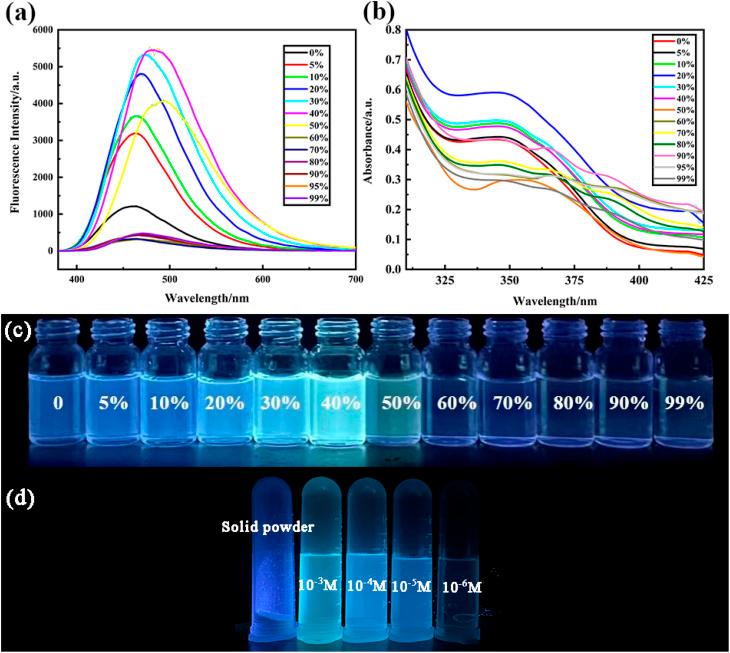
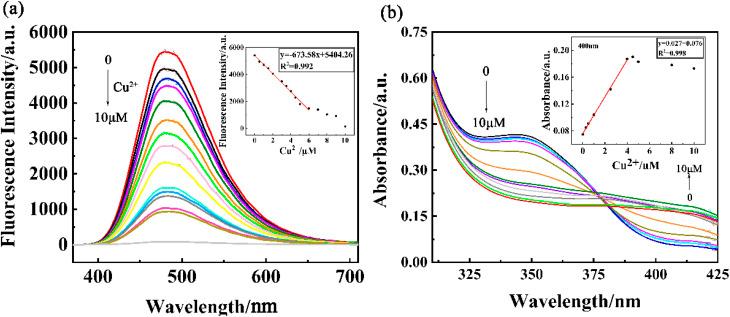
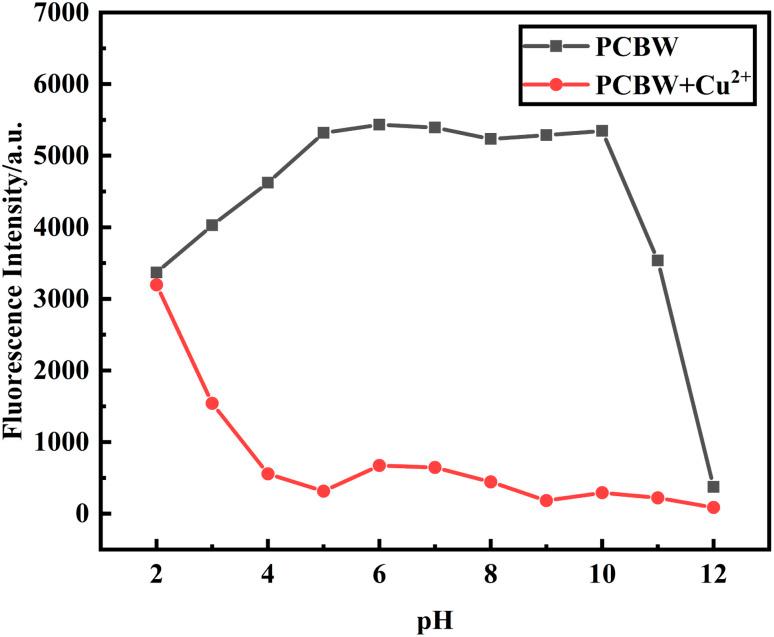
Based on the typical Suzuki coupling reaction and Schiff base reaction, a novel fluorescent molecular PCBW is synthesized and applied as a fluorescence and colorimetric sensor to detect Cu in aqueous solution. The PCBW sensor presents the aggregation-caused quenching (ACQ) effect and at 1 × 10 mol L it emits the strongest turquoise fluorescence in the DMSO-HO system ( = 40%). The sensor exhibits a 'turn-off' fluorescent characteristic by adding Cu, and its fluorescent intensity shows a reliable linear relationship with the Cu concentration in the range of 0-6 × 10 mol L, with a detection limit of 1.19 × 10 mol L. Meanwhile, the PCBW sensor also exhibits the colorimetric sensing from colorless to light yellow. The sensor has good selectivity and anti-interference and its pH application range can be extended from 5 to 10. The intramolecular charge transfer (ICT) is speculated as the main fluorescence mechanism of PCBW. In addition, the sensor presents good reusability and is practicable to detect Cu in diverse aqueous samples.
基于典型的铃木偶联反应和席夫碱反应,合成了一种新型荧光分子PCBW,并将其用作荧光和比色传感器来检测水溶液中的铜。PCBW传感器呈现聚集诱导猝灭(ACQ)效应,在1×10⁻⁵ mol/L时,它在二甲基亚砜-水体系(体积比 = 40%)中发出最强的蓝绿色荧光。通过加入铜,该传感器呈现“关断”荧光特性,其荧光强度在0 - 6×10⁻⁵ mol/L范围内与铜浓度呈现可靠的线性关系,检测限为1.19×10⁻⁷ mol/L。同时,PCBW传感器还呈现从无色到浅黄色的比色传感。该传感器具有良好的选择性和抗干扰性,其pH应用范围可从5扩展到10。推测分子内电荷转移(ICT)是PCBW的主要荧光机制。此外,该传感器具有良好的可重复使用性,可实际用于检测多种水样中的铜。








 Zotero 插件