
嵌合抗原受体 T 细胞治疗:自身免疫性风湿病领域的新进展。
Chimeric antigen receptor T cell therapy: a new emerging landscape in autoimmune rheumatic diseases.
机构信息
Department of Rheumatology, Renji Hospital, Shanghai Jiaotong University School of Medicine, Shanghai, China.
Epidemiology and Public Health Group, School of Health Sciences, The University of Manchester, Manchester, UK.
出版信息
Rheumatology (Oxford). 2024 May 2;63(5):1206-1216. doi: 10.1093/rheumatology/kead616.
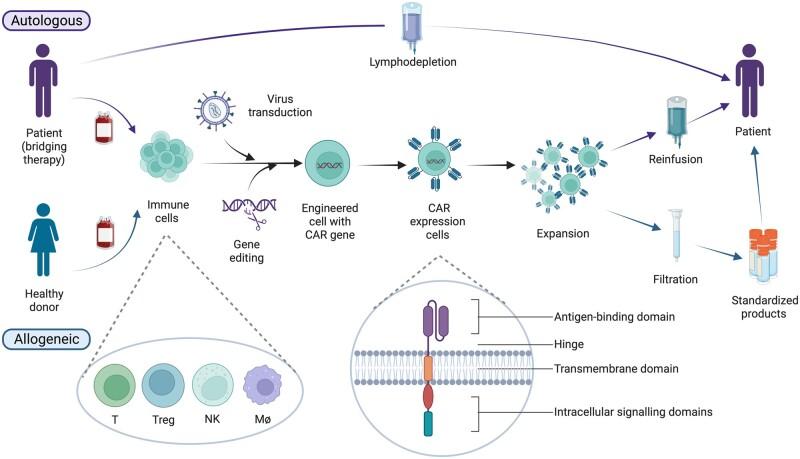
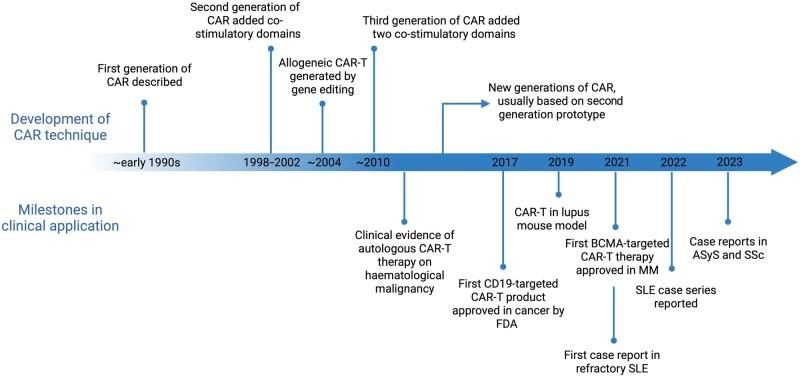
Chimeric antigen receptor T cell (CAR-T) therapy, an innovative immune cell therapy, has revolutionized the treatment landscape of haematological malignancies. The past 2 years has witnessed the successful application of CD19-targeting CAR constructs in refractory cases of autoimmune rheumatic diseases, including systemic lupus erythematosus, systemic sclerosis and anti-synthetase syndrome. In comparison with existing B cell depletion therapies, targeting CD19 has demonstrated a more rapid and profound therapeutic effect, enabling drug-free remission with manageable adverse events. These promising results necessitate validation through long-term, large-sample randomized controlled studies. Corroborating the role of CAR-T therapy in refractory rheumatological disorders and affirming safety, efficacy and durability of responses are the aims of future clinical studies. Optimizing the engineering strategies and better patient selection are also critical to further refining the successful clinical implementation of CAR-T therapy.
嵌合抗原受体 T 细胞(CAR-T)疗法作为一种创新性的免疫细胞疗法,彻底改变了血液系统恶性肿瘤的治疗格局。在过去的 2 年中,CD19 靶向 CAR 结构已成功应用于包括系统性红斑狼疮、系统性硬皮病和抗合成酶综合征在内的自身免疫性风湿病的难治性病例。与现有的 B 细胞耗竭疗法相比,靶向 CD19 具有更快速和更深刻的治疗效果,能够实现无药物缓解,且不良反应可管理。这些有前景的结果需要通过长期、大样本的随机对照研究来验证。通过未来的临床研究来证实 CAR-T 疗法在难治性风湿性疾病中的作用,确认其安全性、有效性和反应持久性,是未来的研究方向。优化工程策略和更好的患者选择对于进一步完善 CAR-T 疗法的成功临床应用也至关重要。
 Zotero 插件