
代谢组学分析作为原发性肾小球肾炎亚型潜在非侵入性生物标志物的研究:荟萃分析。
Metabolome panels as potential noninvasive biomarkers for primary glomerulonephritis sub-types: meta-analysis of profiling metabolomics studies.
机构信息
Regenerative Medicine Research Center, Faculty of Medicine, Isfahan University of Medical Sciences, Hezar Jarib St., Isfahan, 81746-73461, Iran.
Department of Laboratory Medicine and Pathology, University of Washington, School of Medicine, Seattle, USA.
出版信息
Sci Rep. 2023 Nov 21;13(1):20325. doi: 10.1038/s41598-023-47800-7.
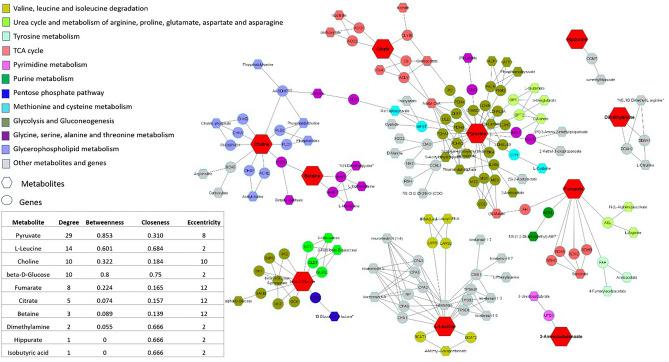
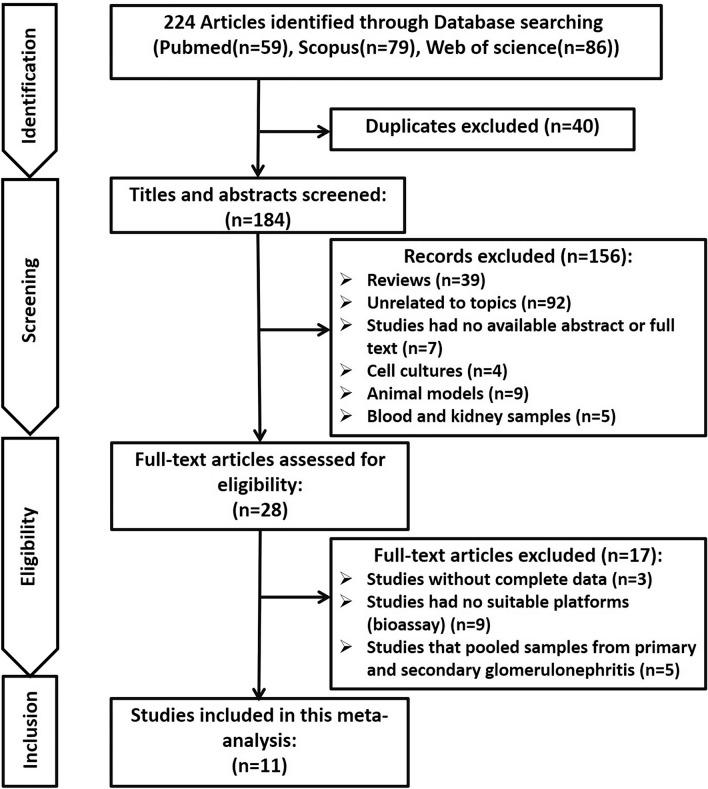
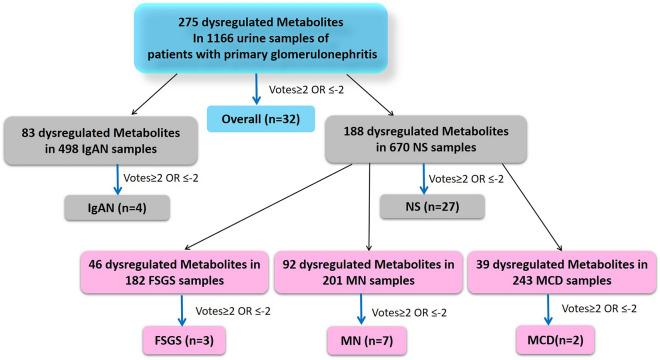
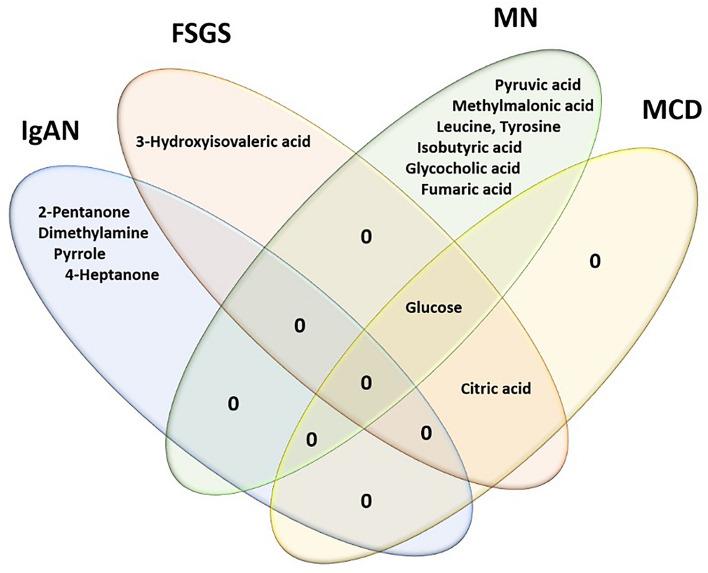
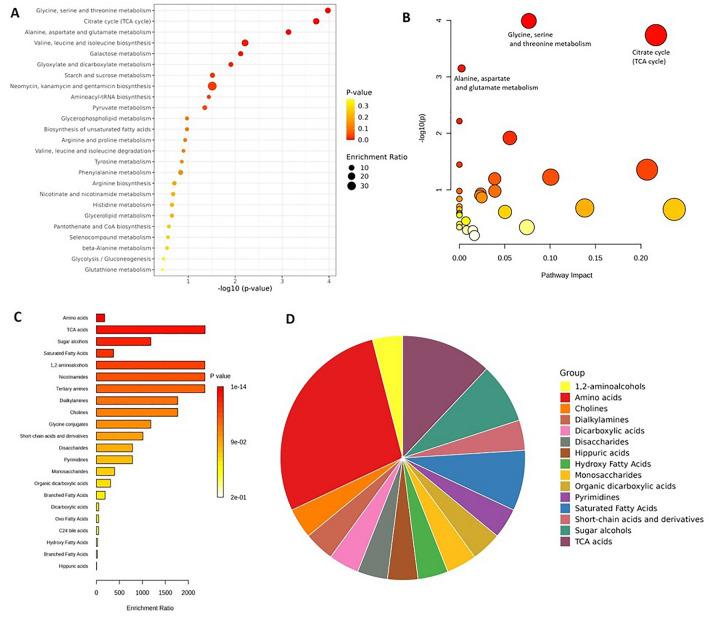
Primary glomerulonephritis diseases (PGDs) are known as the top causes of chronic kidney disease worldwide. Renal biopsy, an invasive method, is the main approach to diagnose PGDs. Studying the metabolome profiles of kidney diseases is an inclusive approach to identify the disease's underlying pathways and discover novel non-invasive biomarkers. So far, different experiments have explored the metabolome profiles in different PGDs, but the inconsistencies might hinder their clinical translations. The main goal of this meta-analysis study was to achieve consensus panels of dysregulated metabolites in PGD sub-types. The PGDs-related metabolome profiles from urine samples in humans were selected in a comprehensive search. Amanida package in R software was utilized for performing the meta-analysis. Through sub-type analyses, the consensus list of metabolites in each category was obtained. To identify the most affected pathways, functional enrichment analysis was performed. Also, a gene-metabolite network was constructed to identify the key metabolites and their connected proteins. After a vigorous search, among the 11 selected studies (15 metabolite profiles), 270 dysregulated metabolites were recognized in urine of 1154 PGDs and control samples. Through sub-type analyses by Amanida package, the consensus list of metabolites in each category was obtained. Top dysregulated metabolites (vote score of ≥ 4 or ≤ - 4) in PGDs urines were selected as main panel of meta-metabolites including glucose, leucine, choline, betaine, dimethylamine, fumaric acid, citric acid, 3-hydroxyisovaleric acid, pyruvic acid, isobutyric acid, and hippuric acid. The enrichment analyses results revealed the involvement of different biological pathways such as the TCA cycle and amino acid metabolisms in the pathogenesis of PGDs. The constructed metabolite-gene interaction network revealed the high centralities of several metabolites, including pyruvic acid, leucine, and choline. The identified metabolite panels could shed a light on the underlying pathological pathways and be considered as non-invasive biomarkers for the diagnosis of PGD sub-types.
原发性肾小球肾炎疾病(PGD)是全球慢性肾脏病的主要病因。肾活检是一种有创性方法,是诊断 PGD 的主要方法。研究肾脏疾病的代谢组谱是一种全面的方法,可以确定疾病的潜在途径并发现新的非侵入性生物标志物。到目前为止,不同的实验已经在不同的 PGD 中探索了代谢组谱,但不一致性可能会阻碍它们的临床转化。本荟萃分析研究的主要目的是确定 PGD 亚型中失调代谢物的共识面板。在全面搜索中选择了人类尿液样本中与 PGD 相关的代谢组学图谱。使用 R 软件中的 Amanida 包进行荟萃分析。通过亚型分析,获得了每个类别中失调代谢物的共识列表。为了确定受影响最严重的途径,进行了功能富集分析。还构建了基因-代谢物网络,以识别关键代谢物及其连接蛋白。经过激烈搜索,在 11 项选定的研究(15 种代谢物图谱)中,在 1154 例 PGD 和对照样本的尿液中发现了 270 种失调代谢物。通过 Amanida 包的亚型分析,获得了每个类别中失调代谢物的共识列表。PGD 尿液中代谢物(投票得分≥4 或≤-4)的共识列表被选为元代谢物的主要面板,包括葡萄糖、亮氨酸、胆碱、甜菜碱、二甲胺、富马酸、柠檬酸、3-羟基异戊酸、丙酮酸、异丁酸和马尿酸。富集分析结果表明,不同的生物途径如 TCA 循环和氨基酸代谢参与了 PGD 的发病机制。构建的代谢物-基因相互作用网络揭示了几种代谢物(包括丙酮酸、亮氨酸和胆碱)的高中心性。鉴定的代谢物面板可以阐明潜在的病理途径,并可作为 PGD 亚型诊断的非侵入性生物标志物。

 Zotero 插件