
ω-3 多不饱和脂肪酸 DHA 和 EPA 在心血管疾病中的临床效应存在变异性——可能的原因与未来的思考。
Variability in the Clinical Effects of the Omega-3 Polyunsaturated Fatty Acids DHA and EPA in Cardiovascular Disease-Possible Causes and Future Considerations.
机构信息
School of Medicine, European University Cyprus, Nicosia 2404, Cyprus.
出版信息
Nutrients. 2023 Nov 18;15(22):4830. doi: 10.3390/nu15224830.
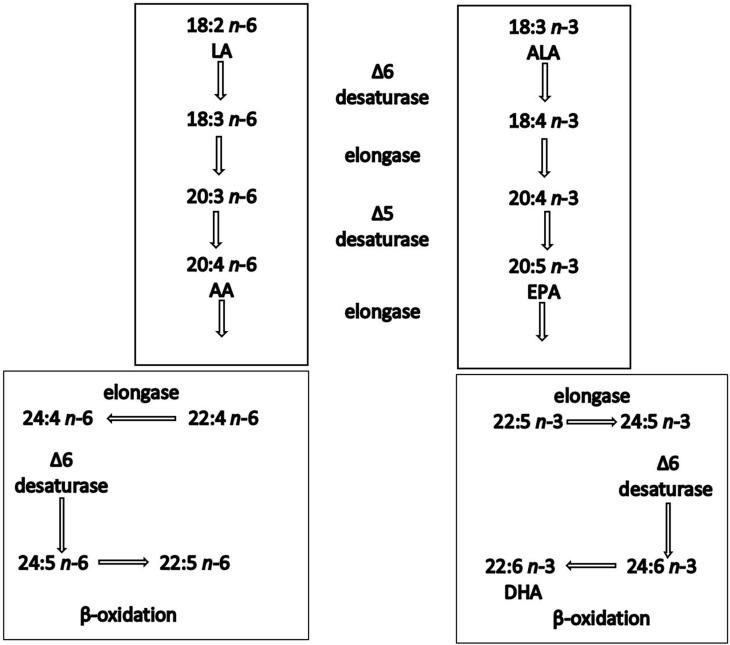
Cardiovascular disease (CVD) that includes myocardial infarction and stroke, is the leading cause of mortality worldwide. Atherosclerosis, the primary underlying cause of CVD, can be controlled by pharmacological and dietary interventions, including -3 polyunsaturated fatty acid (PUFA) supplementation. -3 PUFA supplementation, primarily consisting of eicosapentaenoic acid (EPA) and docosahexaenoic acid (DHA), has shown promise in reducing atherosclerosis by modulating risk factors, including triglyceride levels and vascular inflammation. -3 PUFAs act by replacing pro-inflammatory fatty acid types in cell membranes and plasma lipids, by regulating transcription factor activity, and by inducing epigenetic changes. EPA and DHA regulate cellular function through shared and differential molecular mechanisms. Large clinical studies on -3 PUFAs have reported conflicting findings, causing confusion among the public and health professionals. In this review, we discuss important factors leading to these inconsistencies, in the context of atherosclerosis, including clinical study design and the differential effects of EPA and DHA on cell function. We propose steps to improve clinical and basic experimental study design in order to improve supplement composition optimization. Finally, we propose that understanding the factors underlying the poor response to -3 PUFAs, and the development of molecular biomarkers for predicting response may help towards a more personalized treatment.
心血管疾病(CVD)包括心肌梗死和中风,是全球死亡的主要原因。动脉粥样硬化是 CVD 的主要潜在原因,可以通过药物和饮食干预来控制,包括 -3 多不饱和脂肪酸(PUFA)的补充。-3 PUFA 的补充,主要由二十碳五烯酸(EPA)和二十二碳六烯酸(DHA)组成,通过调节包括甘油三酯水平和血管炎症在内的风险因素,显示出减少动脉粥样硬化的潜力。-3 PUFAs 通过在细胞膜和血浆脂质中取代促炎脂肪酸类型、调节转录因子活性和诱导表观遗传变化来发挥作用。EPA 和 DHA 通过共享和差异的分子机制调节细胞功能。关于 -3 PUFAs 的大型临床研究报告了相互矛盾的发现,这在公众和卫生专业人员中引起了混淆。在这篇综述中,我们讨论了导致这些不一致的重要因素,包括临床研究设计以及 EPA 和 DHA 对细胞功能的不同影响,以动脉粥样硬化为背景。我们提出了改进临床和基础实验研究设计的步骤,以改善补充剂成分的优化。最后,我们提出,了解对 -3 PUFAs 反应不佳的背后因素以及预测反应的分子生物标志物的发展,可能有助于实现更个性化的治疗。

 Zotero 插件