
重新审视电穿孔介导的组织固定化学:能够捕获大脑中的小分子以可视化其分布变化。
Revisiting PFA-mediated tissue fixation chemistry: enables trapping of small molecules in the brain to visualize their distribution changes.
作者信息
Nonaka Hiroshi, Mino Takeharu, Sakamoto Seiji, Oh Jae Hoon, Watanabe Yu, Ishikawa Mamoru, Tsushima Akihiro, Amaike Kazuma, Kiyonaka Shigeki, Tamura Tomonori, Aricescu A Radu, Kakegawa Wataru, Miura Eriko, Yuzaki Michisuke, Hamachi Itaru
机构信息
Department of Synthetic Chemistry and Biological Chemistry, Graduate School of Engineering, Kyoto University, Kyoto 615-8510, Japan.
ERATO (Exploratory Research for Advanced Technology, JST), Tokyo 102-0075, Japan.
出版信息
Chem. 2023 Feb;9(2):523-540. doi: 10.1016/j.chempr.2022.11.005.
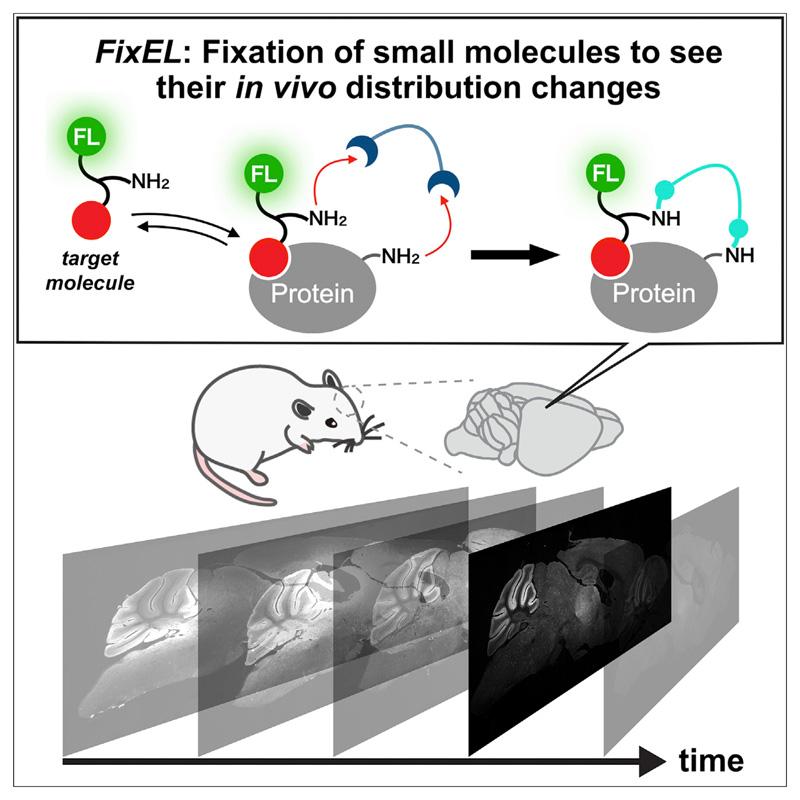
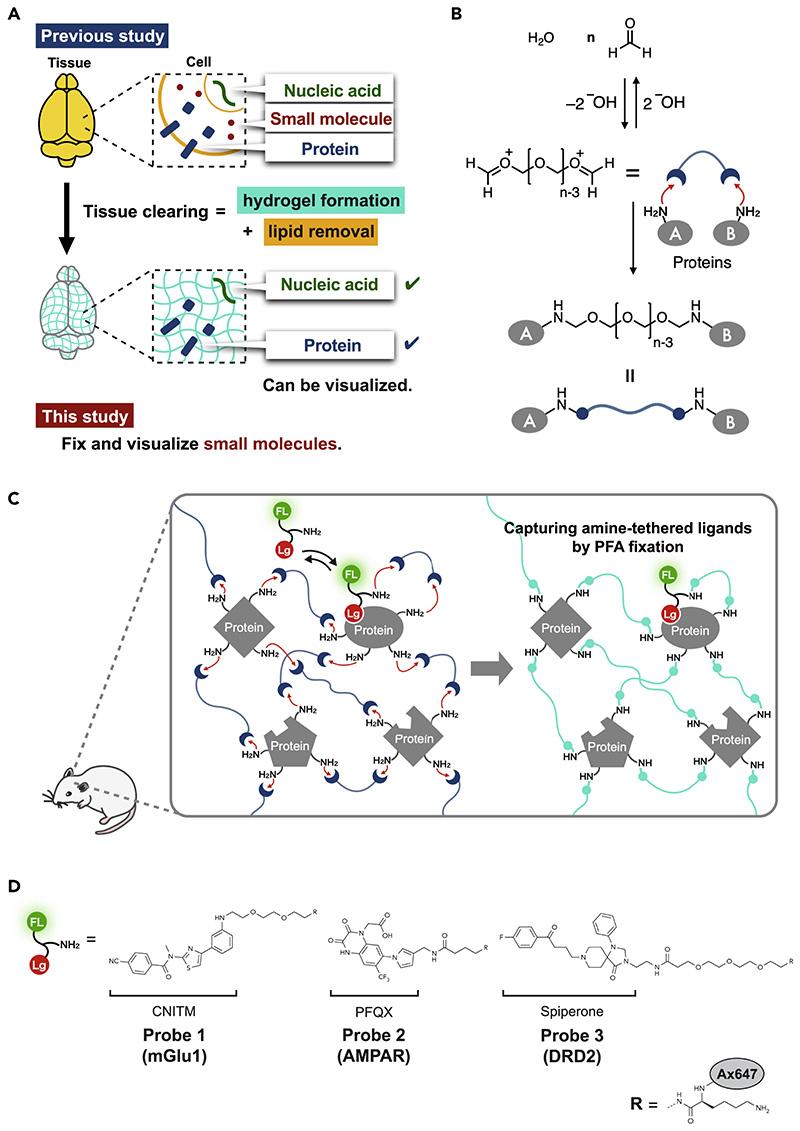
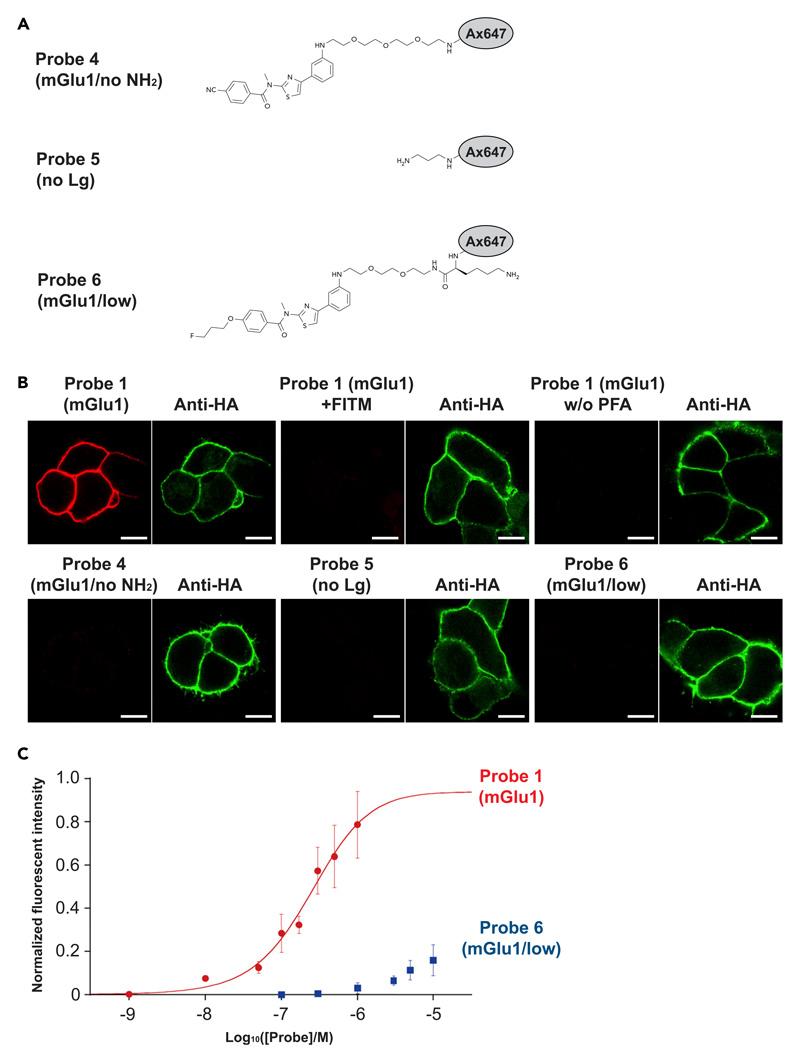
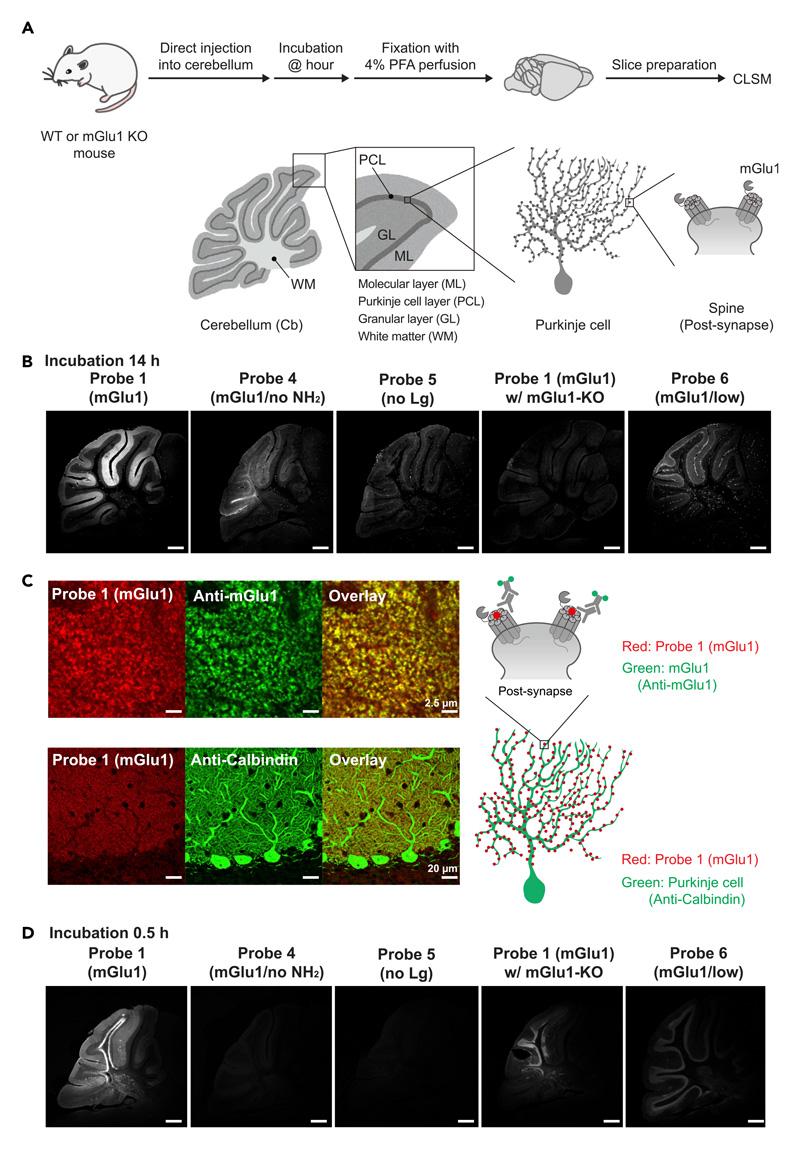
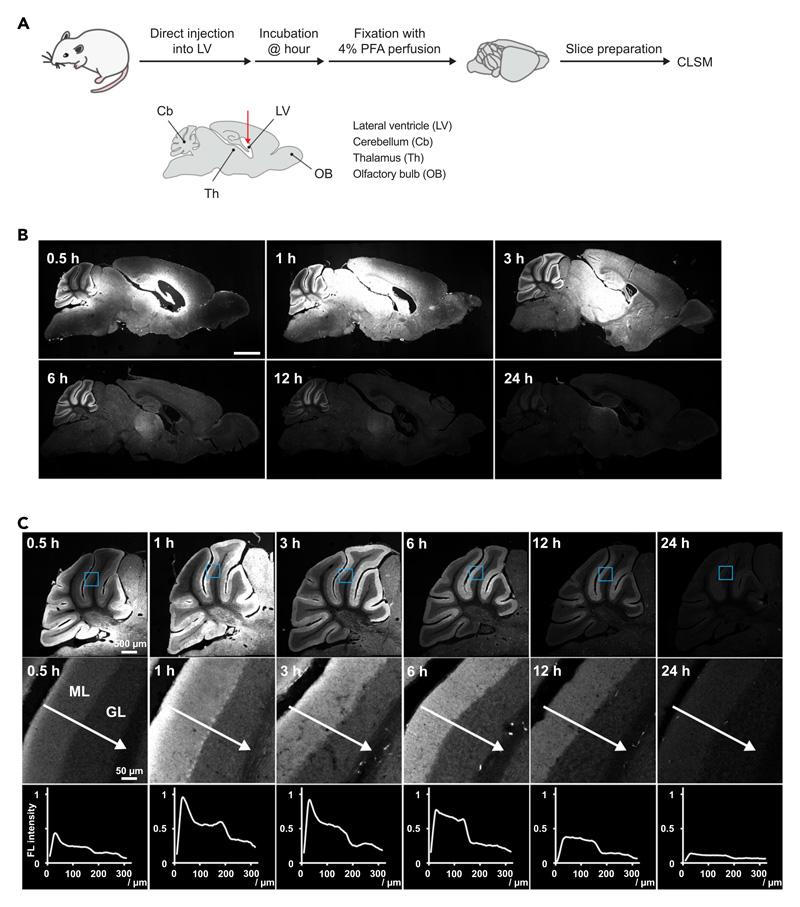
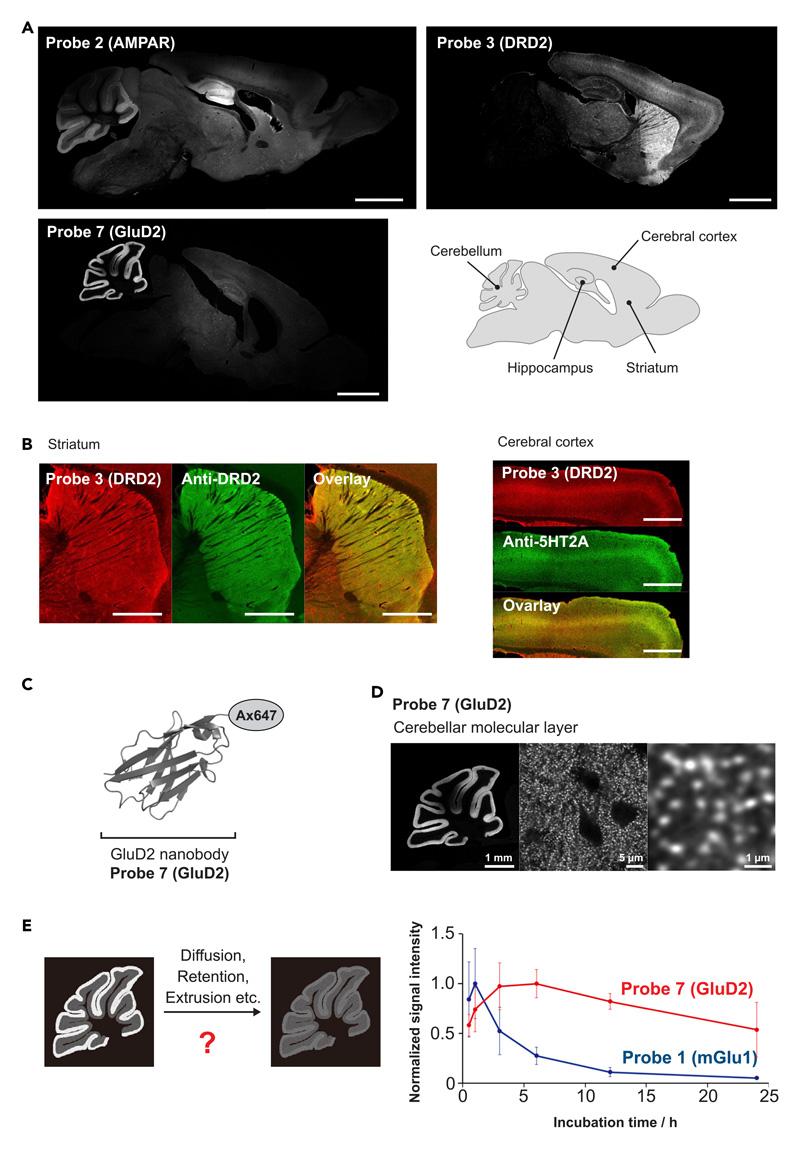
Various small molecules have been used as functional probes for tissue imaging in medical diagnosis and pharmaceutical drugs for disease treatment. The spatial distribution, target selectivity, and diffusion/excretion kinetics of small molecules in structurally complicated specimens are critical for function. However, robust methods for precisely evaluating these parameters in the brain have been limited. Herein, we report a new method termed "fixation-driven chemical cross-linking of exogenous ligands ()," which traps and images exogenously administered molecules of interest (MOIs) in complex tissues. This method relies on protein-MOI interactions and chemical cross-linking of amine-tethered MOI with paraformaldehyde used for perfusion fixation. is used to obtain images of the distribution of the small molecules, which addresses selective/nonselective binding to proteins, time-dependent localization changes, and diffusion/retention kinetics of MOIs such as the scaffold of PET tracer derivatives or drug-like small molecules.
各种小分子已被用作医学诊断中组织成像的功能探针以及疾病治疗的药物。小分子在结构复杂的标本中的空间分布、靶向选择性和扩散/排泄动力学对其功能至关重要。然而,在大脑中精确评估这些参数的可靠方法一直有限。在此,我们报告了一种新方法,称为“外源配体的固定驱动化学交联()”,该方法可捕获并成像复杂组织中外源施用的感兴趣分子(MOIs)。此方法依赖于蛋白质-MOI相互作用以及用于灌注固定的胺连接MOI与多聚甲醛的化学交联。利用该方法可获得小分子分布的图像,该图像可解决MOIs(如PET示踪剂衍生物支架或类药物小分子)与蛋白质的选择性/非选择性结合、随时间变化的定位变化以及扩散/保留动力学问题。

 Zotero 插件