
创伤性脊柱骨折和脊髓损伤后重返工作岗位:一项回顾性队列研究。
Return to work after traumatic spinal fractures and spinal cord injuries: a retrospective cohort study.
机构信息
Guilan Road Trauma Research Center, Trauma Institute, Guilan University of Medical Sciences, Rasht, Iran.
Social Determinants of Health Research Center, Trauma Institute, Guilan University of Medical Sciences, Rasht, Iran.
出版信息
Sci Rep. 2023 Dec 19;13(1):22573. doi: 10.1038/s41598-023-50033-3.
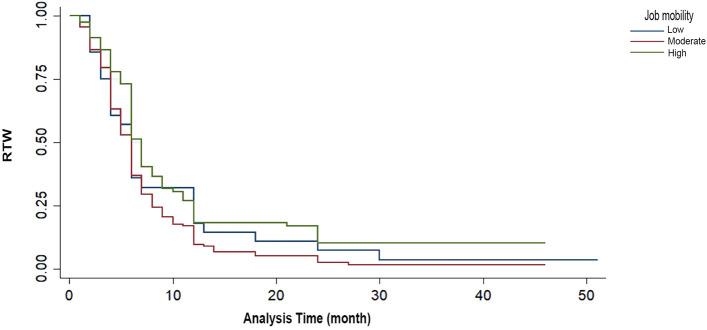
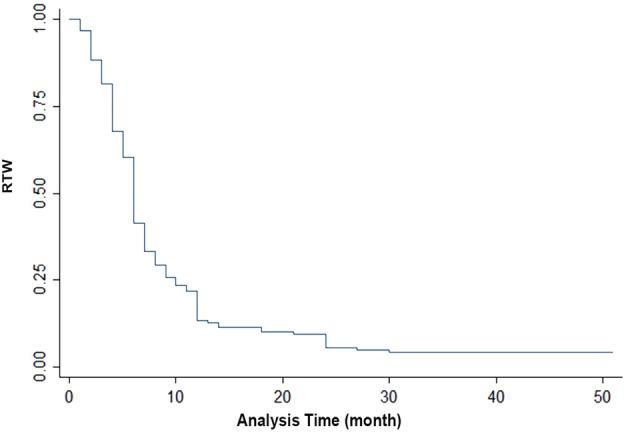
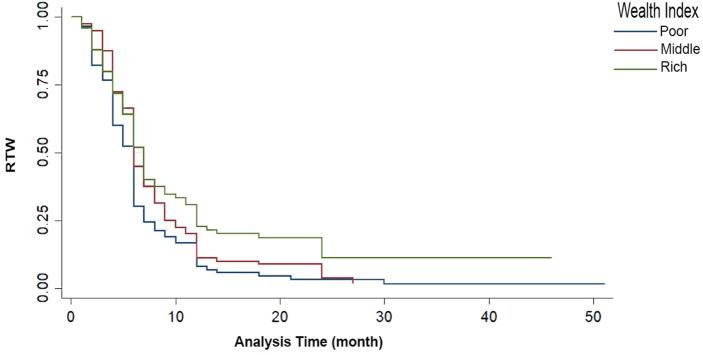
This study aimed to determine the factors associated with return to work (RTW) after traumatic spinal fracture and spinal cord injury. It provided a predictive model for RTW among patients with spinal fractures and spinal cord injury and determined important factors influencing the time to RTW after injury. A retrospective cohort study was conducted in Poursina Tertiary Hospital, Guilan, Iran between May 2017 and May 2020. Patients aged 18 to 65 who were hospitalized with traumatic spinal fractures and spinal cord injuries were included. Demographic and clinical data were collected from the National Spinal Column/Cord Injury Registry of Iran (NSCIR-IR). A researcher-administered questionnaire was used through a telephone interview to obtain complementary data on social and occupational variables. Kaplan-Meier survival analysis was used to estimate the average time to RTW and the predictors of RTW were determined by multivariate Cox regression model. Of the 300 patients included, 78.6% returned to work and the average time to RTW was about 7 months. The mean age of the participants was 45.63 ± 14.76 years old. Among the study variables, having a Bachelor's degree (HR 2.59; 95% CI 1.16-5.77; P = 0.019), complications after injury (HR 0.47; 95% CI 0.35-0.62; P = 0.0001), full coverage health insurance (HR 1.73; 95% CI 1.10-2.72; P = 0.016), opium use (HR 0.48; 95% CI 0.26-0.90; P = 0.023), number of vertebral fractures (HR 0.82; 95% CI 0.67-0.99; P = 0.046), and length of hospital stay (HR 0.95; 95% CI 0.93-0.98; P = 0.001) were found to be significant in predicting RTW in Cox regression analysis. Our analysis showed that wealthier people and those with high job mobility returned to work later.
本研究旨在确定与创伤性脊柱骨折和脊髓损伤后重返工作岗位(RTW)相关的因素。它为脊柱骨折和脊髓损伤患者的 RTW 提供了预测模型,并确定了影响受伤后 RTW 时间的重要因素。这是一项回顾性队列研究,于 2017 年 5 月至 2020 年 5 月在伊朗吉兰省的波鲁因纳三级医院进行。纳入年龄在 18 至 65 岁之间、因创伤性脊柱骨折和脊髓损伤住院的患者。从伊朗国家脊柱/脊髓损伤登记处(NSCIR-IR)收集人口统计学和临床数据。通过电话访谈使用研究人员管理的问卷获取有关社会和职业变量的补充数据。采用 Kaplan-Meier 生存分析估计 RTW 的平均时间,并通过多变量 Cox 回归模型确定 RTW 的预测因素。在纳入的 300 名患者中,78.6%的患者重返工作岗位,平均 RTW 时间约为 7 个月。参与者的平均年龄为 45.63±14.76 岁。在研究变量中,拥有学士学位(HR 2.59;95%CI 1.16-5.77;P=0.019)、受伤后并发症(HR 0.47;95%CI 0.35-0.62;P=0.0001)、全面医疗保险(HR 1.73;95%CI 1.10-2.72;P=0.016)、鸦片使用(HR 0.48;95%CI 0.26-0.90;P=0.023)、骨折椎体数量(HR 0.82;95%CI 0.67-0.99;P=0.046)和住院时间(HR 0.95;95%CI 0.93-0.98;P=0.001)在 Cox 回归分析中被发现对 RTW 有显著预测作用。我们的分析表明,较富裕的人和工作流动性较高的人重返工作岗位的时间较晚。
 Zotero 插件