
脂联素和细菌代谢产物:连接肥胖和肠道微生物失调与靶点的关键分子桥梁
Adipokines and Bacterial Metabolites: A Pivotal Molecular Bridge Linking Obesity and Gut Microbiota Dysbiosis to Target.
机构信息
Université de La Réunion, INSERM, UMR 1188 Diabète Athérothrombose Thérapies Réunion Océan Indien (DéTROI), 97410 Saint-Pierre, La Réunion, France.
出版信息
Biomolecules. 2023 Nov 23;13(12):1692. doi: 10.3390/biom13121692.
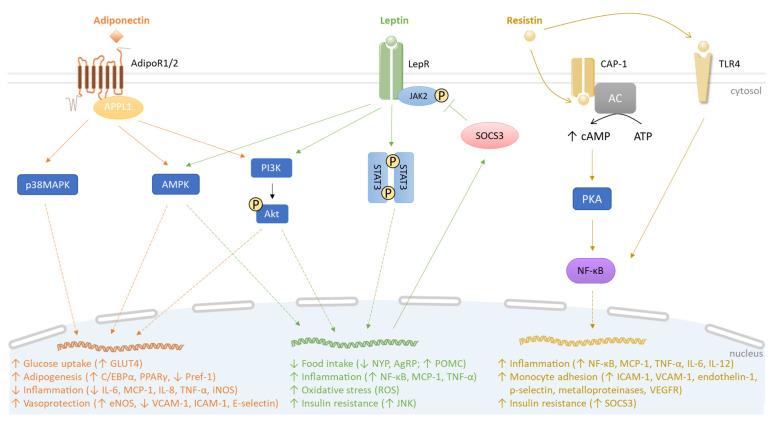
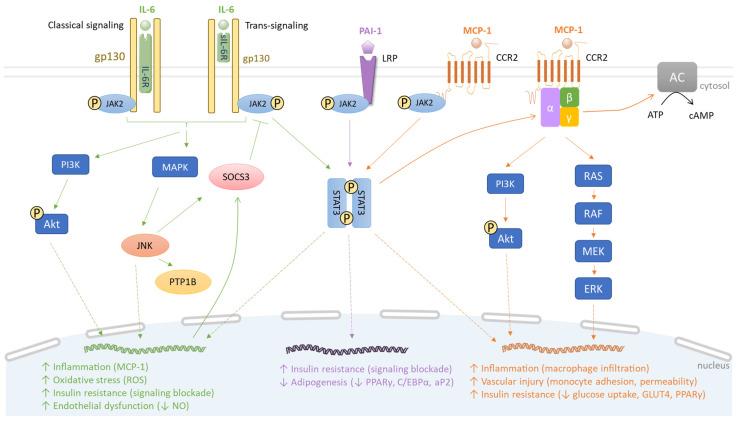
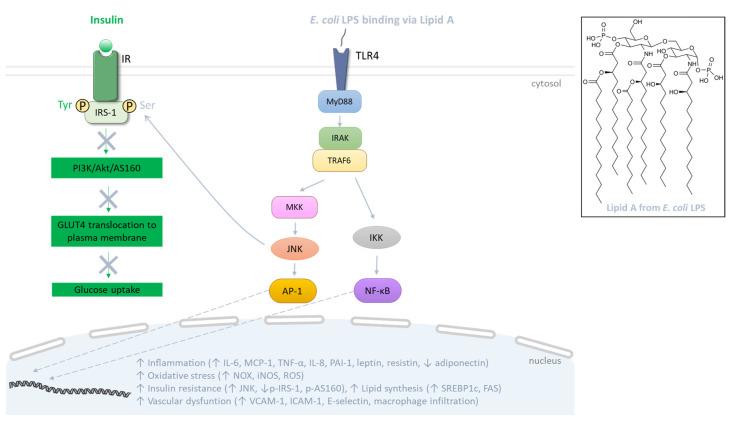
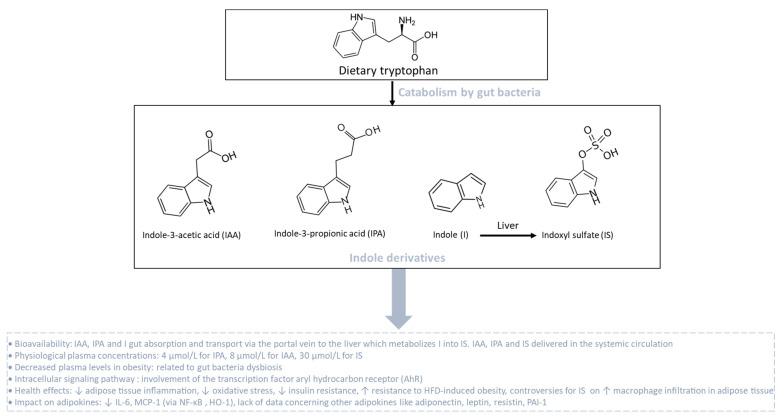
Adipokines are essential mediators produced by adipose tissue and exert multiple biological functions. In particular, adiponectin, leptin, resistin, IL-6, MCP-1 and PAI-1 play specific roles in the crosstalk between adipose tissue and other organs involved in metabolic, immune and vascular health. During obesity, adipokine imbalance occurs and leads to a low-grade pro-inflammatory status, promoting insulin resistance-related diabetes and its vascular complications. A causal link between obesity and gut microbiota dysbiosis has been demonstrated. The deregulation of gut bacteria communities characterizing this dysbiosis influences the synthesis of bacterial substances including lipopolysaccharides and specific metabolites, generated via the degradation of dietary components, such as short-chain fatty acids, trimethylamine metabolized into trimethylamine-oxide in the liver and indole derivatives. Emerging evidence suggests that these bacterial metabolites modulate signaling pathways involved in adipokine production and action. This review summarizes the current knowledge about the molecular links between gut bacteria-derived metabolites and adipokine imbalance in obesity, and emphasizes their roles in key pathological mechanisms related to oxidative stress, inflammation, insulin resistance and vascular disorder. Given this interaction between adipokines and bacterial metabolites, the review highlights their relevance (i) as complementary clinical biomarkers to better explore the metabolic, inflammatory and vascular complications during obesity and gut microbiota dysbiosis, and (ii) as targets for new antioxidant, anti-inflammatory and prebiotic triple action strategies.
脂联素是脂肪组织产生的重要介质,具有多种生物学功能。特别是脂联素、瘦素、抵抗素、IL-6、MCP-1 和 PAI-1 在脂肪组织与参与代谢、免疫和血管健康的其他器官之间的相互作用中发挥特定作用。在肥胖期间,发生脂联素失衡,导致低度炎症状态,促进与胰岛素抵抗相关的糖尿病及其血管并发症。已经证明肥胖与肠道微生物失调之间存在因果关系。这种失调特征的肠道细菌群落的失调会影响细菌物质的合成,包括内毒素和特定代谢物,这些物质是通过降解膳食成分(如短链脂肪酸)生成的,例如在肝脏中转化为三甲胺氧化物的三甲胺和吲哚衍生物。新出现的证据表明,这些细菌代谢物调节参与脂联素产生和作用的信号通路。 本综述总结了关于肥胖中肠道细菌衍生代谢物与脂联素失衡之间的分子联系的最新知识,并强调了它们在与氧化应激、炎症、胰岛素抵抗和血管紊乱相关的关键病理机制中的作用。鉴于脂联素和细菌代谢物之间的这种相互作用,本综述强调了它们的相关性(i)作为补充的临床生物标志物,以更好地探索肥胖和肠道微生物失调期间的代谢、炎症和血管并发症,以及(ii)作为新的抗氧化、抗炎和益生菌三重作用策略的靶点。



 Zotero 插件