
特定阳离子抗菌肽增强常规诊断中低负荷休眠的恢复。
Specific Cationic Antimicrobial Peptides Enhance the Recovery of Low-Load Quiescent in Routine Diagnostics.
机构信息
Institute of Infection and Immunity, St. George's, University of London, Cranmer Terrace, London SW17 0RE, UK.
TiKa Diagnostics Ltd., Cranmer Terrace, London SW17 0RE, UK.
出版信息
Int J Mol Sci. 2023 Dec 16;24(24):17555. doi: 10.3390/ijms242417555.
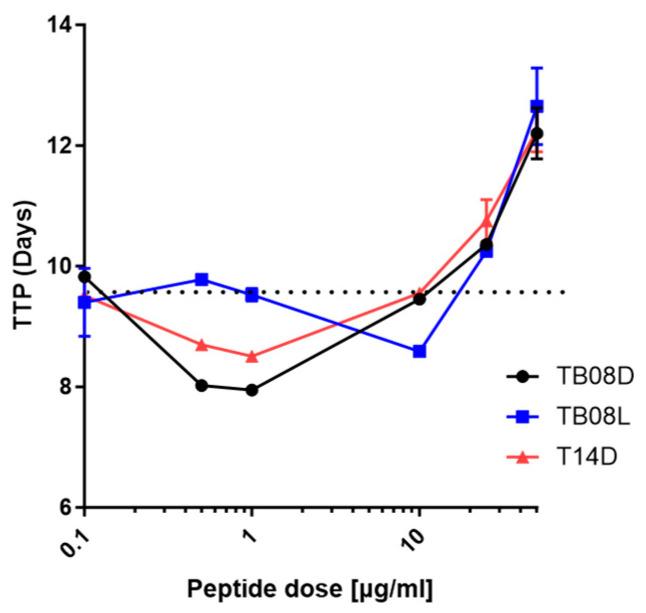
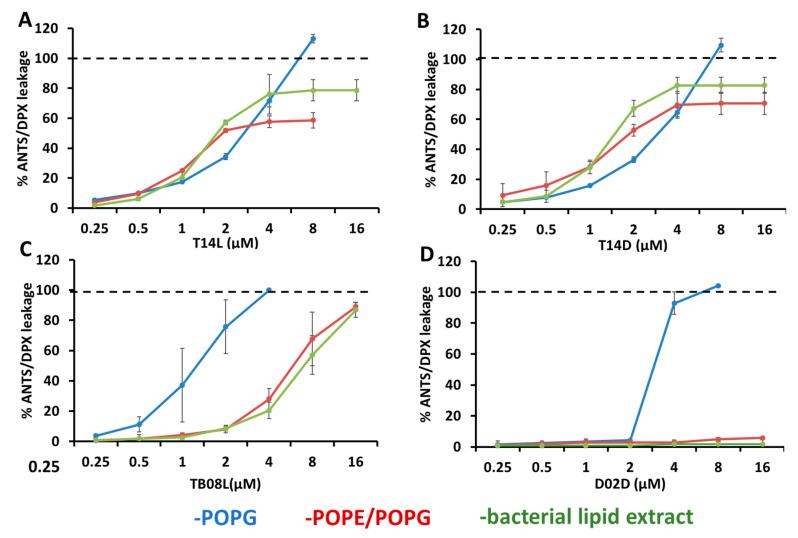
The culture confirmation of (MTB) remains the gold standard for the diagnosis of Tuberculosis (TB) with culture conversion representing proof of cure. However, over 40% of TB samples fail to isolate MTB even though many patients remain infectious due to the presence of viable non-culturable forms. Previously, we have shown that two short cationic peptides, T14D and TB08L, induce a hormetic response at low concentrations, leading to a stimulation of growth in MTB and the related animal pathogen (bTB). Here, we examine these peptides showing they can influence the mycobacterial membrane integrity and function through membrane potential reduction. We also show this disruption is associated with an abnormal reduction in transcriptomic signalling from specific mycobacterial membrane sensors that normally monitor the immediate cellular environment and maintain the non-growing phenotype. We observe that exposing MTB or bTB to these peptides at optimal concentrations rapidly represses signalling mechanisms maintaining dormancy phenotypes, which leads to the promotion of aerobic metabolism and conversion into a replicative phenotype. We further show a practical application of these peptides as reagents able to enhance conventional routine culture methods by stimulating mycobacterial growth. We evaluated the ability of a peptide-supplemented sample preparation and culture protocol to isolate the MTB against a gold standard routine method tested in parallel on 255 samples from 155 patients with suspected TB. The peptide enhancement increased the sample positivity rate by 46% and decreased the average time to sample positivity of respiratory/faecal sampling by seven days. The most significant improvements in isolation rates were from sputum smear-negative low-load samples and faeces. The peptide enhancement increased sampling test sensitivity by 19%, recovery in samples from patients with a previously culture-confirmed TB by 20%, and those empirically treated for TB by 21%. We conclude that sample decontamination and culture enhancement with D-enantiomer peptides offer good potential for the much-needed improvement of the culture confirmation of TB.
(MTB)的培养确证仍然是结核病(TB)诊断的金标准,培养转换代表治愈的证据。然而,即使许多患者由于存在有活力的非可培养形式而仍然具有传染性,仍有超过 40%的 TB 样本无法分离 MTB。以前,我们已经表明,两种短阳离子肽,T14D 和 TB08L,在低浓度下诱导应激反应,导致 MTB 和相关动物病原体(bTB)的生长刺激。在这里,我们检查了这些肽,发现它们可以通过降低膜电位来影响分枝杆菌的膜完整性和功能。我们还表明,这种破坏与特定分枝杆菌膜传感器的转录组信号异常减少有关,这些传感器通常监测即时细胞环境并维持非生长表型。我们观察到,将这些肽以最佳浓度暴露于 MTB 或 bTB 会迅速抑制维持休眠表型的信号机制,从而促进有氧代谢并转化为复制表型。我们进一步展示了这些肽作为试剂的实际应用,它们能够通过刺激分枝杆菌生长来增强常规常规培养方法。我们评估了肽补充样本制备和培养方案的能力,以分离 MTB,与平行测试的金标准常规方法相比,该方法在 155 名疑似 TB 患者的 255 个样本中进行了测试。肽增强提高了样本阳性率 46%,并将呼吸/粪便采样的平均阳性时间缩短了七天。分离率的最大提高来自于痰涂片阴性低载量样本和粪便。肽增强提高了采样测试的敏感性 19%,对以前培养确证的 TB 患者样本的恢复提高了 20%,对经验性治疗 TB 的患者样本的恢复提高了 21%。我们得出结论,用 D-对映体肽进行样本去污和培养增强为结核病的培养确证提供了急需的改进提供了很好的潜力。




 Zotero 插件