
沉默 HE4 通过调节 C3/MMPs/prss 轴减轻狼疮肾炎小鼠的肾纤维化。
Silencing HE4 alleviates the renal fibrosis in lupus nephritis mice by regulating the C3/MMPs/prss axis.
机构信息
Department of Nephrology, Affiliated Fuzhou First Hospital of Fujian Medical University, No.190, Dadao Road, Taijiang District, Fuzhou City, Fujian, 350004, China.
出版信息
Naunyn Schmiedebergs Arch Pharmacol. 2024 Jul;397(7):4823-4831. doi: 10.1007/s00210-023-02883-x. Epub 2023 Dec 29.
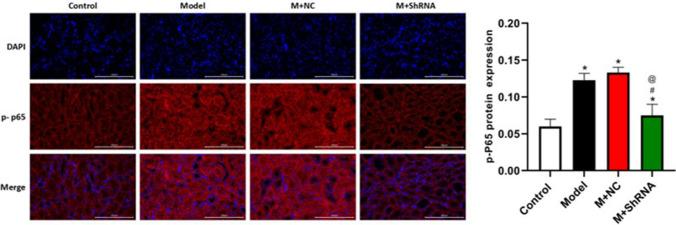
To explore the regulatory effect of human epididymis protein 4 (HE4) on renal fibrosis in mice with lupus nephritis (LN) and the underlying mechanism. Ten-week old MRL/LPR mice were injected with HE4 shRNA adenovirus vector through the renal pelvis for 5 days. Renal tissues were extracted for HE and Masson staining to evaluate pathological changes and fibrosis in lupus nephritis mice. The level of urine protein was measured using a biochemical analyzer, while the expression level of HE4 and p-NF-κB p65 in renal tissues was visualized using an immunofluorescence assay. The level of β2-microglobulin (β2-MG), neutrophil gelatinase-associated lipocalin (NGAL), and kidney injury molecule 1 (Kim-1) was determined by the immunohistochemical assay. Western blotting was used to determine the levels of C3, HE4, matrix metalloproteinase-2 (MMP2), MMP9, p-p65, prss23, and prss35 in renal tissues. Compared to wild-type C57BL/6 mice, MRL/LPR mice showed a marked increase in the number of glomeruli, hyperplasic basement membrane, severe infiltration of inflammatory cells in renal tubules and glomeruli, obvious necrosis in glomeruli, elevated fibrosis levels, and increased levels of urine protein, β2-MG, NGAL, Kim-1, C3, HE4, MMP2, MMP9, and p-p65; and decreased levels of prss23 and prss35 were observed in MRL/LPR mice. After the administration of the HE4 shRNA adenovirus vector, the repaired structure of renal tubules and glomeruli improved infiltration of inflammatory cells, reduced collagen fiber and urine protein, suppressed levels of C3, HE4, MMP2, MMP9, and p-P65, and facilitated the expression of prss23 and prss35 which were observed. Silencing HE4 improved renal fibrosis and inhibited inflammation in mice with lupus nephritis, which may play a role in inhibiting C3/MMPs and promoting prss-related protein expression.
目的
探讨人附睾蛋白 4(HE4)对狼疮肾炎(LN)小鼠肾纤维化的调控作用及其机制。
方法
10 周龄 MRL/LPR 小鼠经肾盂注射 HE4 shRNA 腺病毒载体 5 天。提取肾组织进行 HE 和 Masson 染色,评价狼疮肾炎小鼠的病理变化和纤维化程度。用生化分析仪测定尿蛋白水平,免疫荧光法检测肾组织中 HE4 和 p-NF-κB p65 的表达水平。免疫组化法测定β2-微球蛋白(β2-MG)、中性粒细胞明胶酶相关脂质运载蛋白(NGAL)和肾损伤分子 1(Kim-1)的水平。Western blot 法测定肾组织中 C3、HE4、基质金属蛋白酶-2(MMP2)、MMP9、p-p65、prss23 和 prss35 的水平。
结果
与野生型 C57BL/6 小鼠相比,MRL/LPR 小鼠肾小球数量明显增加,基底膜增生,肾小管和肾小球炎症细胞浸润严重,肾小球明显坏死,纤维化程度升高,尿蛋白、β2-MG、NGAL、Kim-1、C3、HE4、MMP2、MMP9 和 p-p65 水平升高,prss23 和 prss35 水平降低。给予 HE4 shRNA 腺病毒载体后,改善了肾小管和肾小球的修复结构,减轻了炎症细胞的浸润,减少了胶原纤维和尿蛋白,抑制了 C3、HE4、MMP2、MMP9 和 p-P65 的水平,促进了 prss23 和 prss35 的表达。
结论
沉默 HE4 可改善狼疮肾炎小鼠的肾纤维化,抑制炎症,可能通过抑制 C3/MMPs 及促进 prss 相关蛋白表达发挥作用。




 Zotero 插件