
源自生物源的氧化锌纳米颗粒:迈向增强抗氧化、抗菌及抗癌活性
Biogenic Zinc oxide nanoparticles from : toward improved antioxidant, antibacterial, and anticancer activities.
作者信息
Alghamdi Rana Abdullah, Al-Zahrani Maryam Hassan, Altarjami Lamaia R, Al Abdulmonem Waleed, Samir Nadia, Said Alaa, Shami Ashjan A, Mohamed W S, Ezzeldien Mohammed
机构信息
Department of Chemistry, College of Sciences and Arts, King Abdulaziz University, Rabigh, Saudi Arabia.
Regenerative Medicine Unit, King Fahd Medical Research Centre, King Abdulaziz University, Jeddah, Saudi Arabia.
出版信息
Front Bioeng Biotechnol. 2023 Dec 15;11:1283898. doi: 10.3389/fbioe.2023.1283898. eCollection 2023.
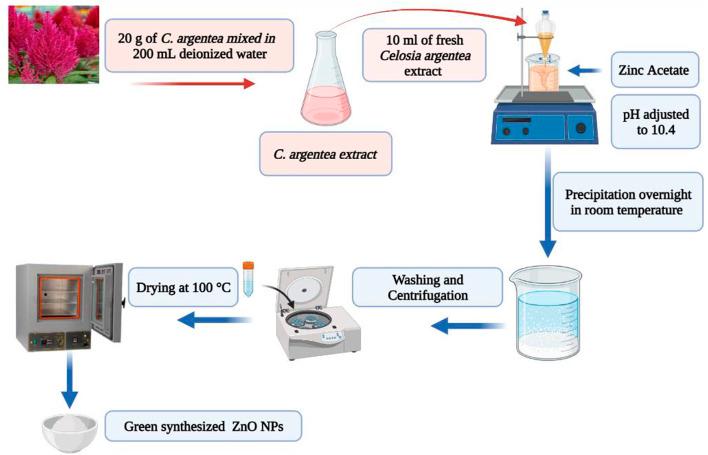
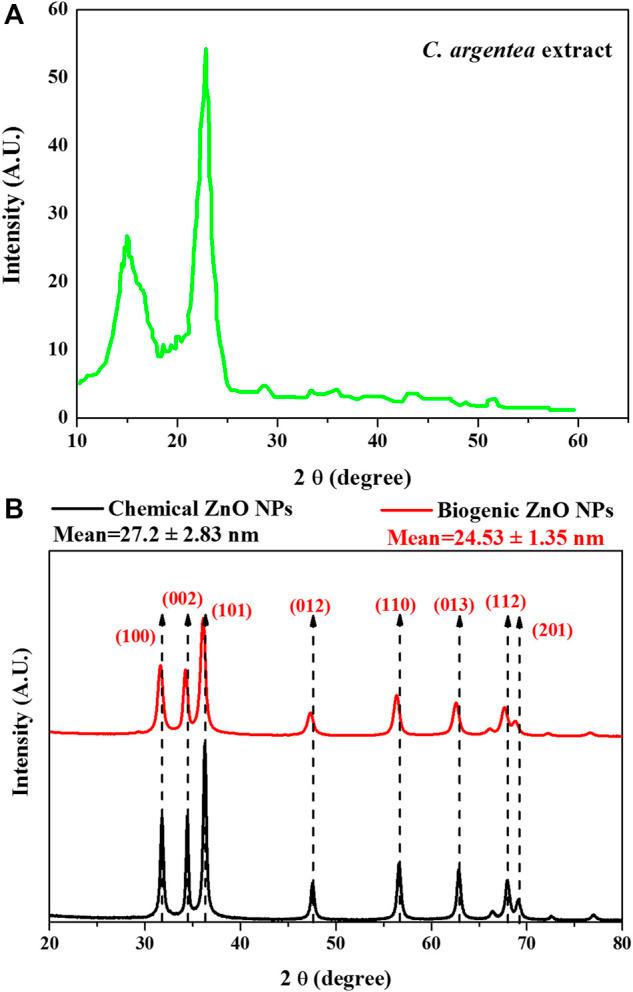
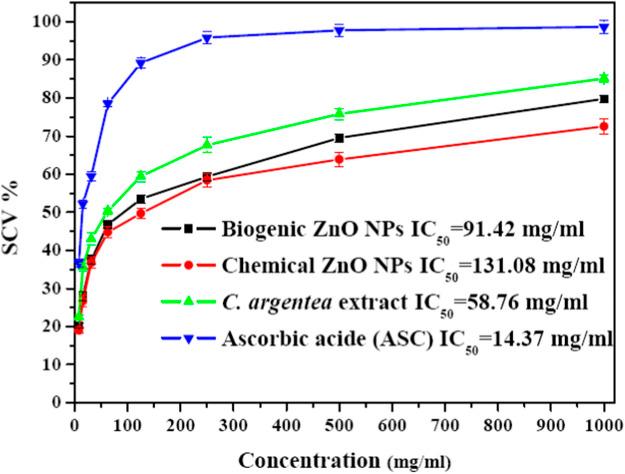
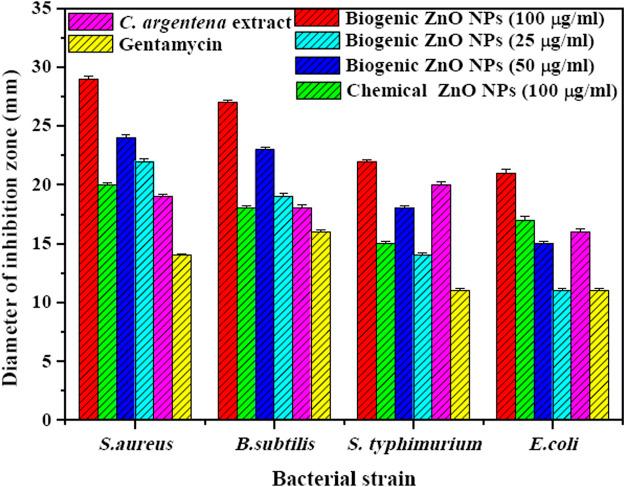
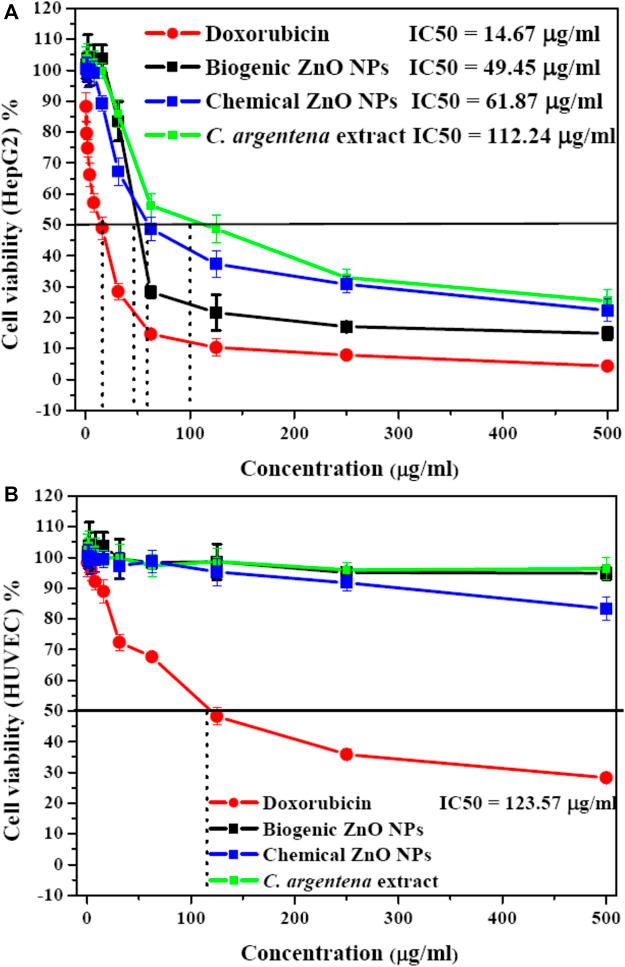
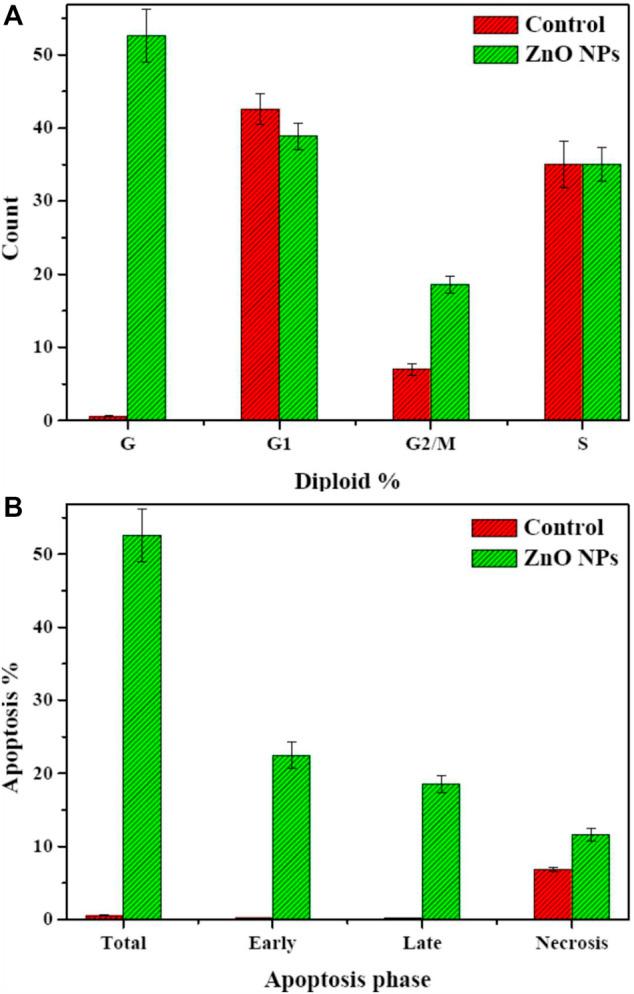
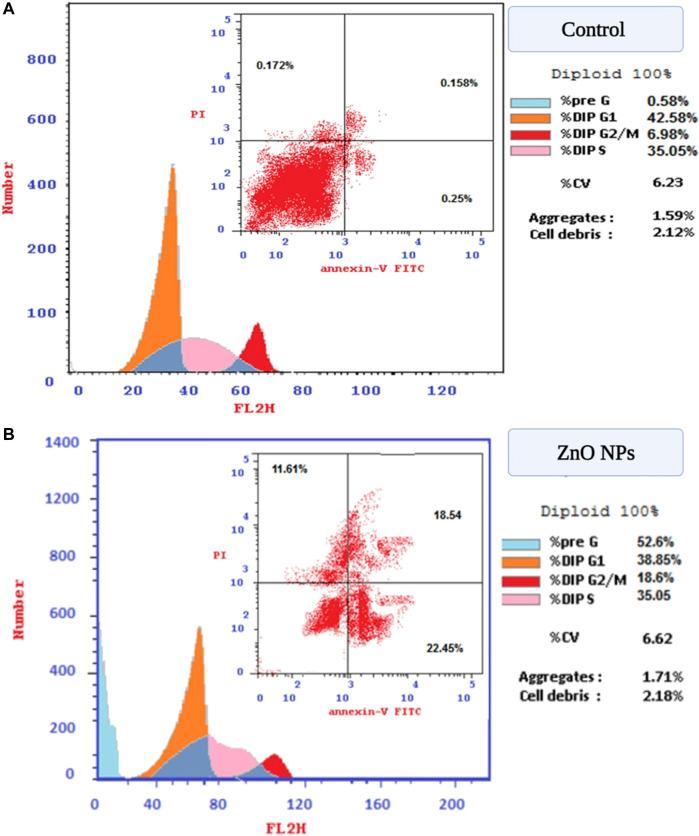
Biogenic Zinc oxide (ZnO) nanoparticles (NPs) were synthesized from () plant extract. Structural analysis confirms the successful synthesis of biogenic zinc oxide NPs from . extract. The biogenic ZnO NPs have an average particle size of 21.55 ± 4.73 nm, a semispherical shape, and a specific surface area of about 50 m/g. The biogenic ZnO NPs have a powerful radical scavenging activity (Ic = 91.24 mg/ml) comparable to ascorbic acid (ASC) as a standard (Ic = 14.37 mg/ml). The antibacterial efficacy was tested against gram-positive and gram-negative bacteria using an agar disc diffusion method. Gram-positive strains with biogenic ZnO NPs have a greater bactericidal impact than gram-negative strains in a concentration-dependent manner. Anticancer activity against Liver hepatocellular cells (HepG2) and Human umbilical vein endothelial cells (HUVEC) was evaluated using a [3-(4,5-dimethylthiazol-2-yl)-2,5diphenyl tetrazolium bromide] (MTT) assay. The results reflect the concentration-dependent cytotoxic effect of biogenic ZnO NPs against HepG2 cells even at low concentrations (Ic = 49.45 μg/ml) compared with doxorubicin (Ic = 14.67 μg/ml) and extract (Ic = 112.24 μg/ml). The cell cycle and gene expression were analyzed to determine the potential anticancer mechanism. The flow cytometric analysis of the cell cycle revealed that biogenic ZnO NPs induce oxidative stress that activates the apoptotic genes NF-κB, CY-C, and P53, leading to cell death. The improved the antioxidant, antibacterial, and anticancer activities of ZnO NPs without altering their structural properties. The effect of green synthesis on the bioactivity of biogenic ZnO NPs is recommended for future work.
生物源氧化锌(ZnO)纳米颗粒(NPs)由()植物提取物合成。结构分析证实了从提取物成功合成生物源氧化锌纳米颗粒。生物源ZnO纳米颗粒的平均粒径为21.55±4.73纳米,呈半球形,比表面积约为50平方米/克。生物源ZnO纳米颗粒具有强大的自由基清除活性(半数抑制浓度Ic = 91.24毫克/毫升),与作为标准的抗坏血酸(ASC)相当(Ic = 14.37毫克/毫升)。使用琼脂圆盘扩散法测试了对革兰氏阳性和革兰氏阴性细菌的抗菌效果。含生物源ZnO纳米颗粒的革兰氏阳性菌株比革兰氏阴性菌株具有更强的杀菌作用,且呈浓度依赖性。使用[3-(4,5-二甲基噻唑-2-基)-2,5-二苯基四氮唑溴盐](MTT)法评估了对肝癌细胞(HepG2)和人脐静脉内皮细胞(HUVEC)的抗癌活性。结果表明,即使在低浓度下(Ic = 49.45微克/毫升),生物源ZnO纳米颗粒对HepG2细胞也具有浓度依赖性的细胞毒性作用,与阿霉素(Ic = 14.67微克/毫升)和提取物(Ic = 112.24微克/毫升)相比。分析了细胞周期和基因表达以确定潜在的抗癌机制。细胞周期的流式细胞术分析表明,生物源ZnO纳米颗粒诱导氧化应激,激活凋亡基因NF-κB、CY-C和P53,导致细胞死亡。提取物在不改变其结构性质的情况下提高了ZnO纳米颗粒的抗氧化、抗菌和抗癌活性。建议在未来的工作中研究绿色合成对生物源ZnO纳米颗粒生物活性的影响。




 Zotero 插件