
中国老年人身体活动与社会经济地位和慢性病的关系:COVID-19 疫情后 CLASS 2020 调查的横断面研究结果。
Association of physical activity with socio-economic status and chronic disease in older adults in China: cross-sectional findings from the survey of CLASS 2020 after the outbreak of COVID-19.
机构信息
Capital University of Physical Education and Sports, Beijing, 100000, China.
Southwest Petroleum University, Chengdu, 610000, China.
出版信息
BMC Public Health. 2024 Jan 2;24(1):37. doi: 10.1186/s12889-023-17492-9.
BACKGROUND
In 2021, China had a population of 264·01 million individuals over the age of 60, indicating a high prevalence of chronic diseases. Among older adults, physical inactivity (PI) is a significant risk factor for chronic diseases. However, few studies have been conducted on the correlation of physical activity (PA) with the economic status, geography and chronic disease risks in Chinese elderly. The objectives of this study were to better understand the distribution of PA among older adults in China and its relationship with economic status, geography, and chronic disease risks.
METHODS
This study utilized data from the China Longitudinal Aging Social Survey (CLASS) in 2020, post-COVID-19. The study employed a stratified, multistage, probabilistic sampling approach and included 11,396 adults over the age of 59 from 28 provinces in China. Data on demographics, the duration and intensity of PA, history of diseases and personalized factors influencing PA were collected via structured interviews by researchers. In this study, we conducted a comprehensive analysis, employing a range of statistical methods including descriptive analysis, Wilcoxon rank-sum tests, Bayesian networks, and chi-square tests.
RESULTS
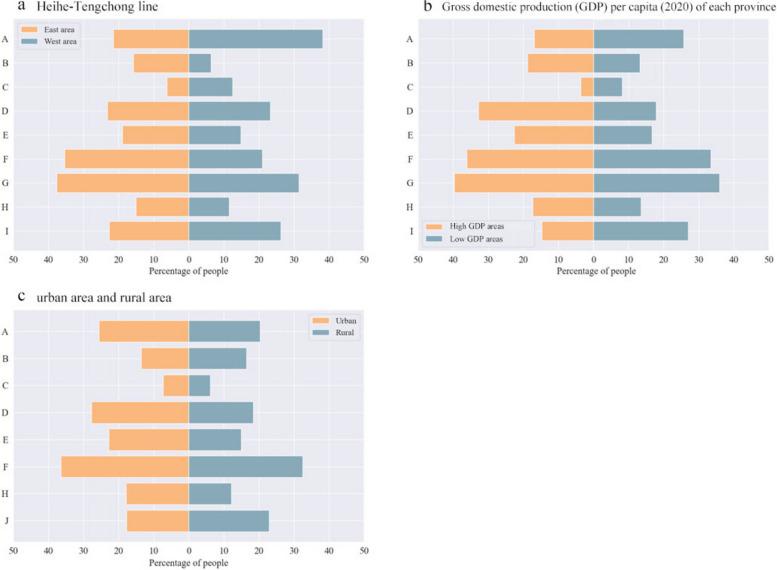
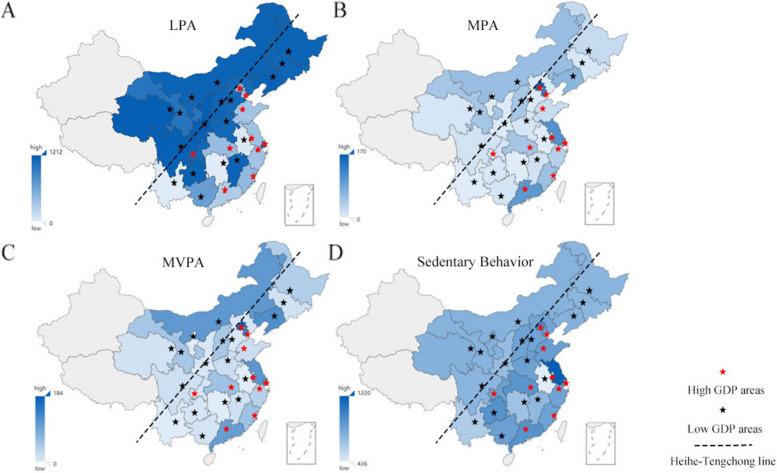
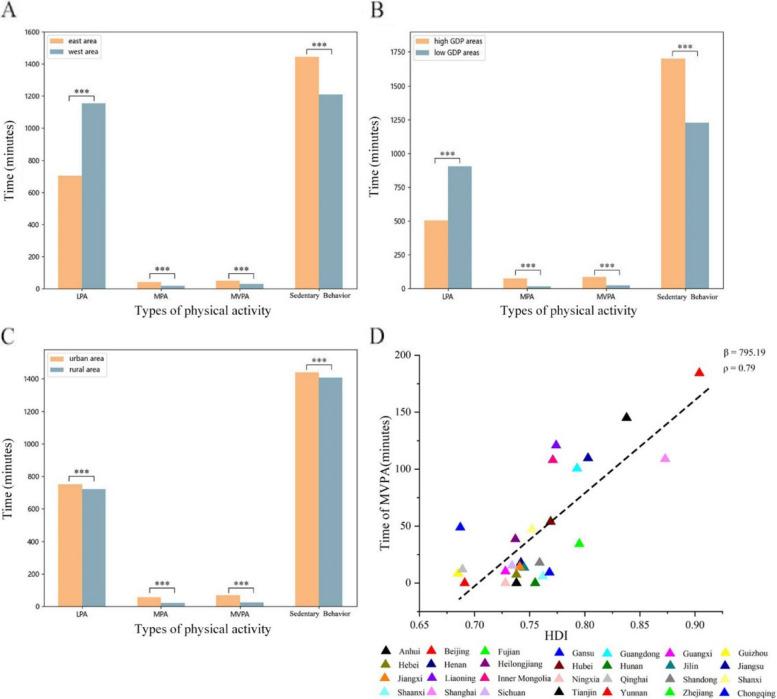
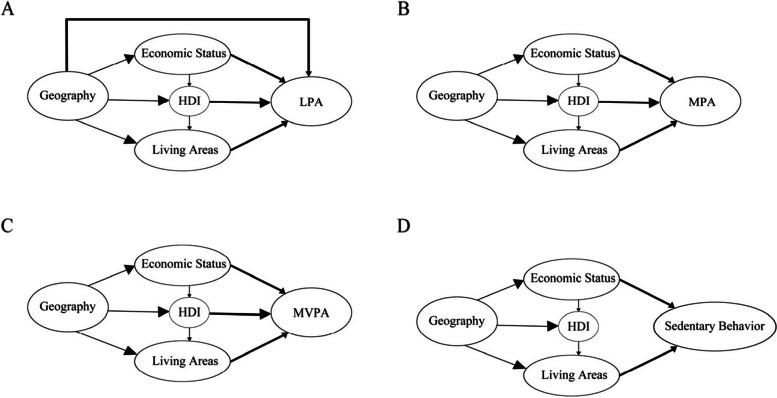
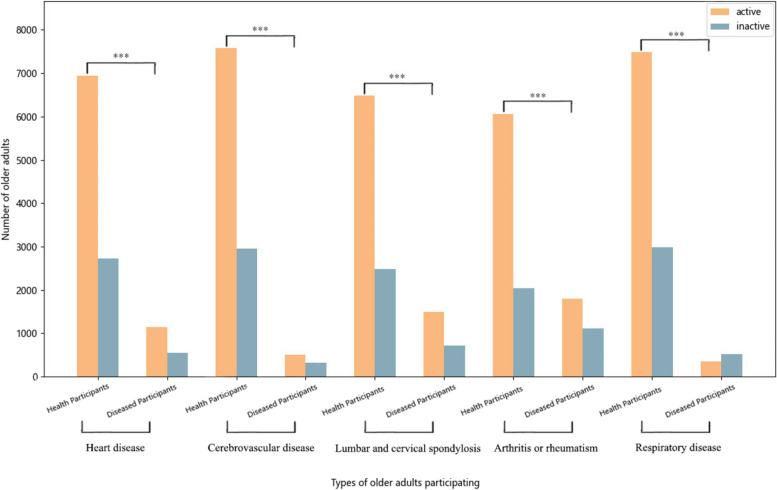
The prevalence of PI among older adults over 59 in China is 28·82%. Significant regional differences were observed in the duration of PA at different intensities. Older adults residing in more economically developed areas were more likely to engage in moderate-to-vigorous physical activity (MVPA) and exhibited longer sedentary behavior. Economic status and urban-rural disparities consistently emerged as direct influential factors across all intensity types. Chronic disease risks were significantly lower in active older adults compared to inactive ones. Lack of social guidance, family support, and personal inclination towards sedentary behavior were the main personalized factors affecting PA among older adults, and these factors could be relatively easily modified.
CONCLUSIONS
Economic status, geography, and living areas (urban and rural) significantly influenced the distribution of physical activities in China. Particularly, economic status and living areas acted as direct factors. Older adults reaching the recommended standards for PA had significantly lower chronic disease risks, highlighting the importance of improving personalized factors which are crucial for promoting PA.
背景
2021 年,中国 60 岁以上人口为 2.6401 亿,慢性病患病率高。老年人中,身体活动不足(PI)是慢性病的重要危险因素。然而,很少有研究关注中国老年人身体活动(PA)与经济状况、地理位置和慢性病风险的相关性。本研究旨在更好地了解中国老年人 PA 的分布及其与经济状况、地理位置和慢性病风险的关系。
方法
本研究使用了 2020 年中国新冠肺炎疫情后中国纵向老龄化社会调查(CLASS)的数据。研究采用分层、多阶段、概率抽样方法,包括来自中国 28 个省的 11396 名 59 岁以上成年人。研究人员通过结构化访谈收集了人口统计学、PA 持续时间和强度、疾病史和影响 PA 的个人因素等数据。本研究采用描述性分析、Wilcoxon 秩和检验、贝叶斯网络和卡方检验等多种统计方法进行综合分析。
结果
中国 59 岁以上老年人 PI 的患病率为 28.82%。不同强度 PA 的持续时间存在显著的区域差异。经济发达地区的老年人更有可能进行中高强度身体活动(MVPA),并且久坐行为时间更长。经济状况和城乡差异始终是所有强度类型的直接影响因素。与不活动的老年人相比,活跃的老年人慢性病风险显著降低。缺乏社会指导、家庭支持和个人对久坐行为的倾向是影响老年人 PA 的主要个人因素,这些因素相对容易改变。
结论
经济状况、地理位置和居住地区(城市和农村)显著影响了中国 PA 的分布。特别是,经济状况和居住地区是直接因素。达到 PA 推荐标准的老年人慢性病风险显著降低,这突出了改善个人因素对促进 PA 的重要性。
 Zotero 插件