
揭示免疫检查点抑制剂的另一面:免疫相关不良事件及预测生物标志物的全面综述。
Uncovering the flip side of immune checkpoint inhibitors: a comprehensive review of immune-related adverse events and predictive biomarkers.
机构信息
Cancer Center, Yantai Affiliated Hospital of Binzhou Medical University, The 2 nd Medical College of Binzhou Medical University, Yantai 264100, China.
Yantai Affiliated Hospital of Binzhou Medical University, The 2 nd Medical College of Binzhou Medical University, Yantai 264100, China.
出版信息
Int J Biol Sci. 2024 Jan 1;20(2):621-642. doi: 10.7150/ijbs.89376. eCollection 2024.
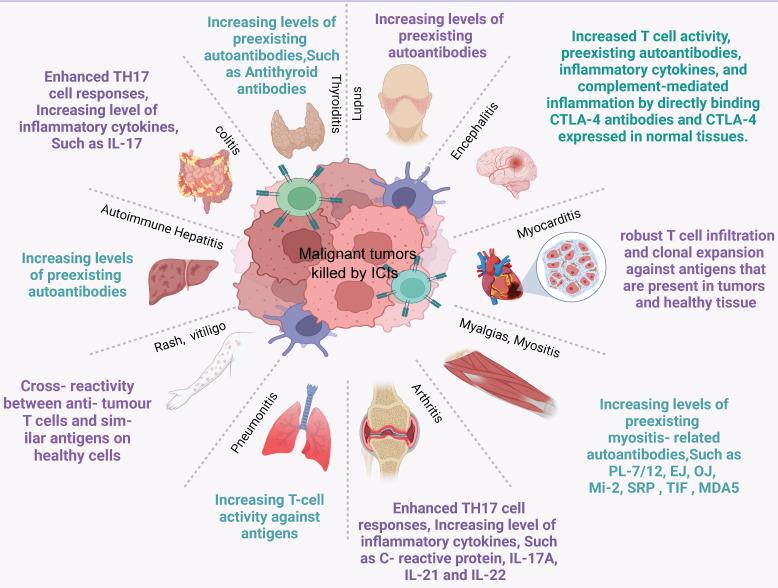
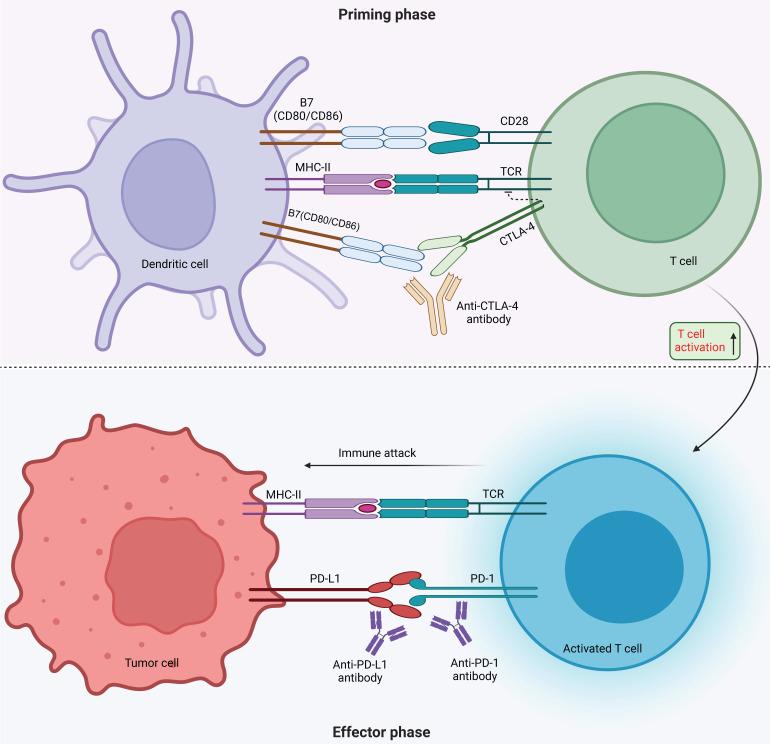
Immune checkpoint inhibitors (ICIs) have generated considerable excitement as a novel class of immunotherapeutic agents due to their remarkable efficacy in treating various types of cancer. However, the widespread use of ICIs has brought about a number of safety concerns, especially the development of immune-related adverse events (irAEs). These serious complications could result in treatment discontinuation and even life-threatening consequences, making it critical to identify high-risk groups and predictive markers of irAEs before initiating therapy. To this end, the current article examines several potential predictive markers of irAEs in important organs affected by ICIs. While retrospective studies have yielded some promising results, limitations such as small sample sizes, variable patient populations, and specific cancer types and ICIs studied make it difficult to generalize the findings. Therefore, prospective cohort studies and real-world investigations are needed to validate the potential of different biomarkers in predicting irAEs risk. Overall, identifying predictive markers of irAEs is a crucial step towards improving patient safety and enhancing the management of irAEs. With ongoing research efforts, it is hoped that more accurate and reliable biomarkers will be identified and incorporated into clinical practice to guide treatment decisions and prevent the development of irAEs in susceptible patients.
免疫检查点抑制剂 (ICIs) 作为一类新型免疫治疗药物,因其在治疗各种类型癌症方面的显著疗效而备受关注。然而,ICIs 的广泛应用带来了许多安全问题,特别是免疫相关不良事件 (irAEs) 的发生。这些严重的并发症可能导致治疗中断甚至危及生命,因此在开始治疗前识别 irAEs 的高危人群和预测标志物至关重要。为此,本文探讨了影响重要器官的 irAEs 的几种潜在预测标志物。虽然回顾性研究取得了一些有希望的结果,但由于样本量小、患者人群不同、研究的癌症类型和 ICI 不同等局限性,难以推广这些发现。因此,需要前瞻性队列研究和真实世界的研究来验证不同生物标志物预测 irAEs 风险的潜力。总的来说,识别 irAEs 的预测标志物是提高患者安全性和增强 irAEs 管理的关键步骤。随着研究工作的不断推进,希望能发现更准确、更可靠的生物标志物,并将其纳入临床实践,以指导治疗决策,防止易感患者发生 irAEs。


 Zotero 插件